Preston Lau: A Journey Through Memories, Tech, and Humanity
Welcome to my personal blog that delves into the intricate tapestry of personal albums and the fascinating intersection of ever-evolving technology and humanity. Come along on a journey with me as we delve into the seamless fusion of creativity, state-of-the-art AI and robotics, intricately interwoven within the tapestry of our shared awareness. Have fun!
Hachioji Ginkgo Festival and Chairlift up the Mt. Takao in One Day
AI Summary
We kicked off a crisp autumn day at the 47th Hachioji Ginkgo Festival, strolling the 100-year-old ginkgo avenue to enjoy 100-yen shrine snacks, queue-worthy apple spring rolls, and a lively marching band parade. Afterward, we took the chairlift up Mt. Takao, hiking past Yakuoin Temple with warm trail snacks to reach the summit for soba, beer, and a stunning sunset view of Mt. Fuji and Tokyo's city lights before walking down in the dark by phone flashlight.
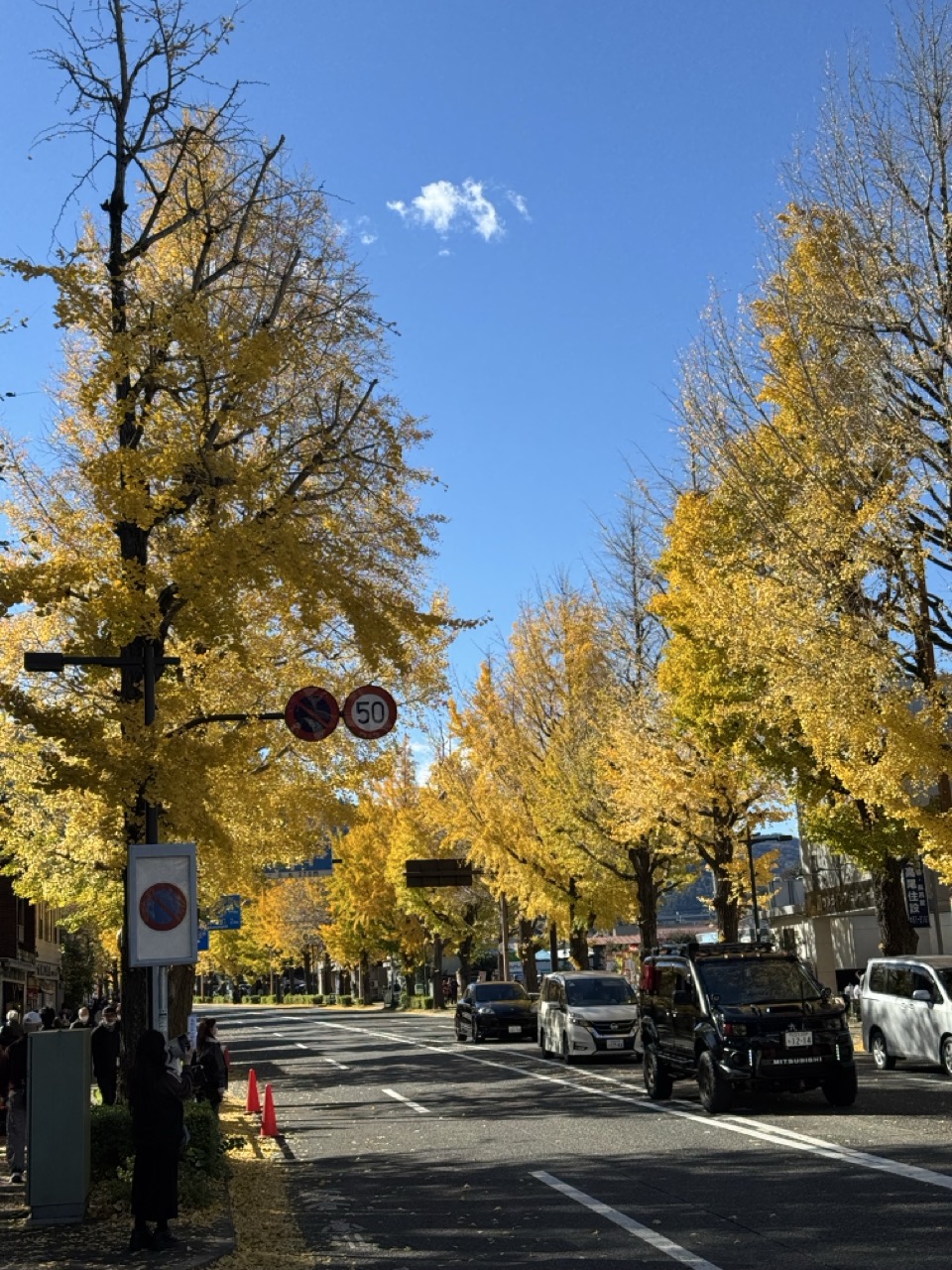
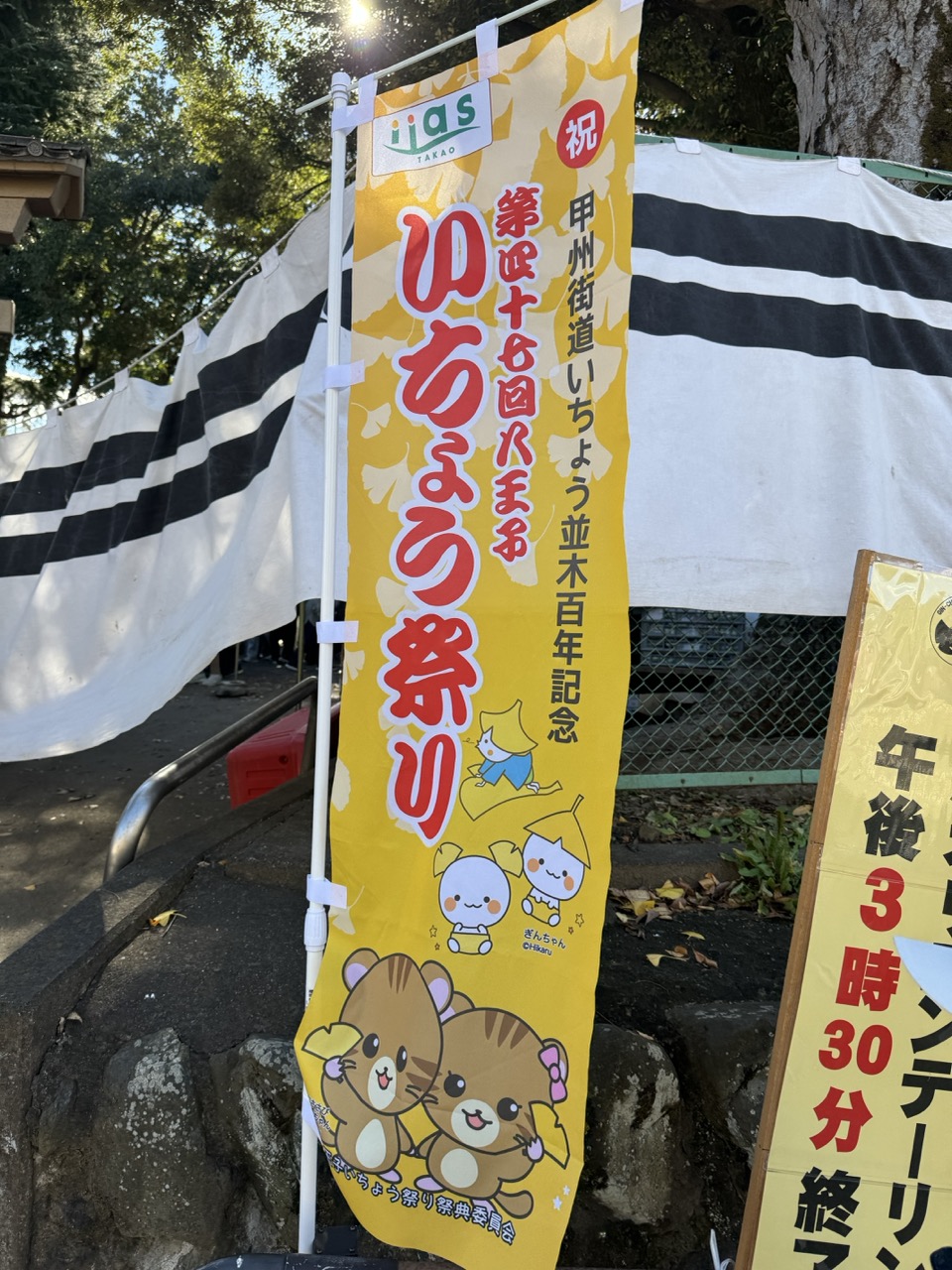
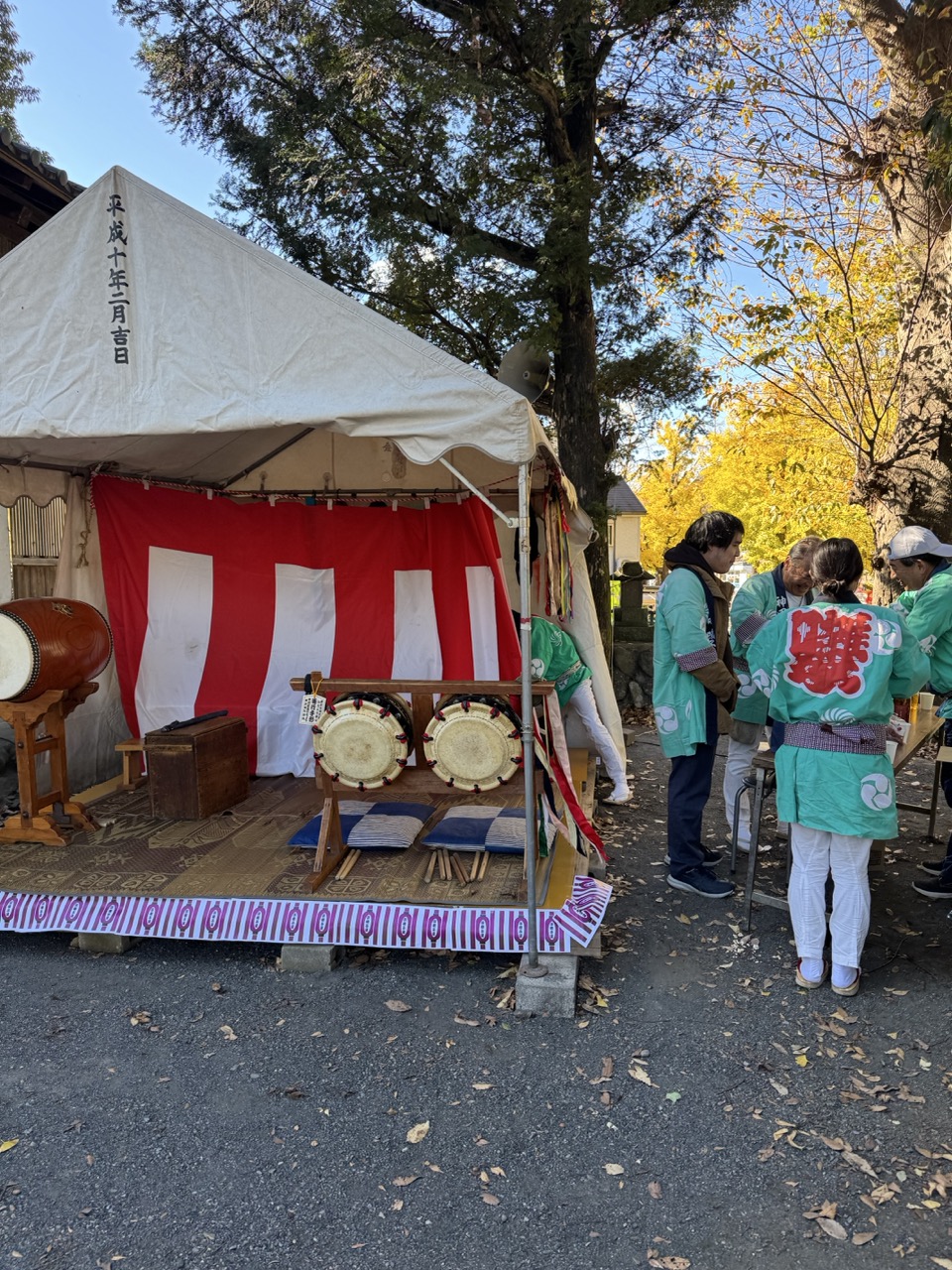
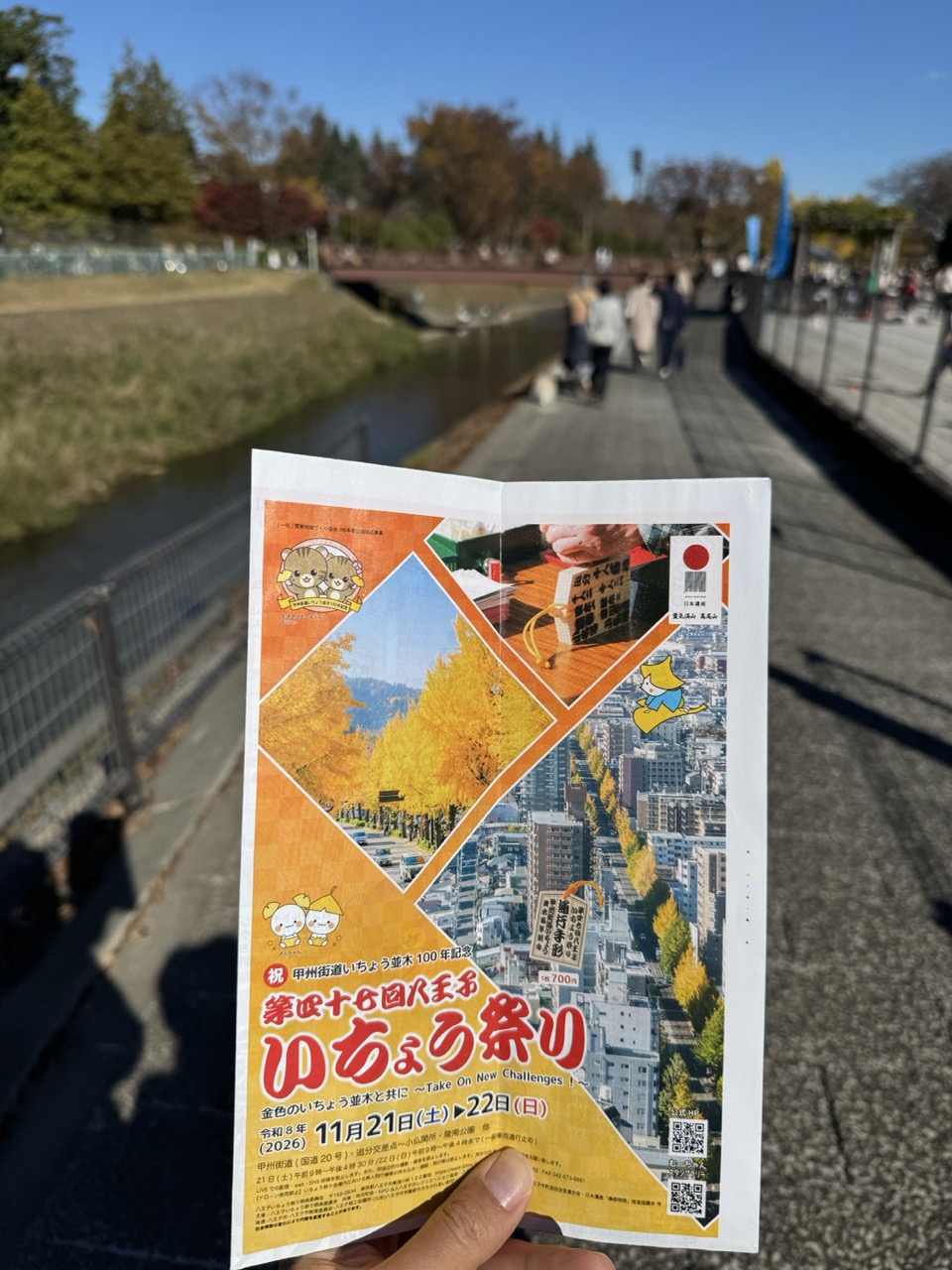
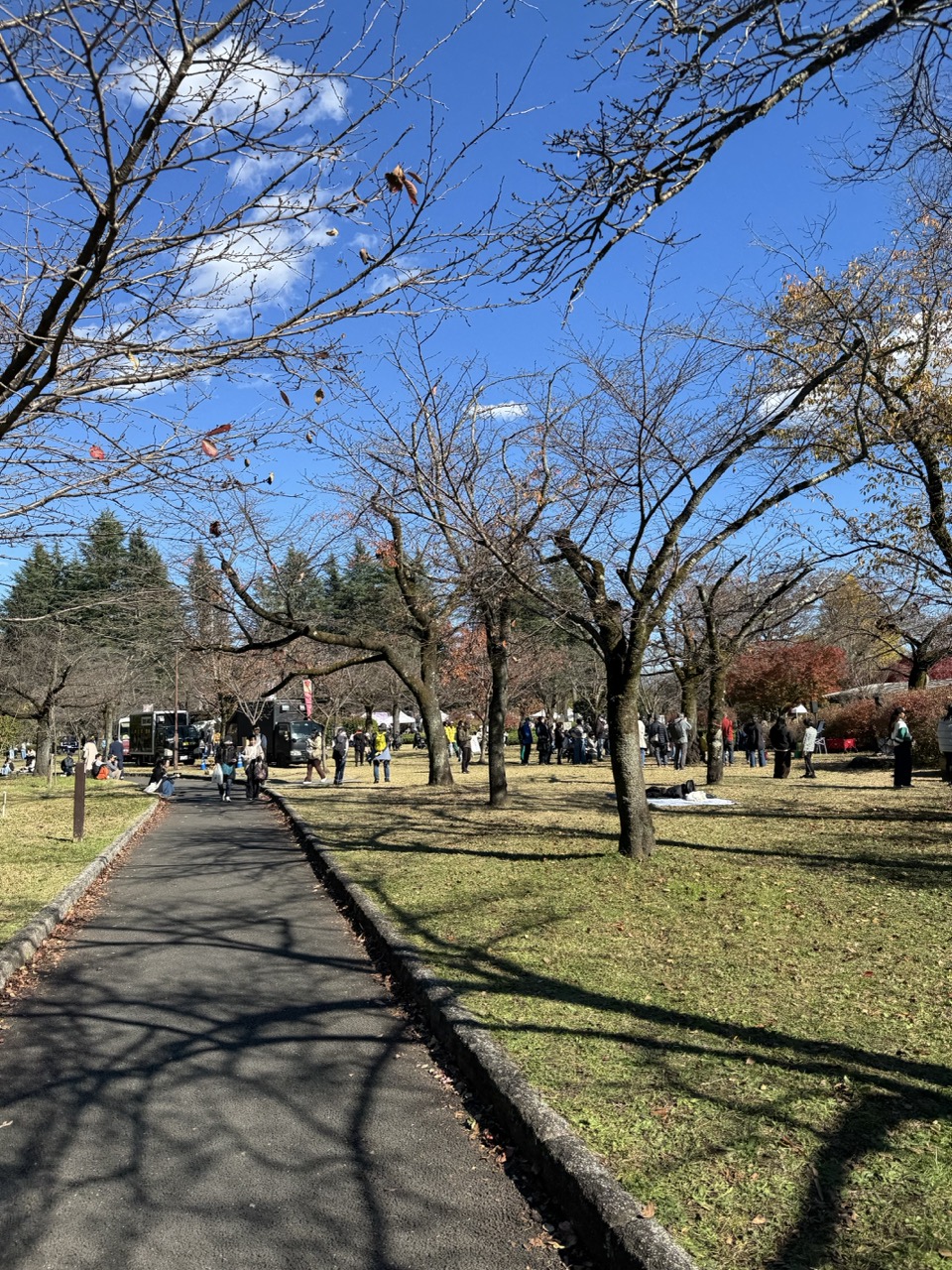
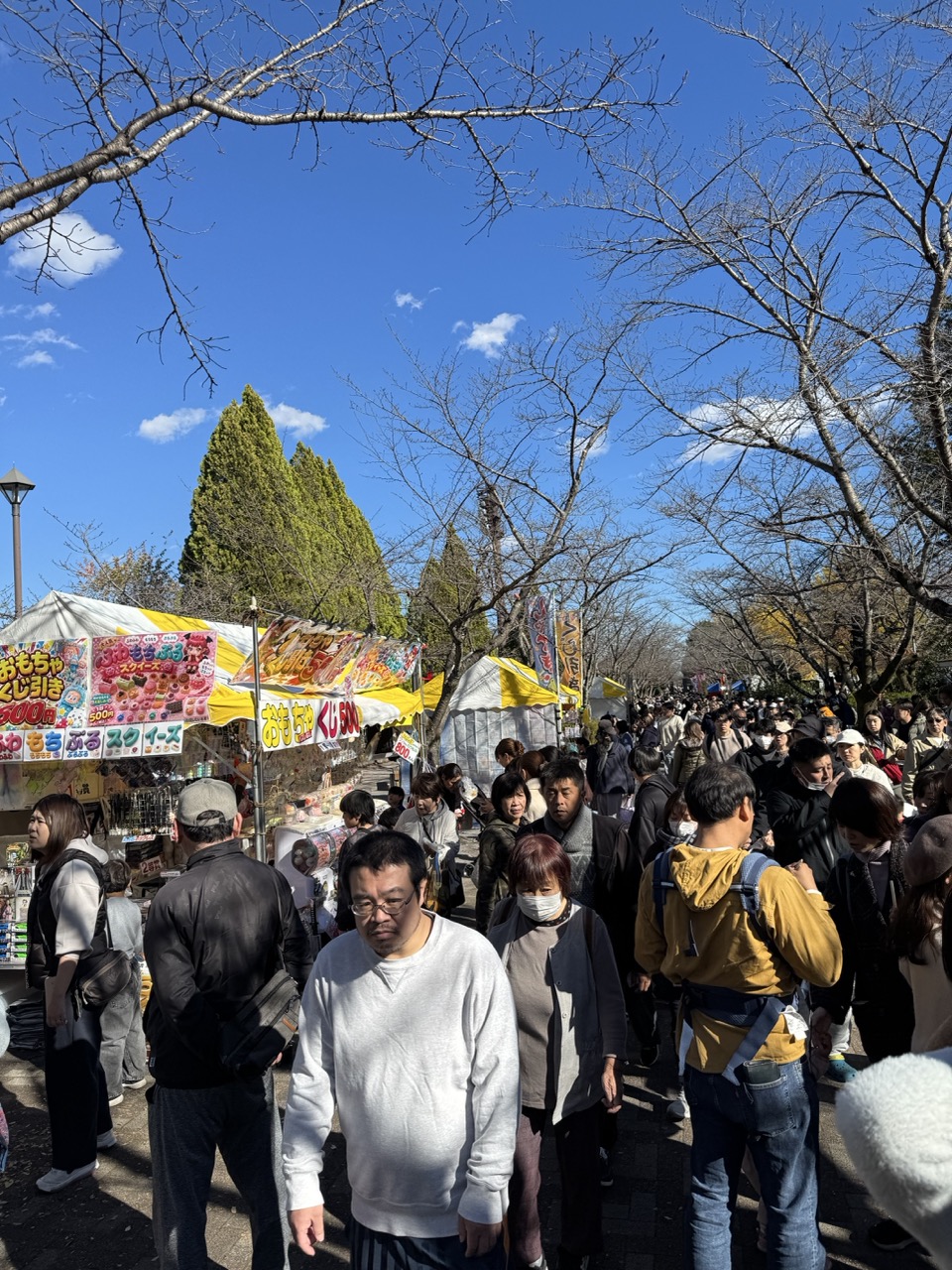
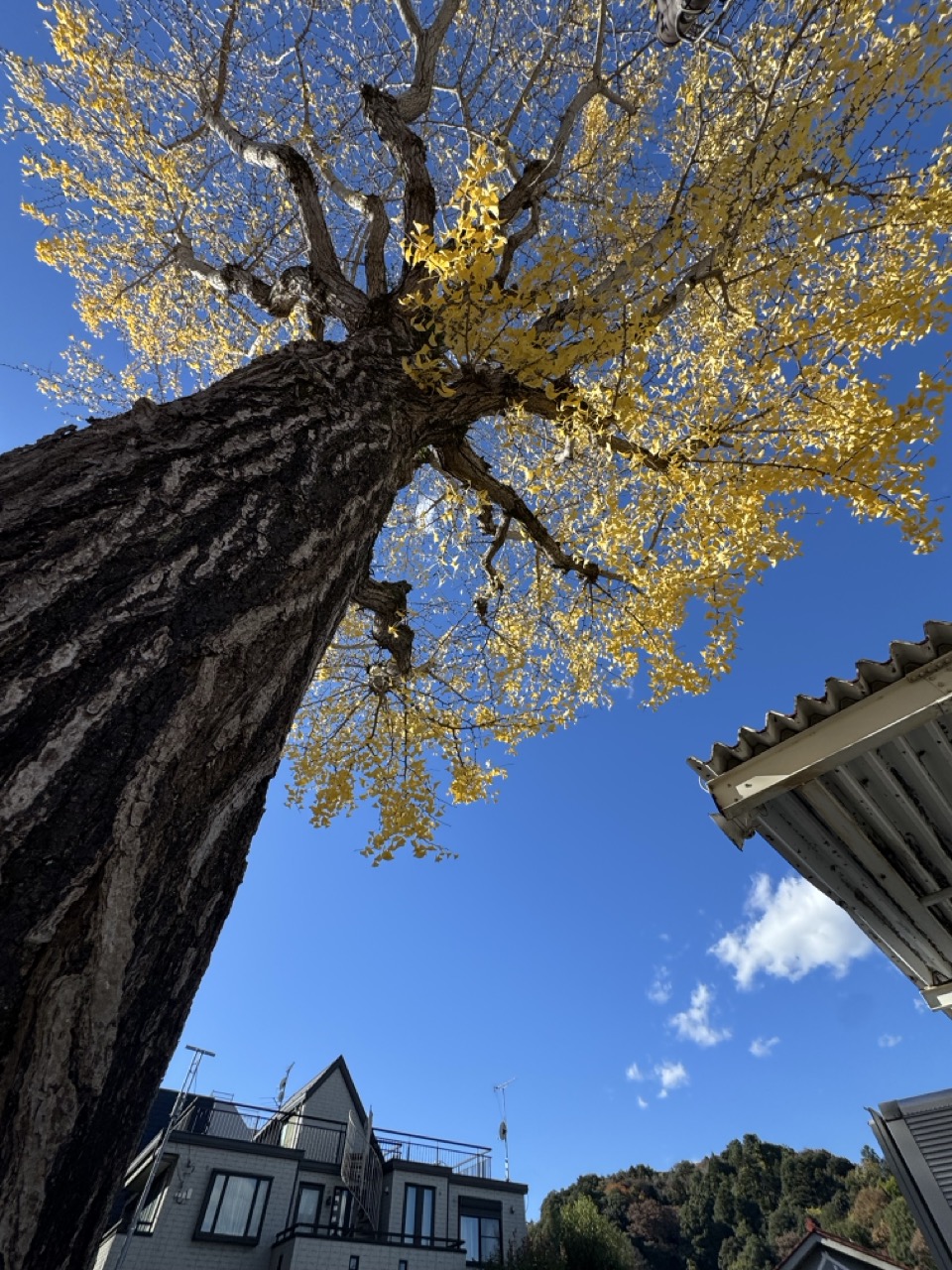
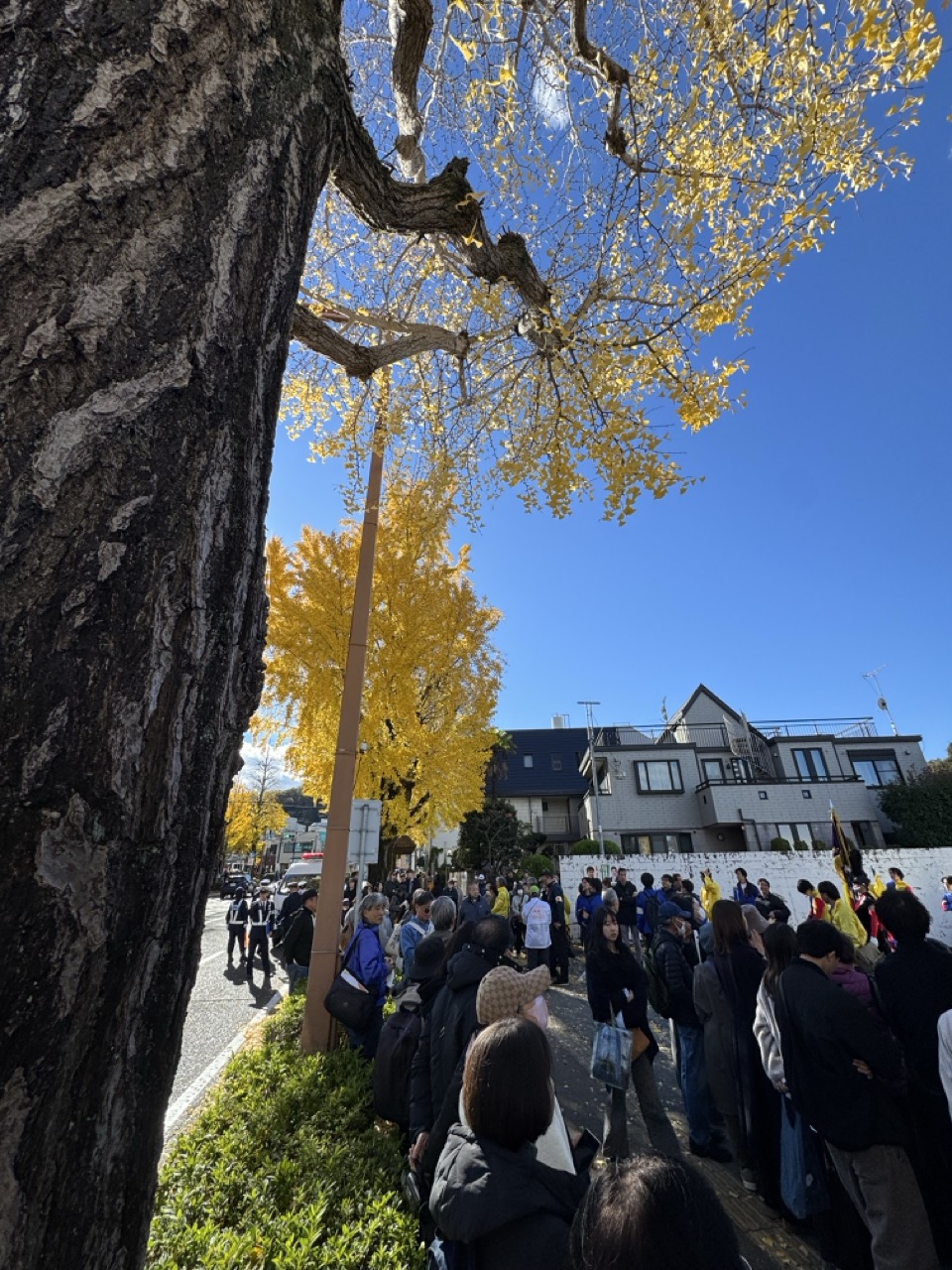
This year was the 47th Hachioji Ginkgo Festival, held on November 21 and 22, and the trees mark 100 years since planting. We started at Ryonan Park, the festival's main venue, which sits at the Takao end. Walking the avenue from there towards Hachioji means the crowd thins as you go and the trees stay in front of you. The day was sunny but colder than forecast, with a high of about 12 degrees in Hachioji, so the warm coat earned its place in the bag.
The Shrine Snacks That Beat the Stalls
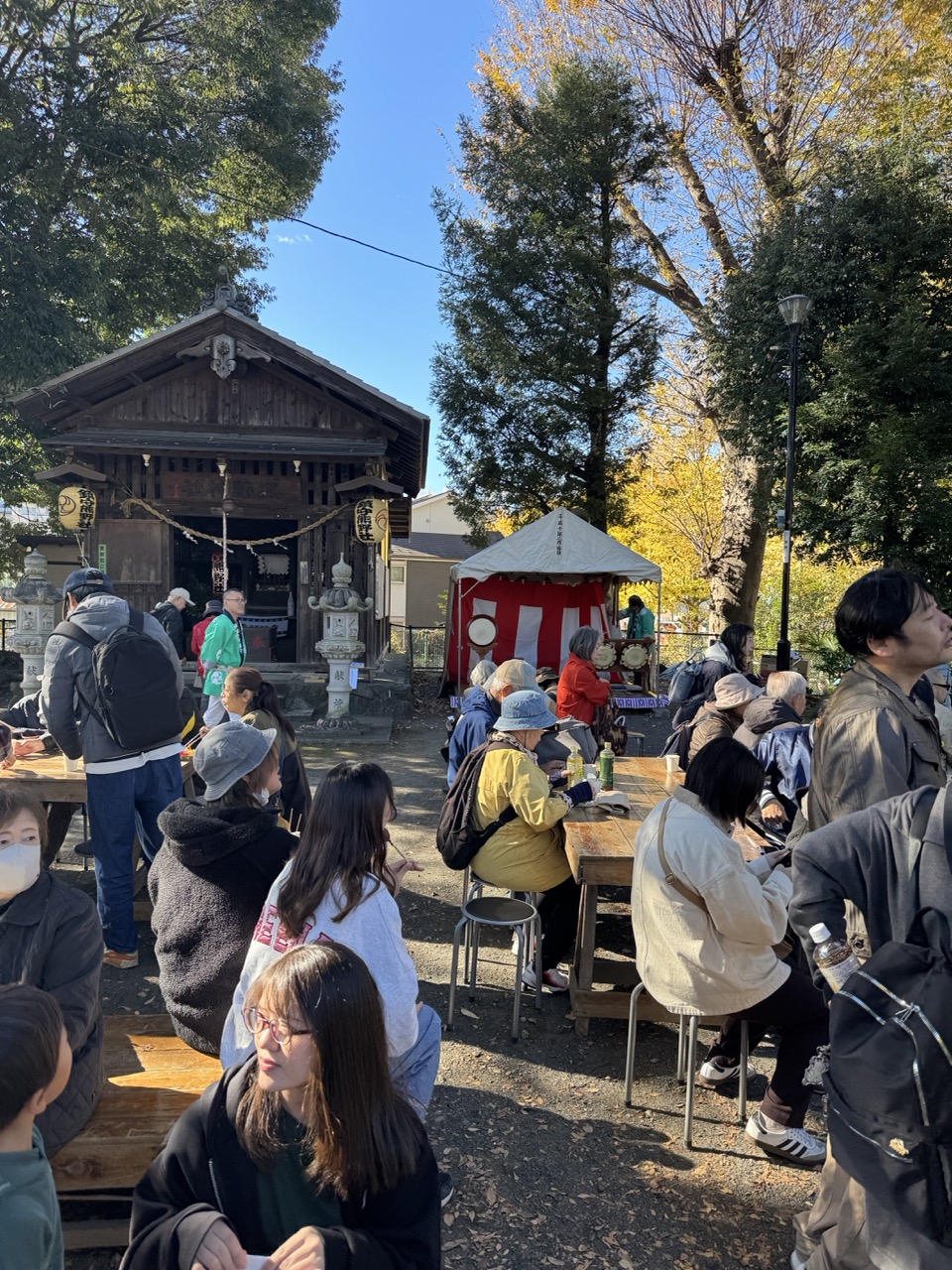
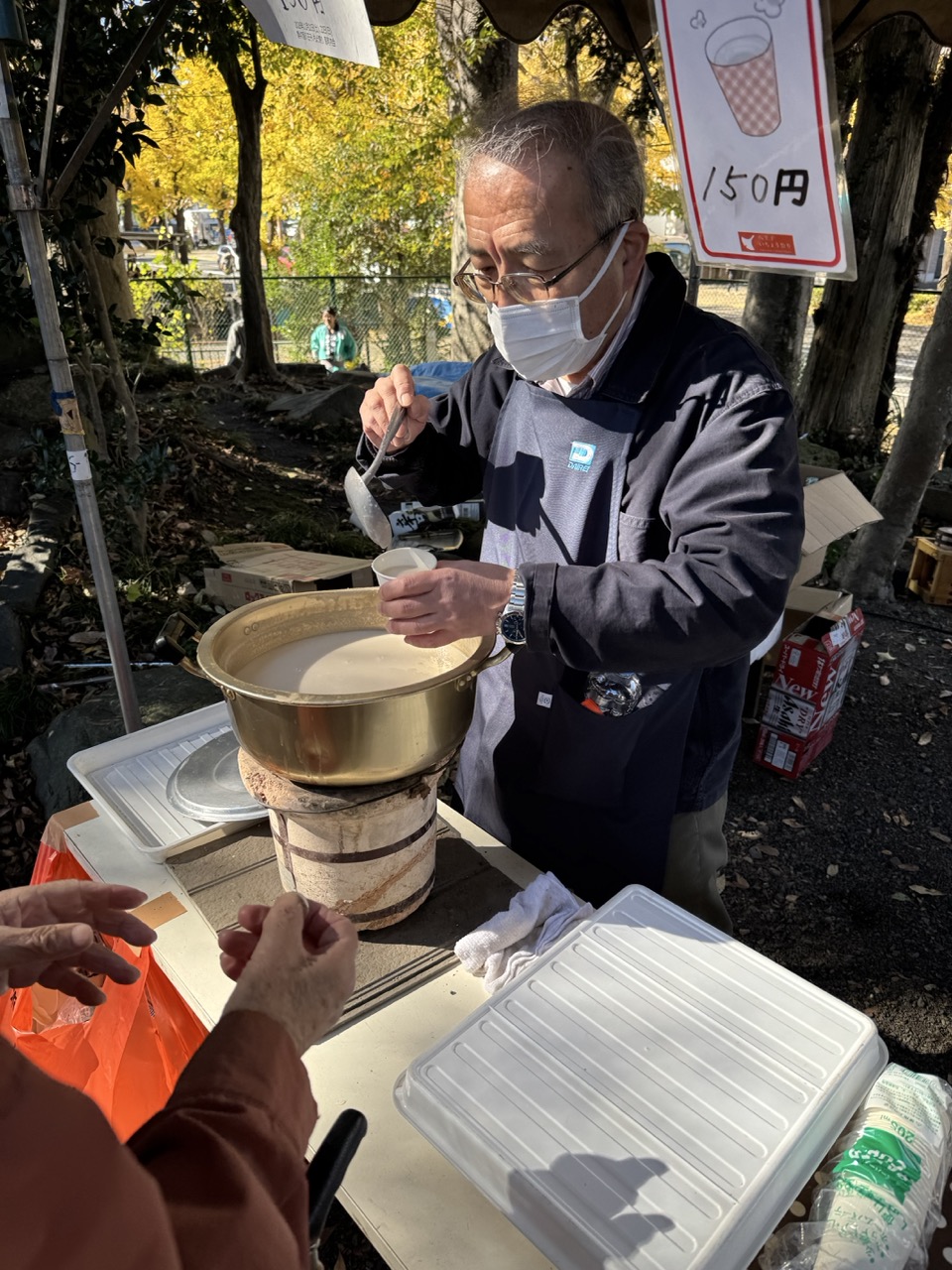
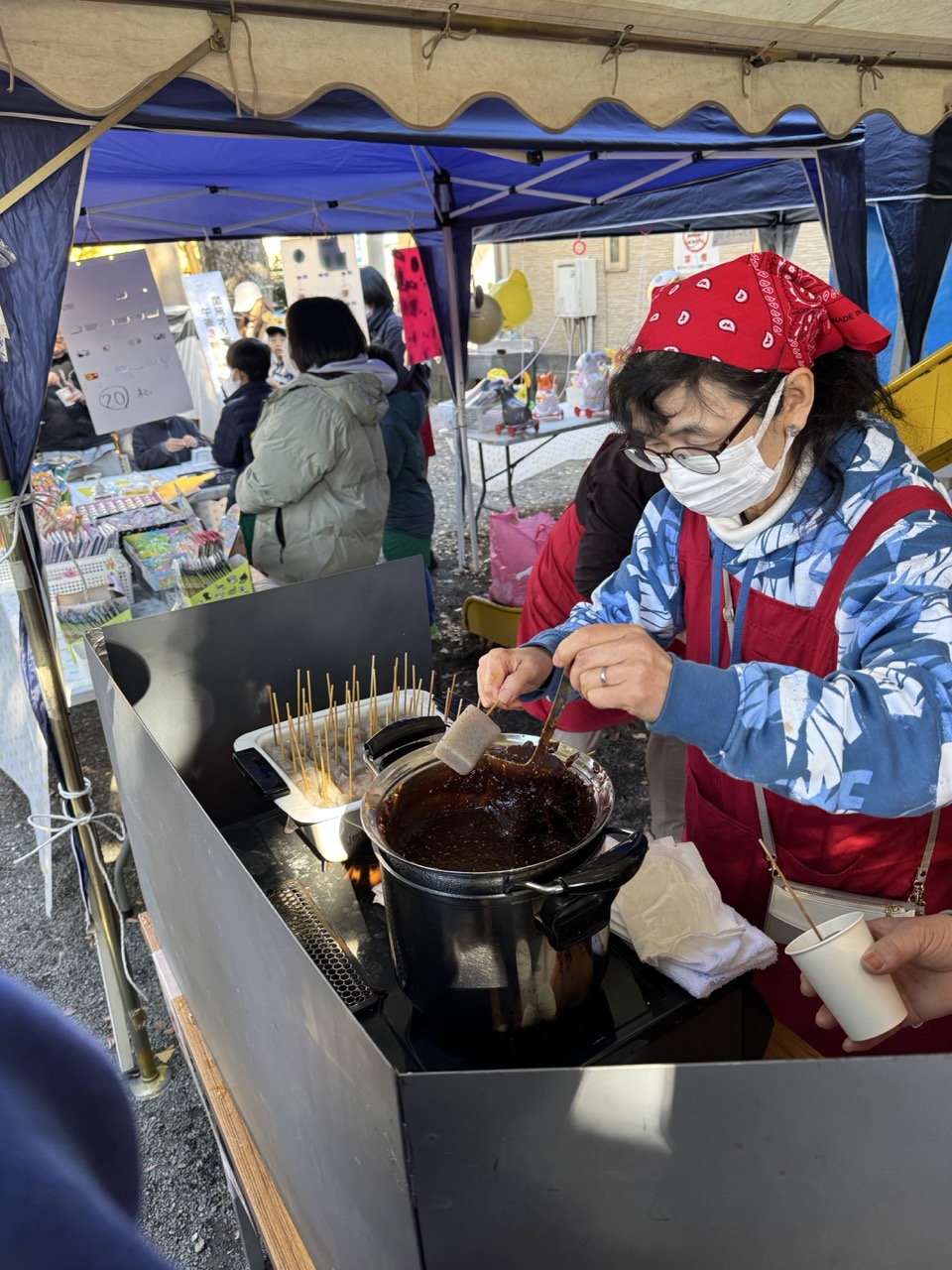
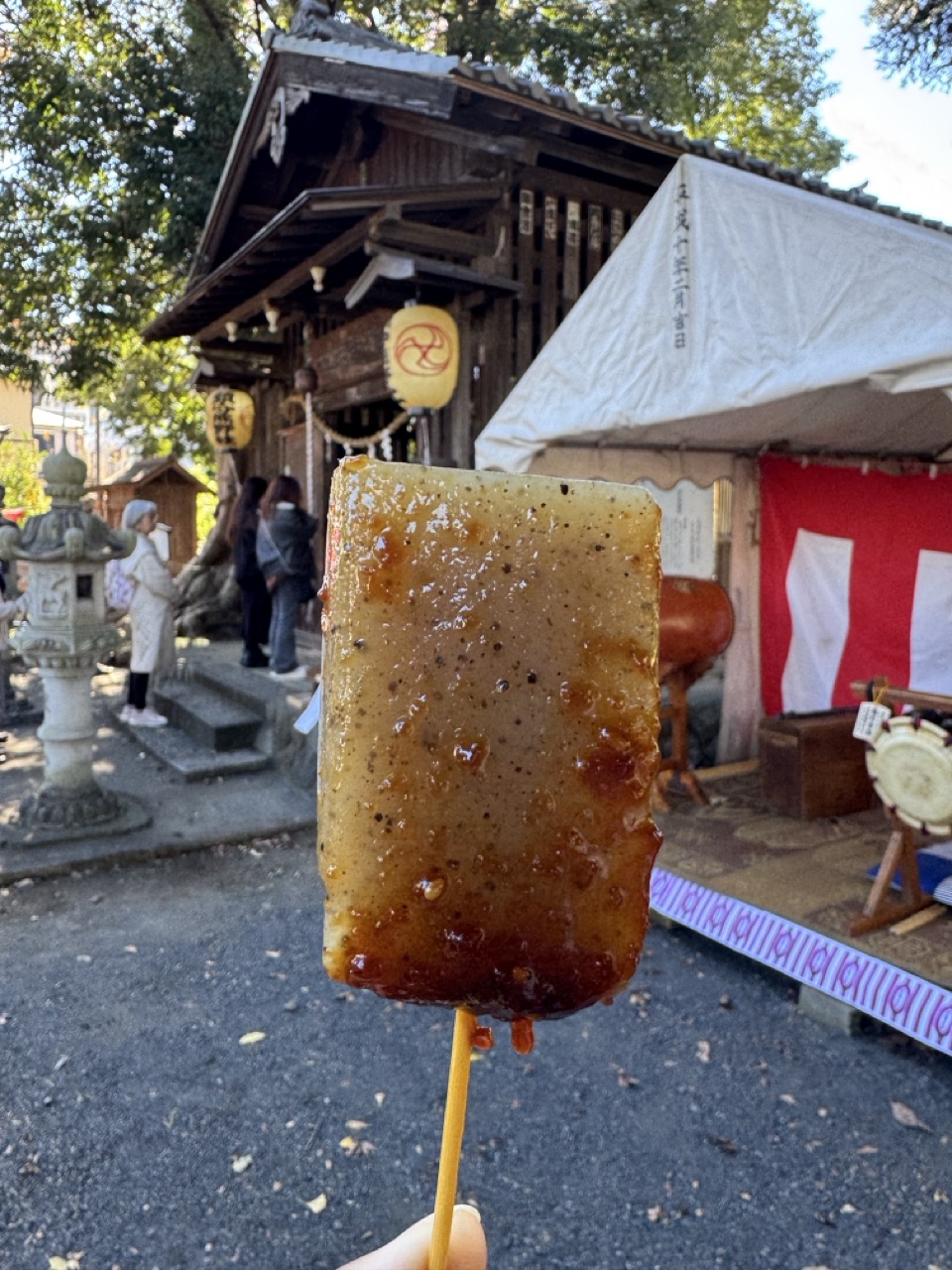
The best value of the day was food at a shrine near Ryonan Park. Prices were low and the quality was high. We had a cup of amazake (甘酒, literally "sweet sake") for 100 yen, and two konnyaku dengaku skewers with miso sauce, also for 100 yen. Those skewers were the best price and the best taste I found all day.
Start with the drink. Amazake is a thick, creamy, cloudy white drink with a natural sweetness, and the name can mislead you. It is made from steamed rice, rice koji, and water, much like sake, though the same source says a shortcut version uses sake lees mixed with hot water and carries trace levels of alcohol. So there are two kinds: a rice koji version with no alcohol, and a sake lees version with a little. A hot cup at 100 yen warms your hands as well as the rest of you.
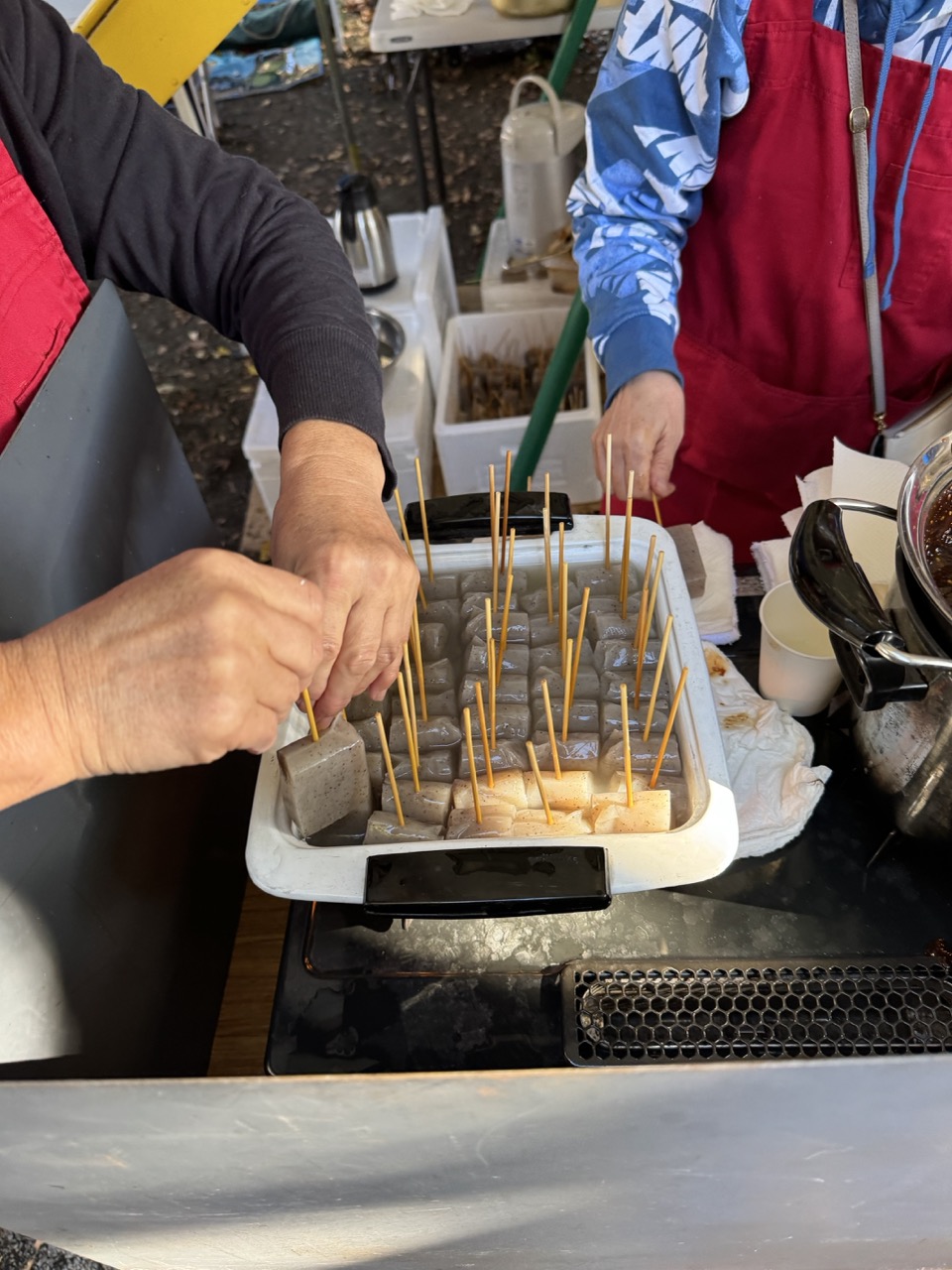
Then the skewers. If you have not met konnyaku before, it is a jelly made from the konjac plant, and konnyaku is a type of jelly made from a yam. On its own it has very little flavour, which is why the sauce matters. The texture is firm and springy, with a bounce that surprises people who expect something soft like gelatin.
Dengaku is the style that makes it work on a stick. These blocks are usually served on skewers with a rich, sweet miso sauce spread over the top, and the same source notes that konnyaku is low in calories and high in fibre. A cooking site describes dengaku miso as sweet but also savoury, which is a good description of why a hot skewer is so satisfying in cold weather. Together the drink and the skewers made a light, warm, cheap lunch that did not weigh me down before a climb.
Wandering the Food Stalls Before the Band
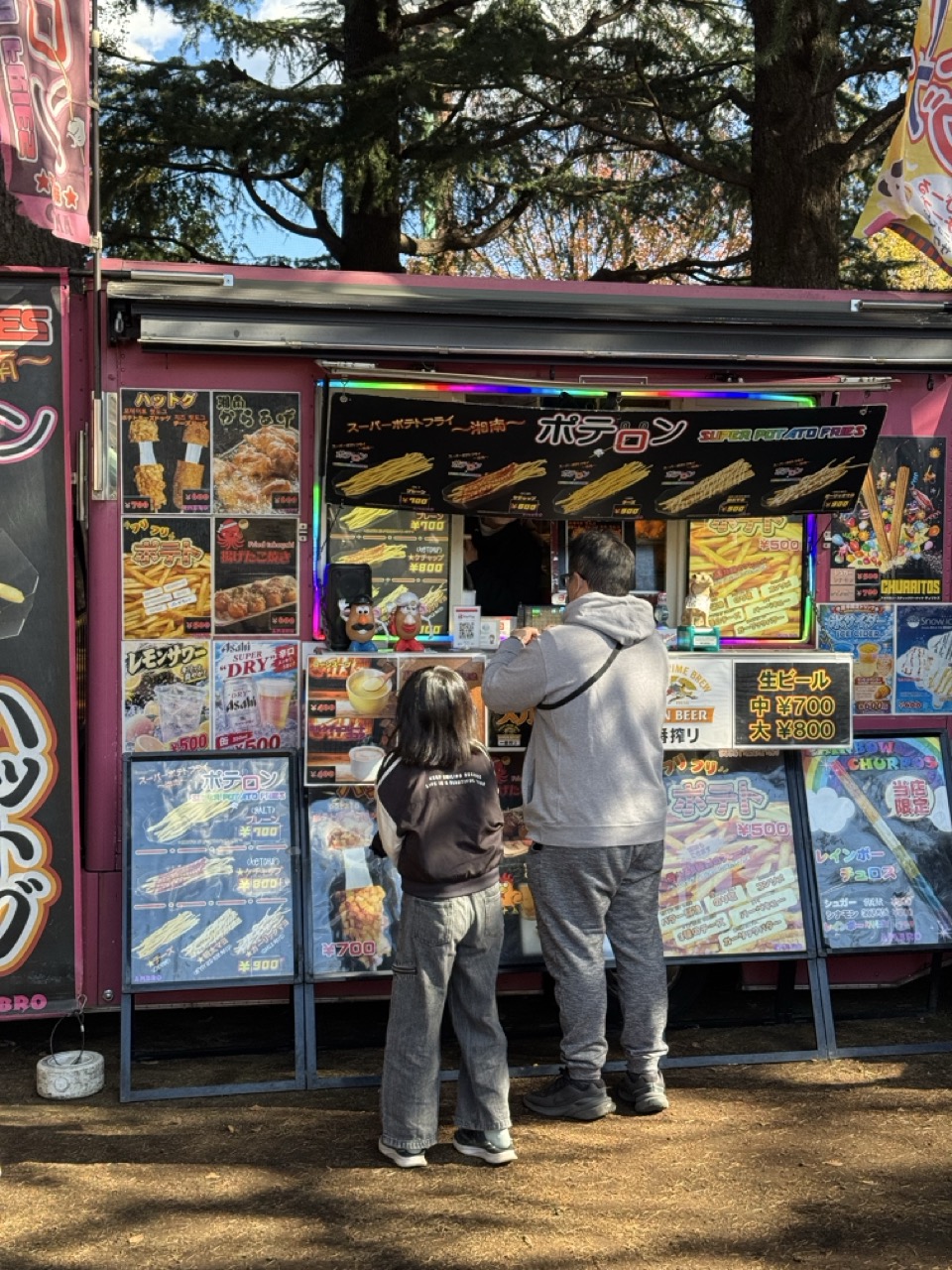
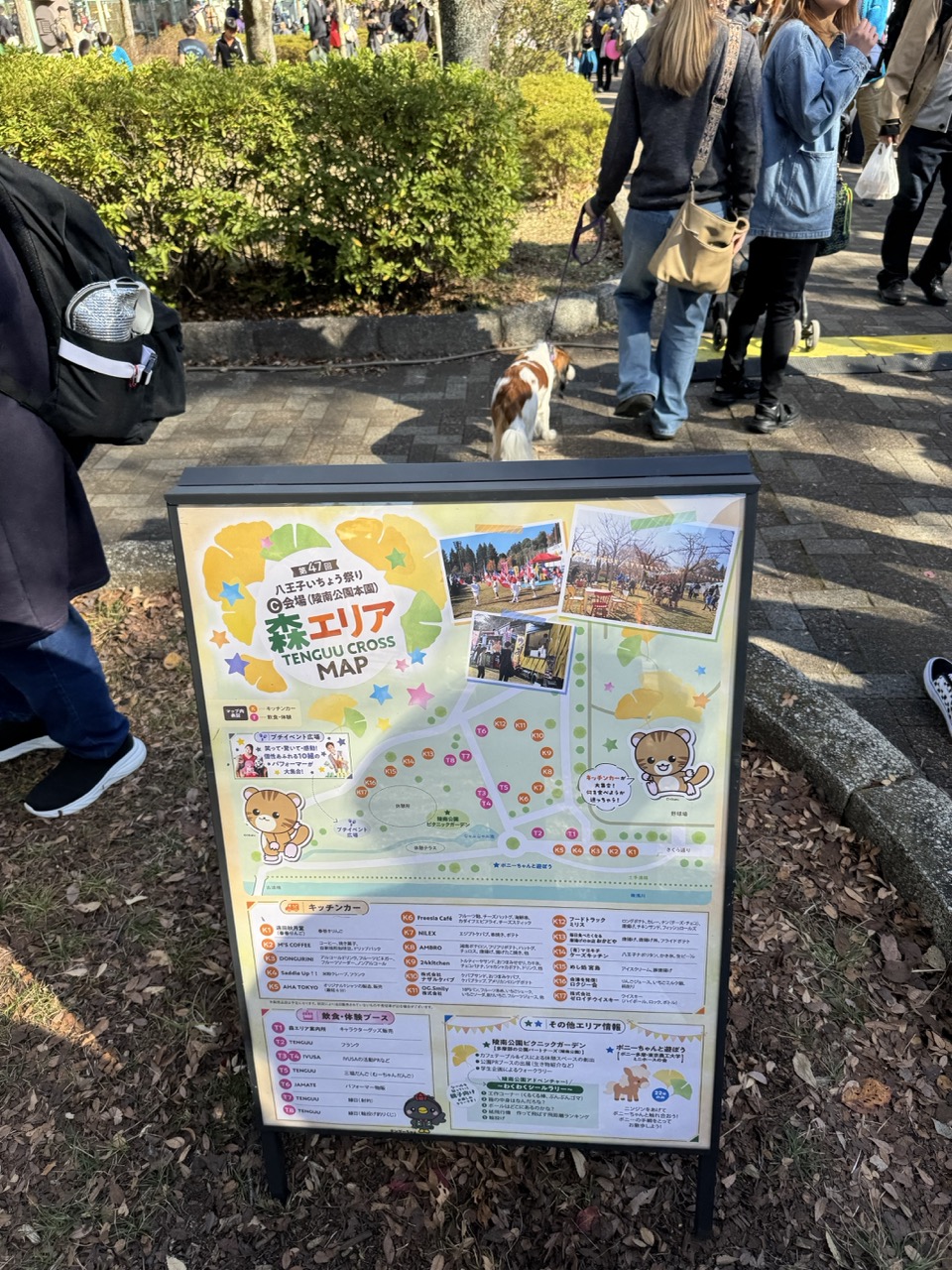
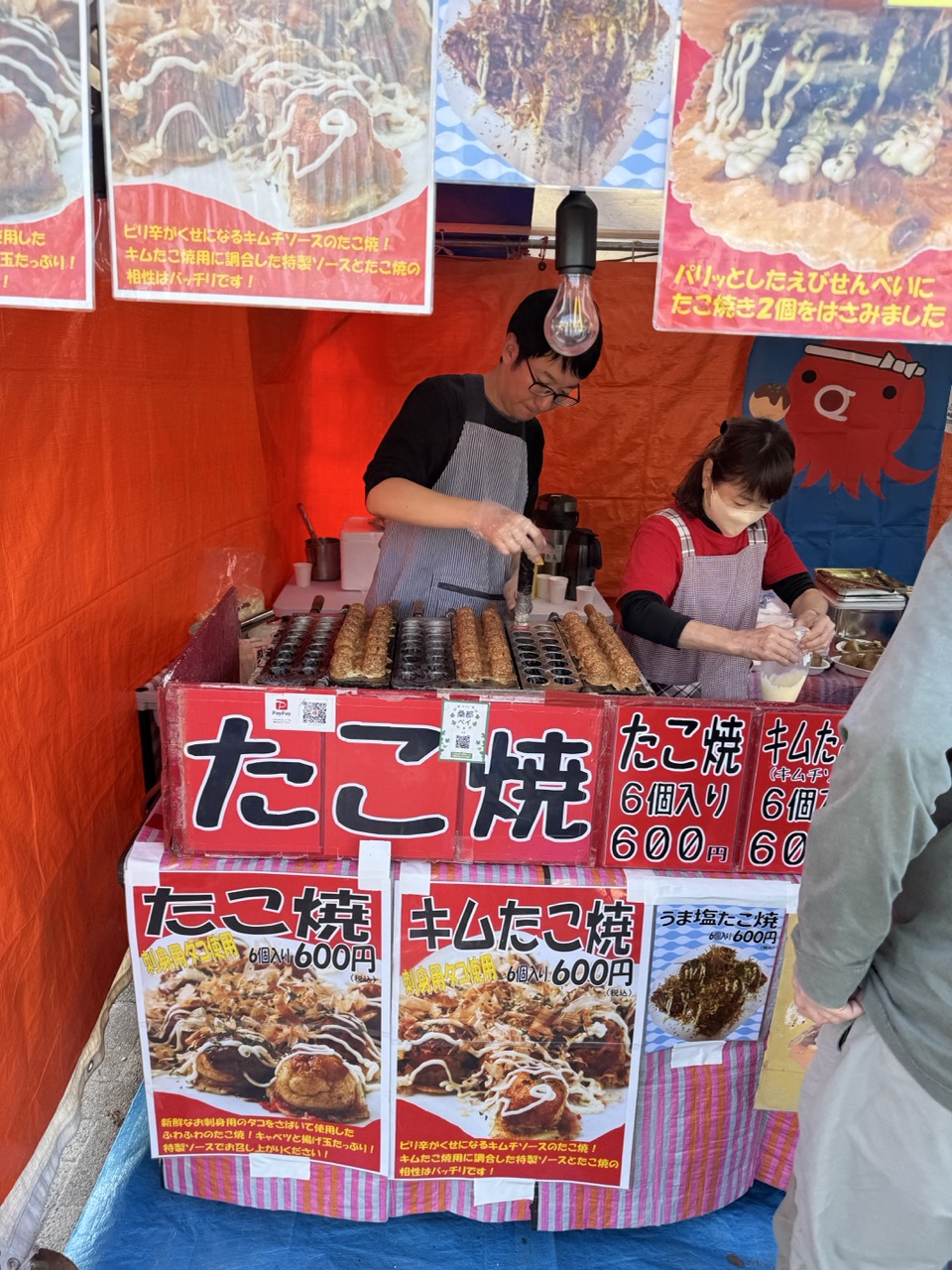
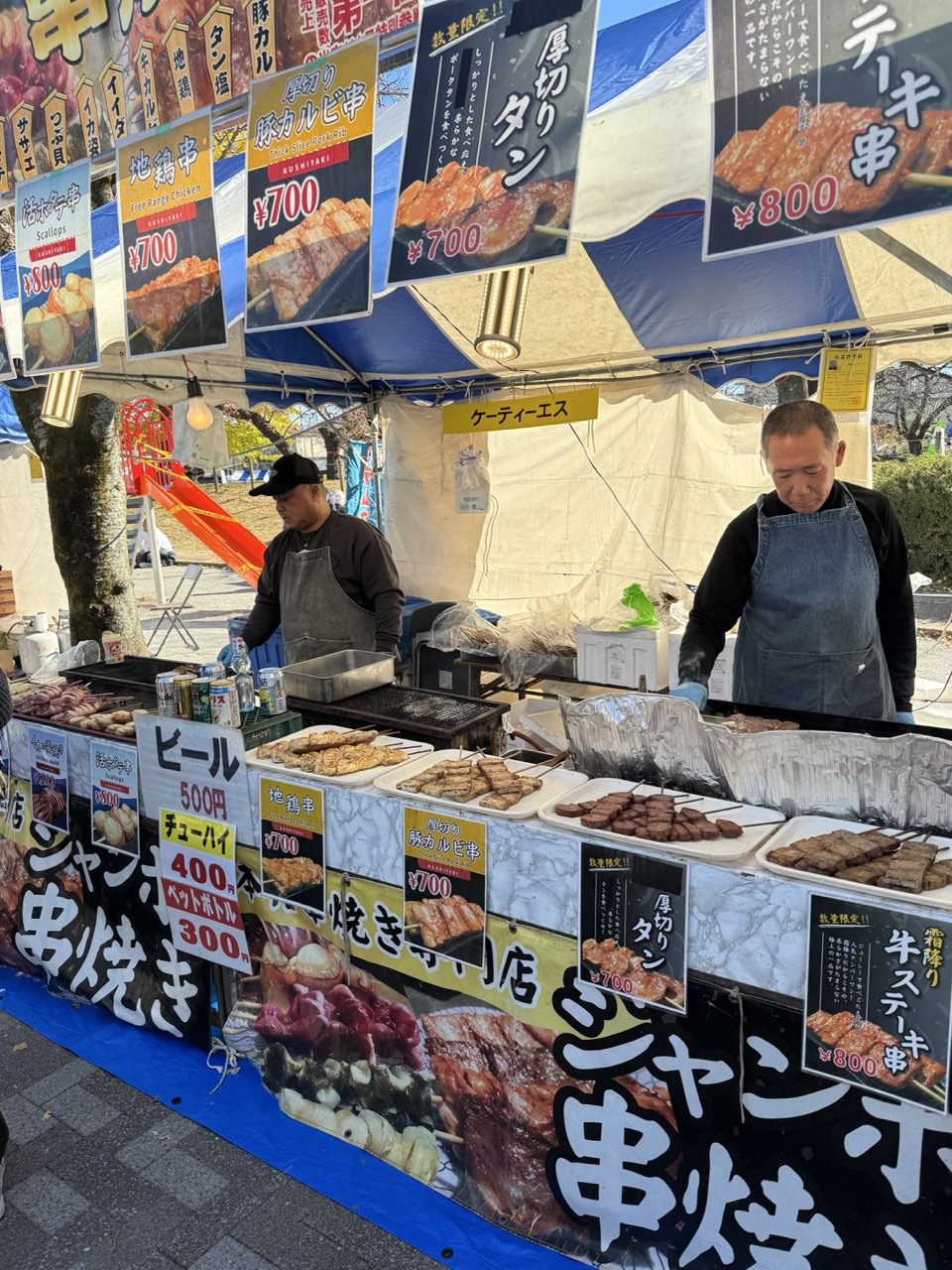
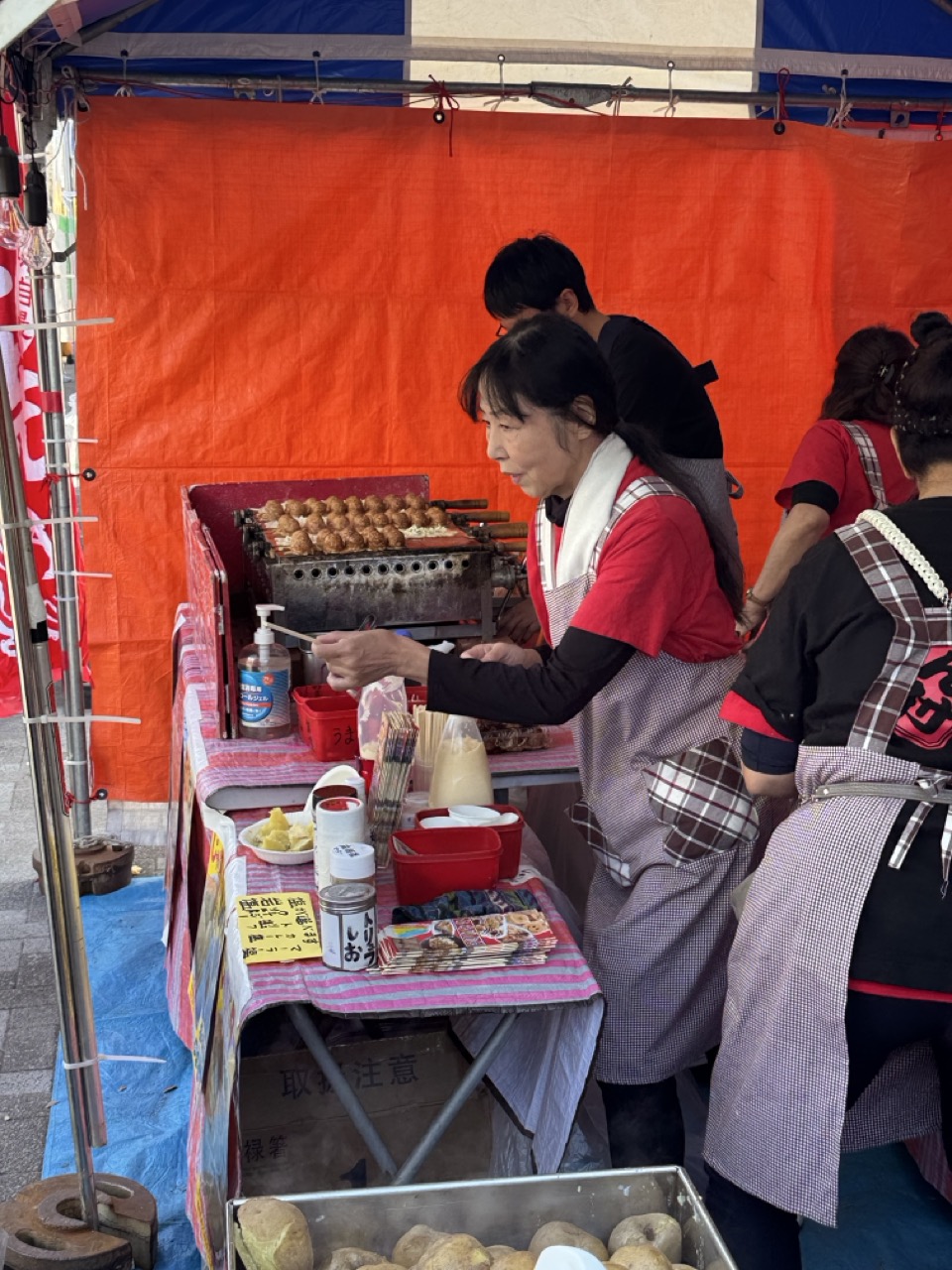
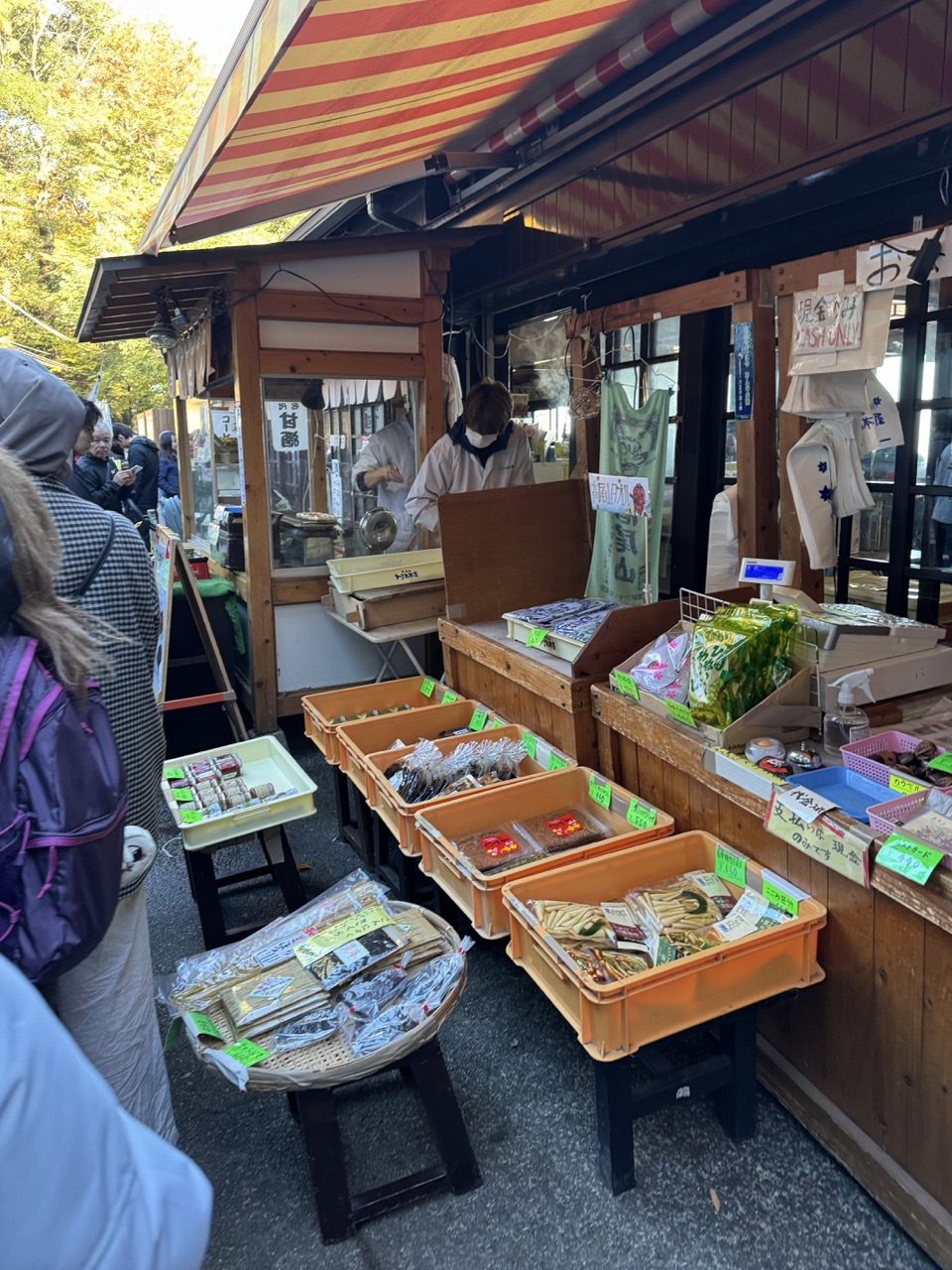
We wandered around all the different food stalls and tried a bit of everything. That is the right way to do this festival, because the food is spread along the avenue and around the main venues, not in one food court. About 300 stalls take part, and it names Hachioji ramen as one of the local dishes you can find.
The stalls come in two main kinds. A Japanese festival guide describes a local bazaar run by residents and nearby shops, and a separate tourism market with specialty products from other regions, with the main areas near the Tama Goryo entrance and Ryonan Park. That mix explains why the food felt so varied: some stalls sell the sort of snacks you expect at any festival, and others sell regional food you would not otherwise find on one street.
The Apple Spring Roll Stall Worth Queuing For
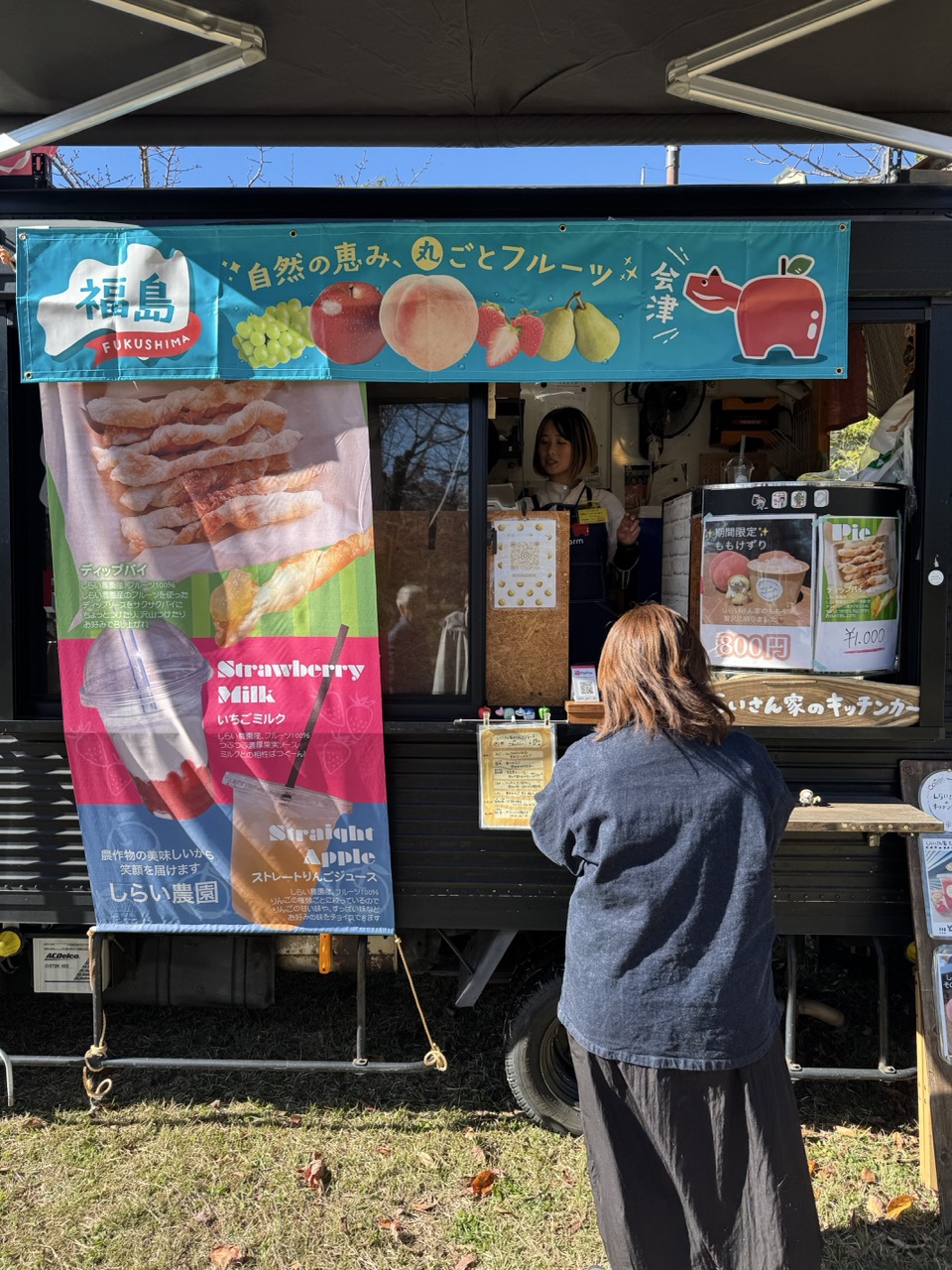
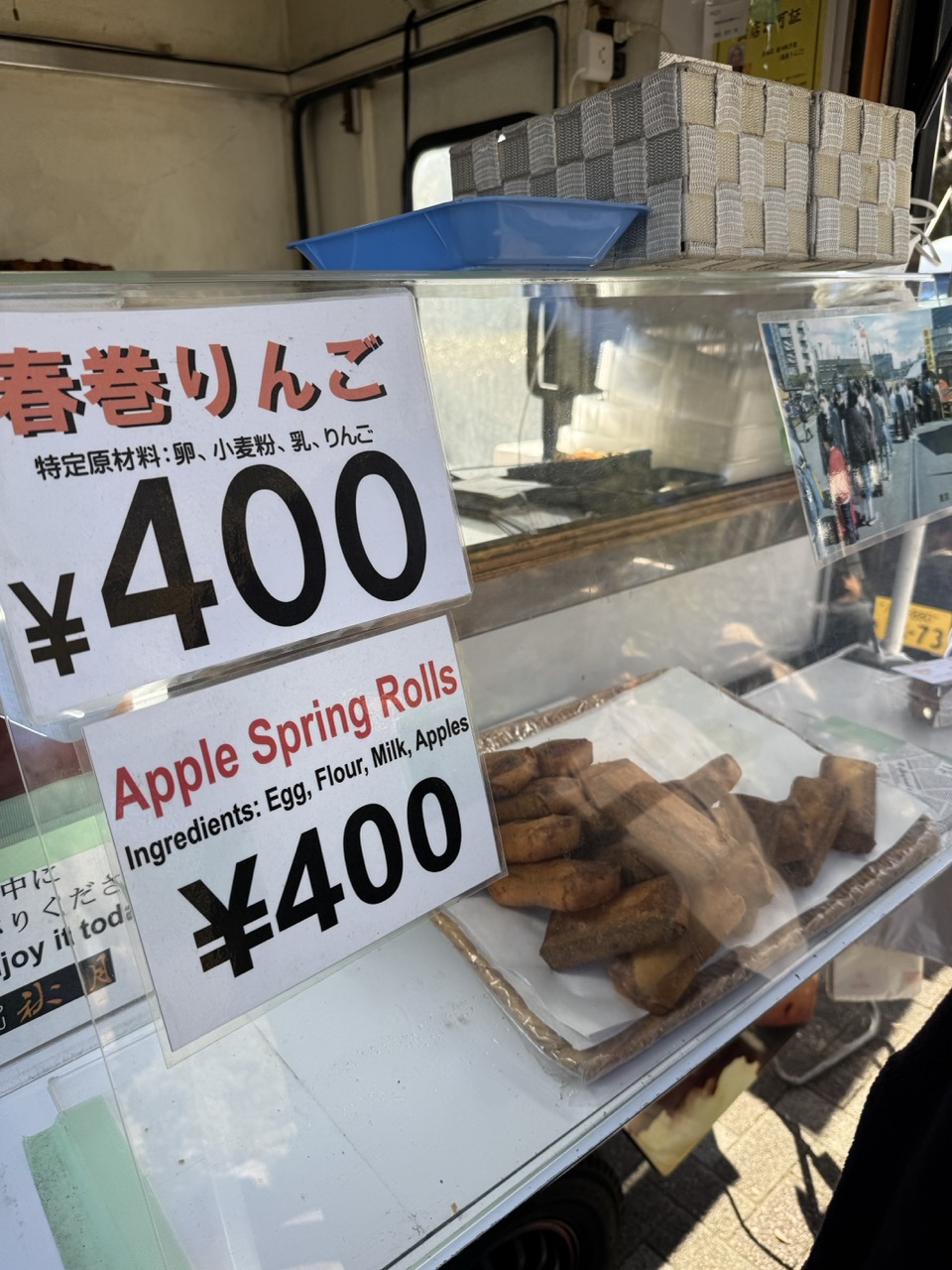
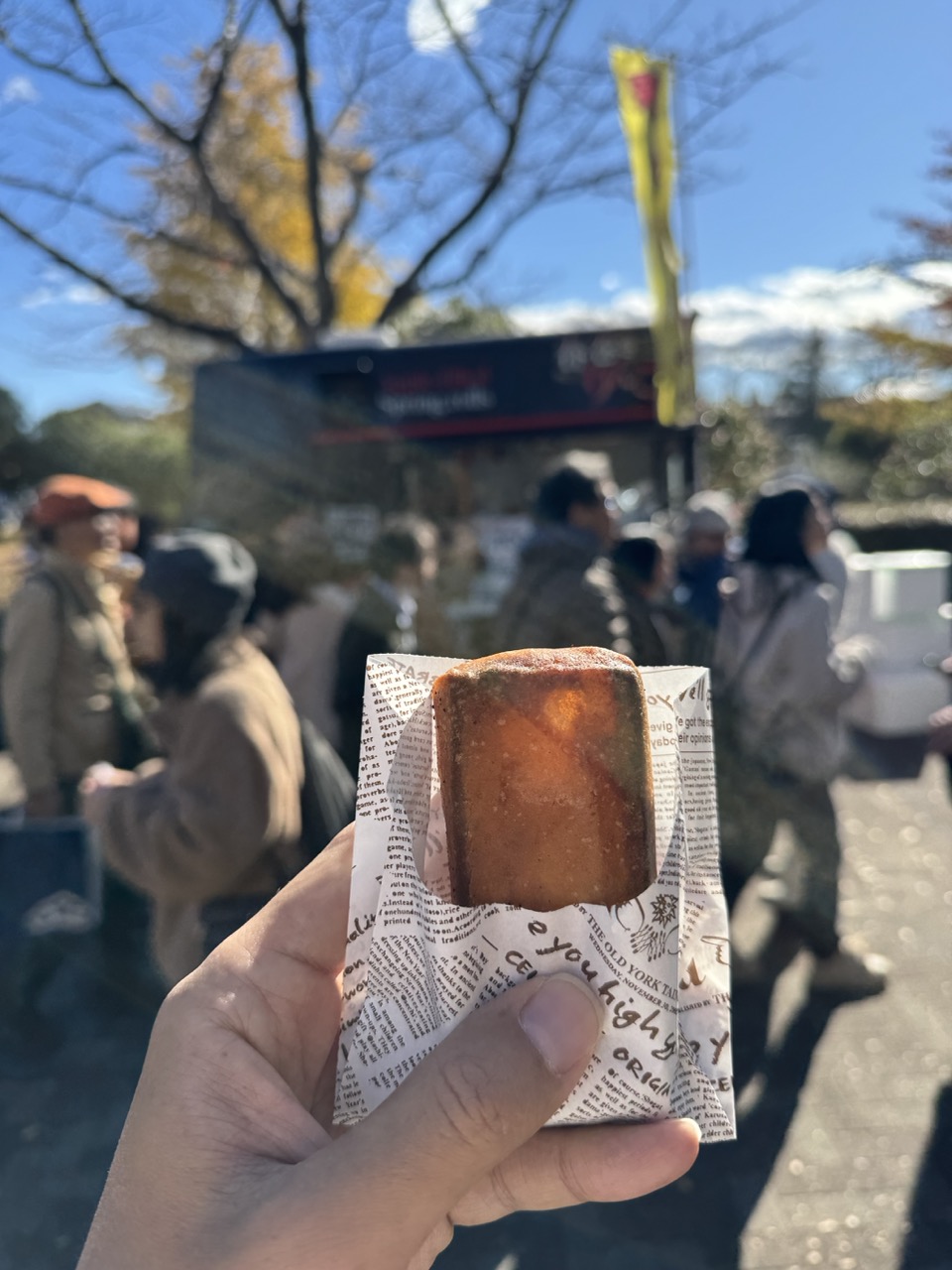
The apple spring rolls were the best thing I ate all day, and they are the reason I would go back. The stall had a long queue, and I would say it was totally worth the wait. The stall's line was the longest I joined at the festival, but it moved, and the people around me clearly knew what they were queuing for.
What made it special was the filling. The apple inside had melted into a soft, hot centre, and it was still hot when I got it. It tasted very good and not too sweet. That last point matters, because many apple desserts lean on sugar. This one let the fruit do the work, which suits a cold afternoon when you want something warm but do not want a heavy dessert before climbing a mountain.
Watching the Marching Band Parade
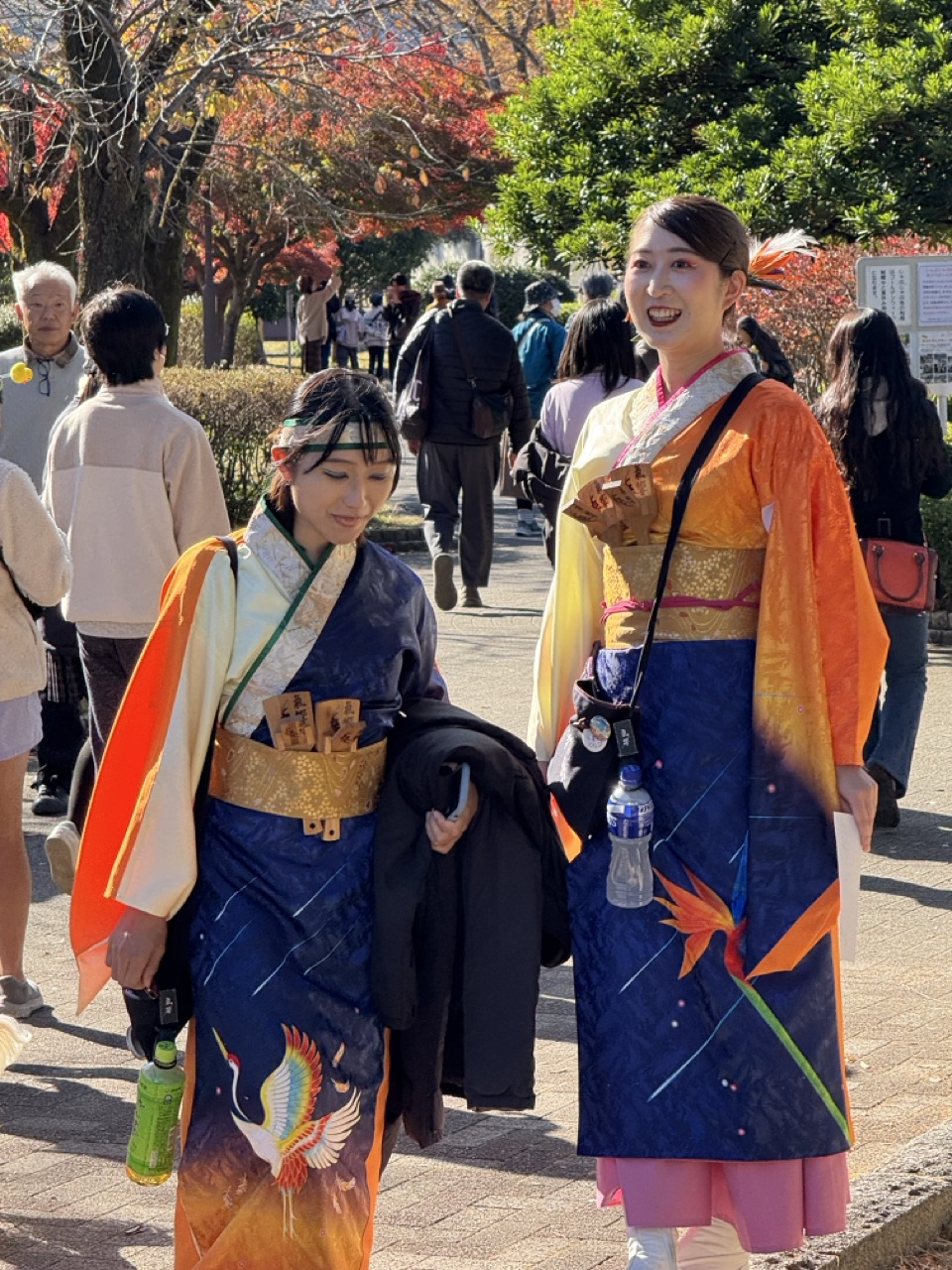
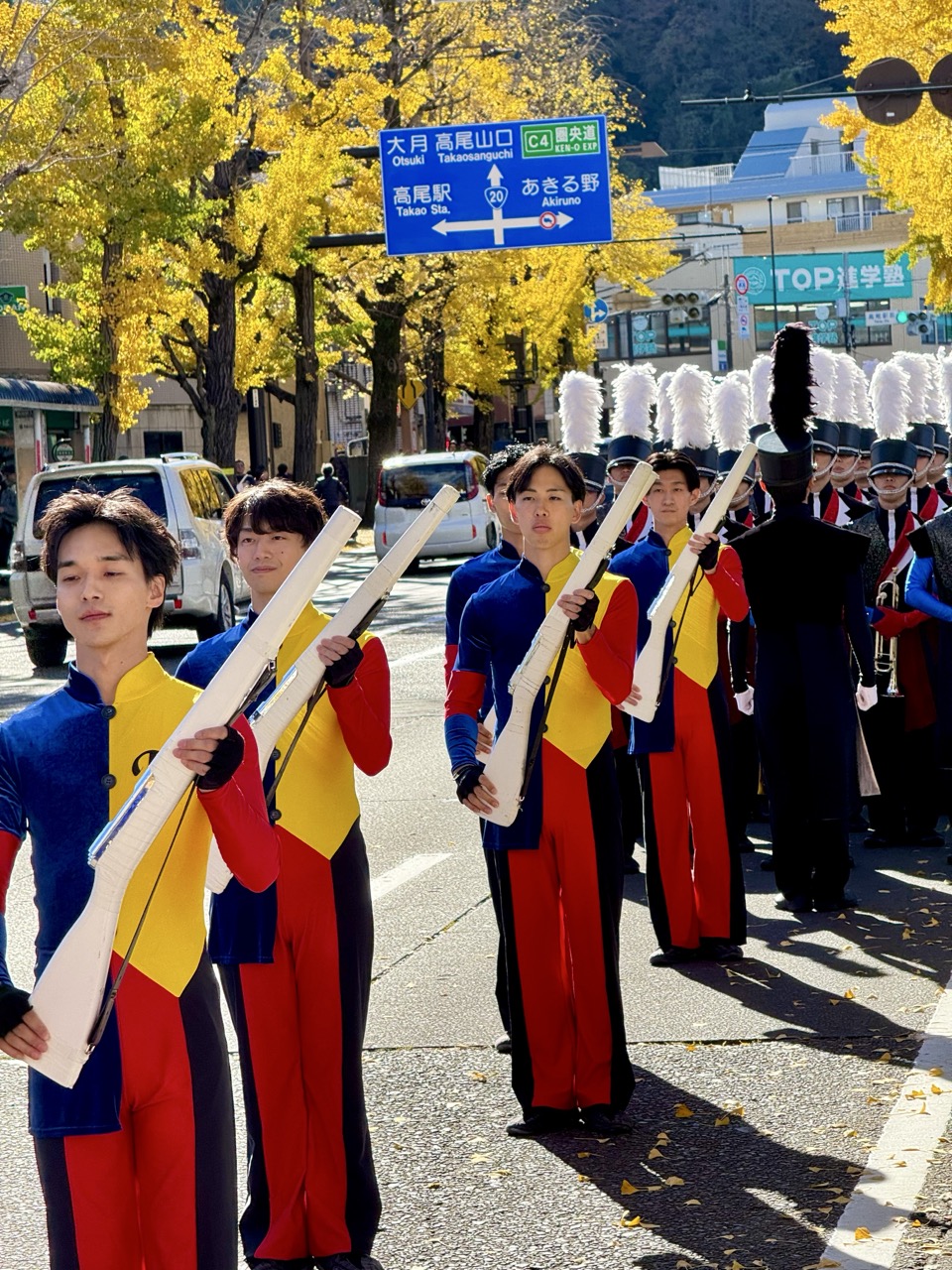
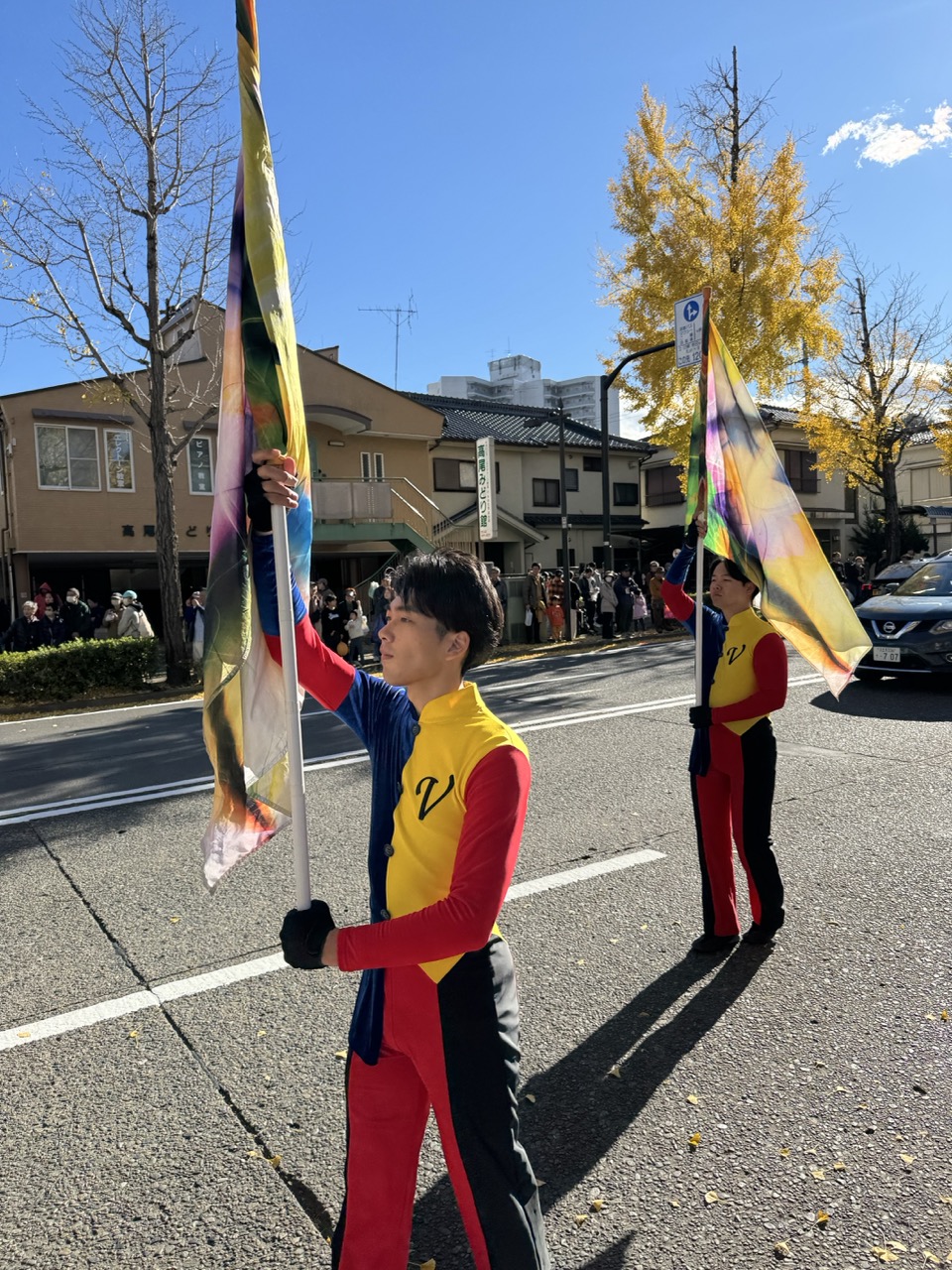
After the food, we watched the marching band on the street. This was the Saturday highlight, and it is worth planning around. According to a local news report, about 150 members of Soka Renaissance Vanguard marched, starting near the north exit of Takao Station at 13:00 and moving along the Koshu Kaido to the Tama Goryo approach.
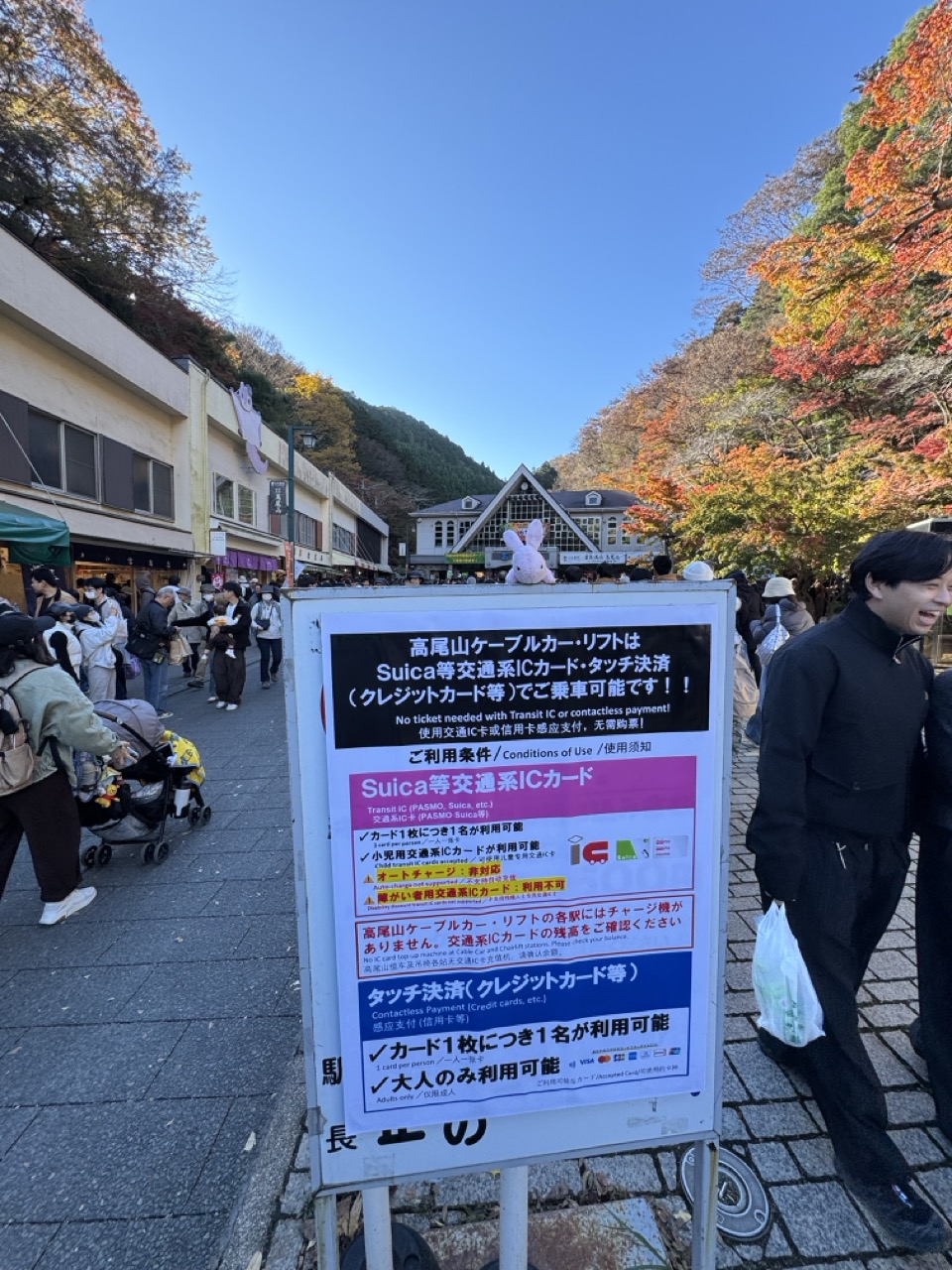
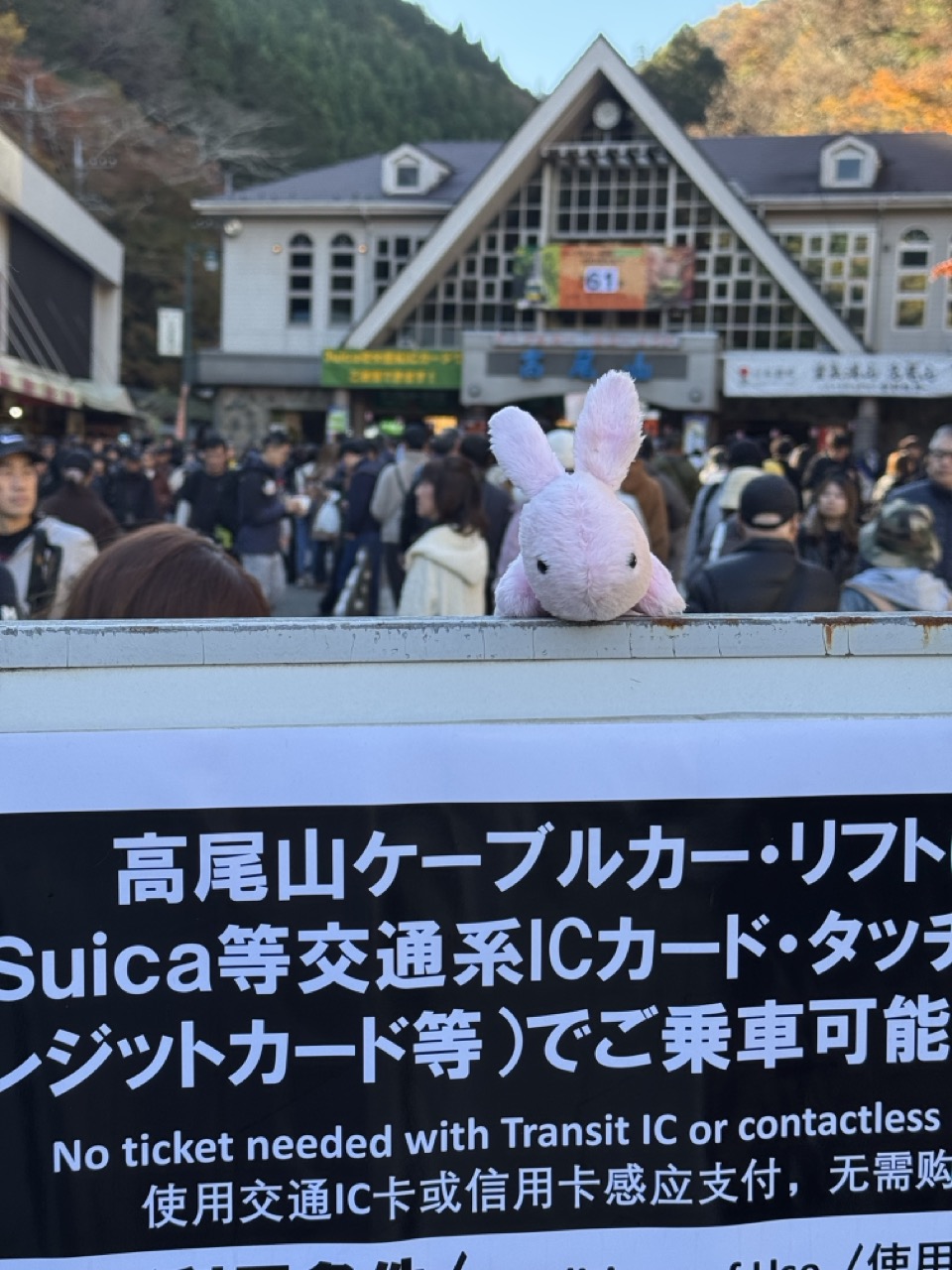
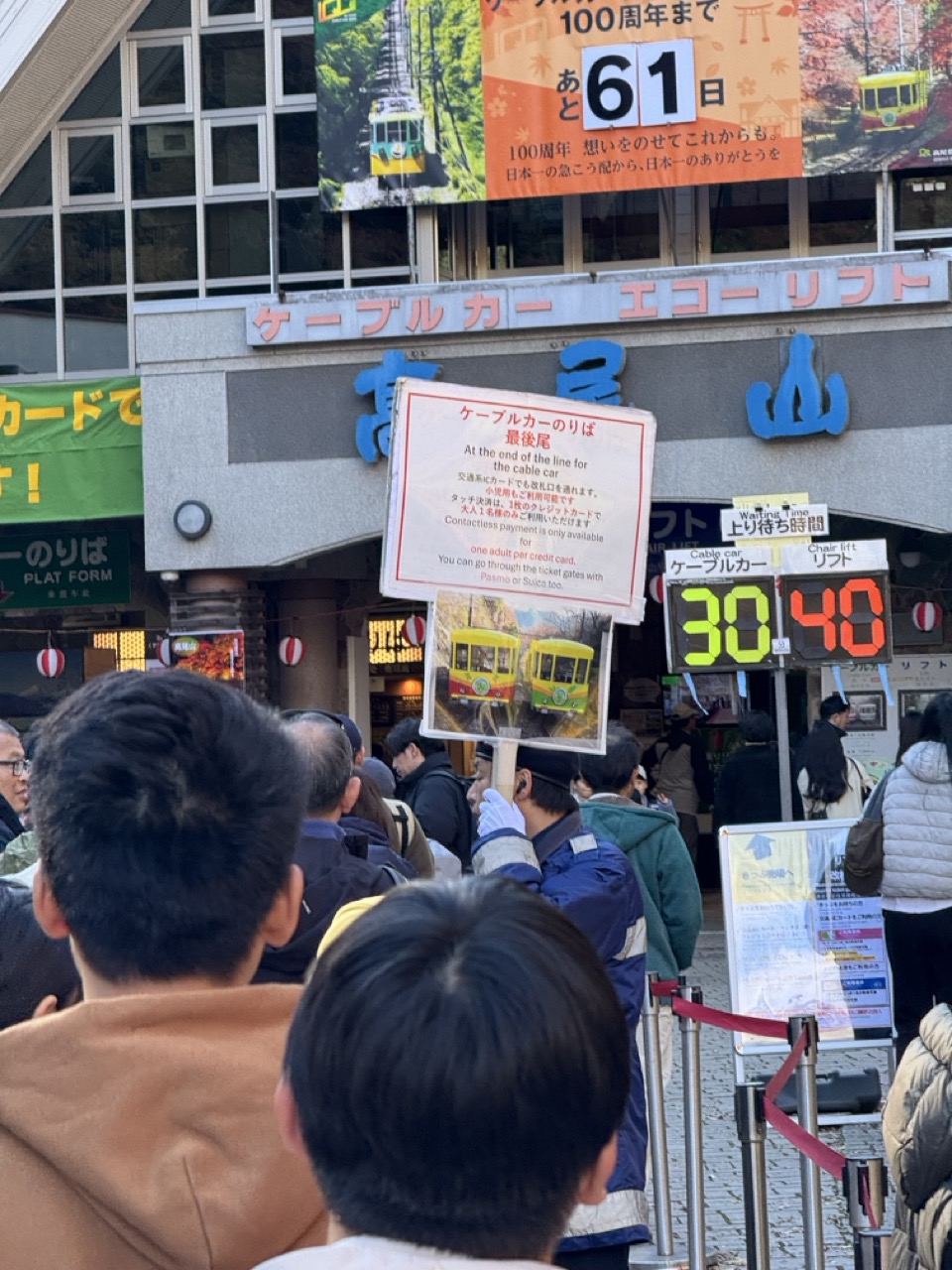
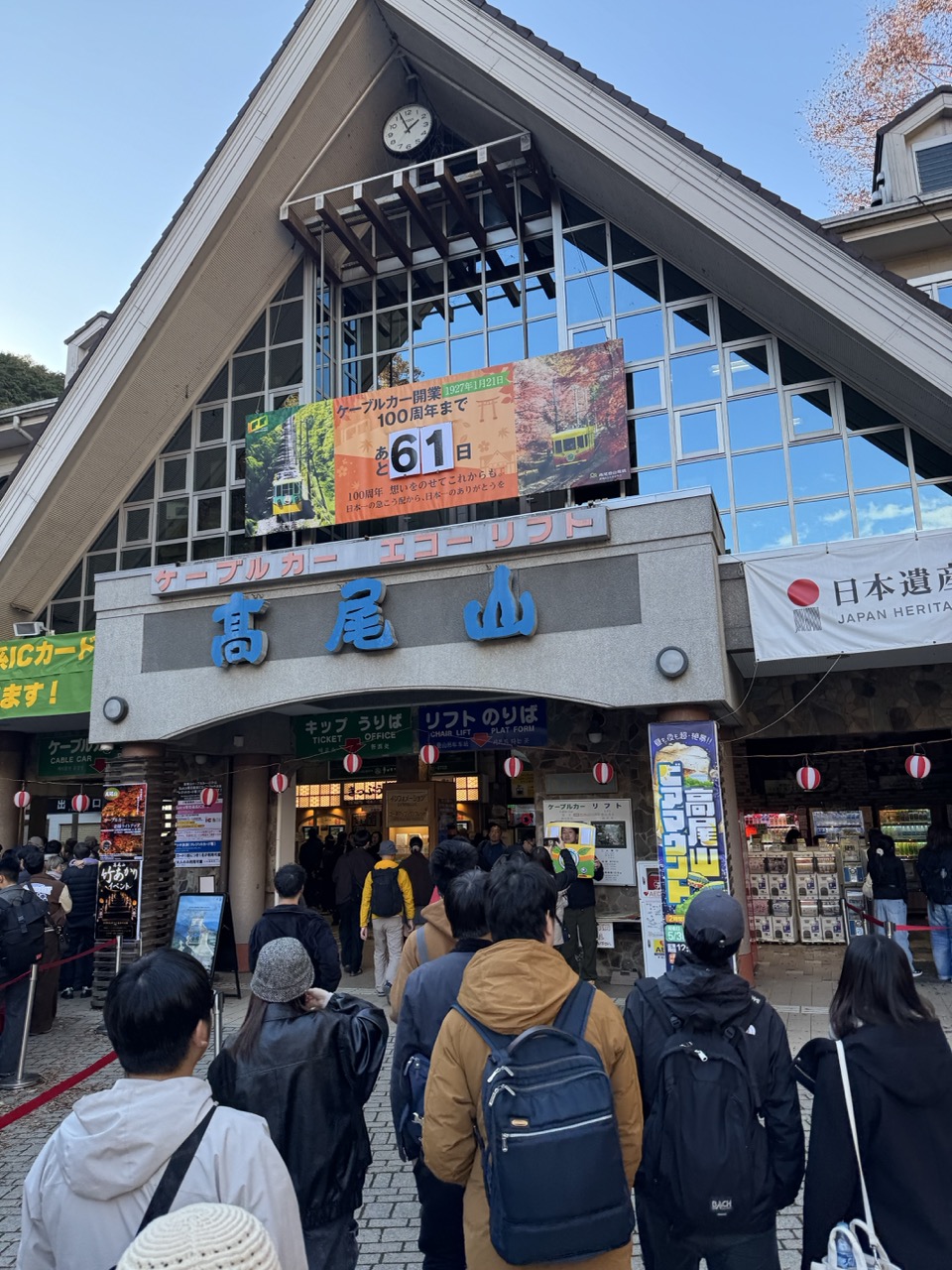
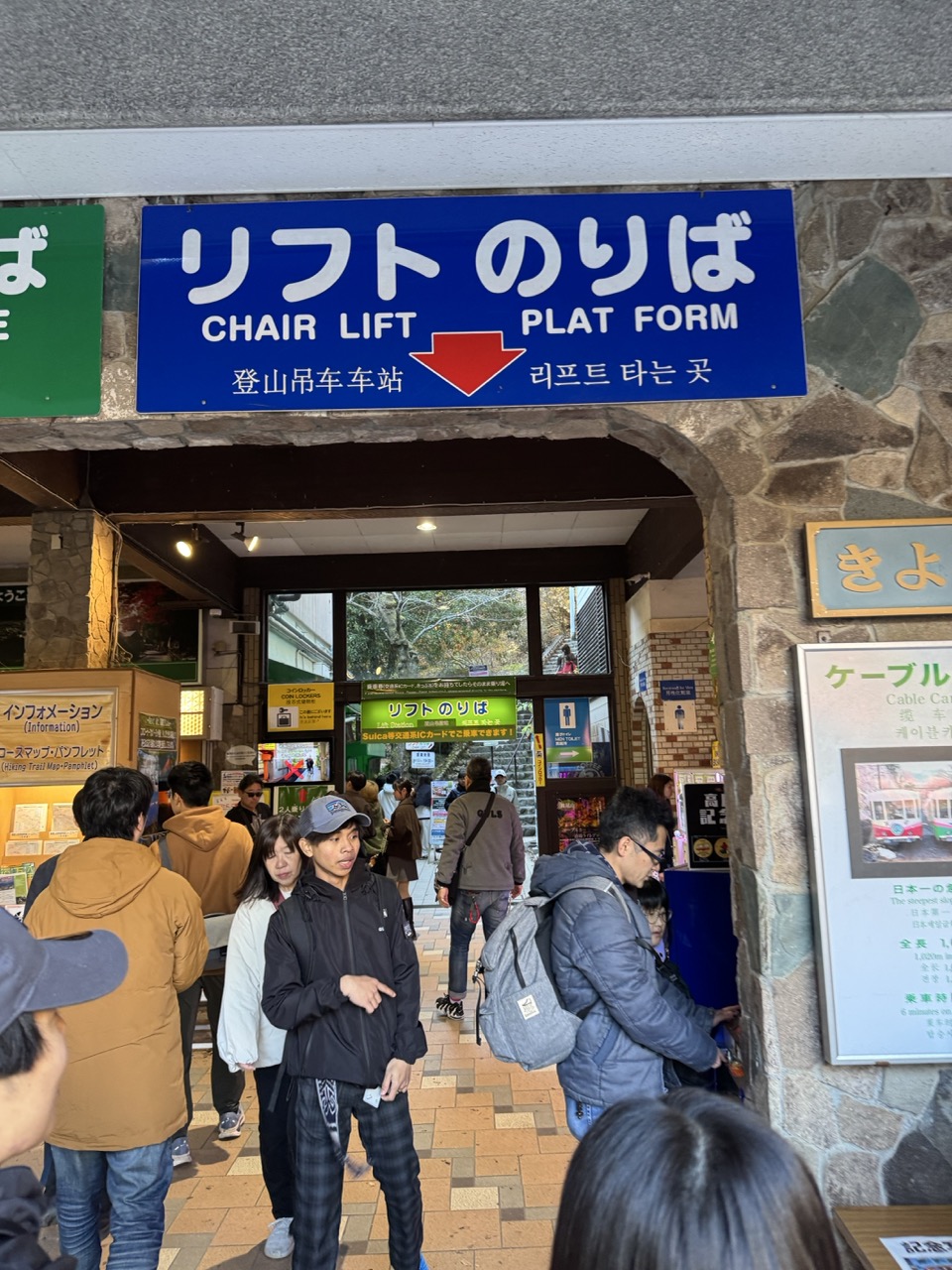
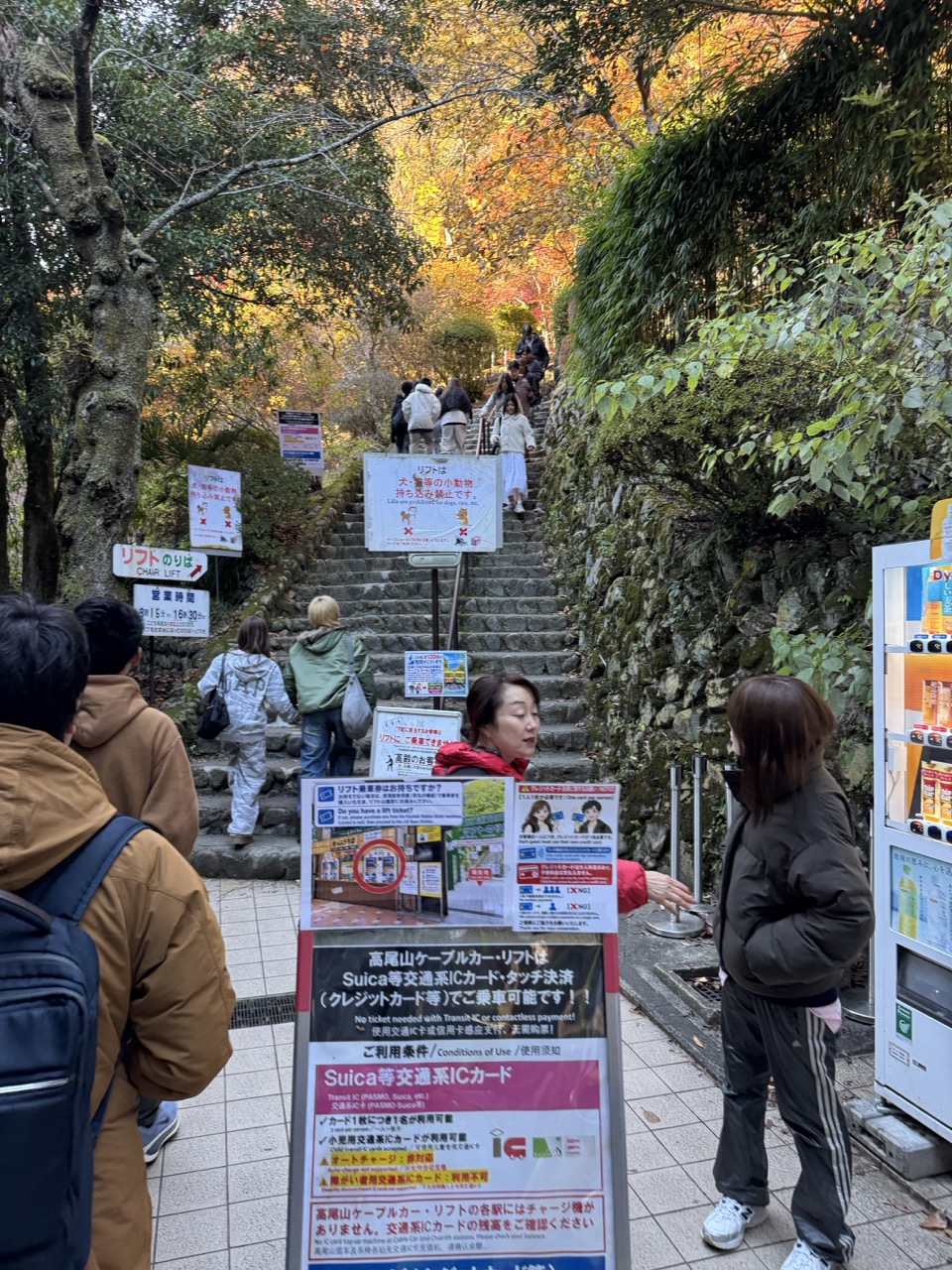
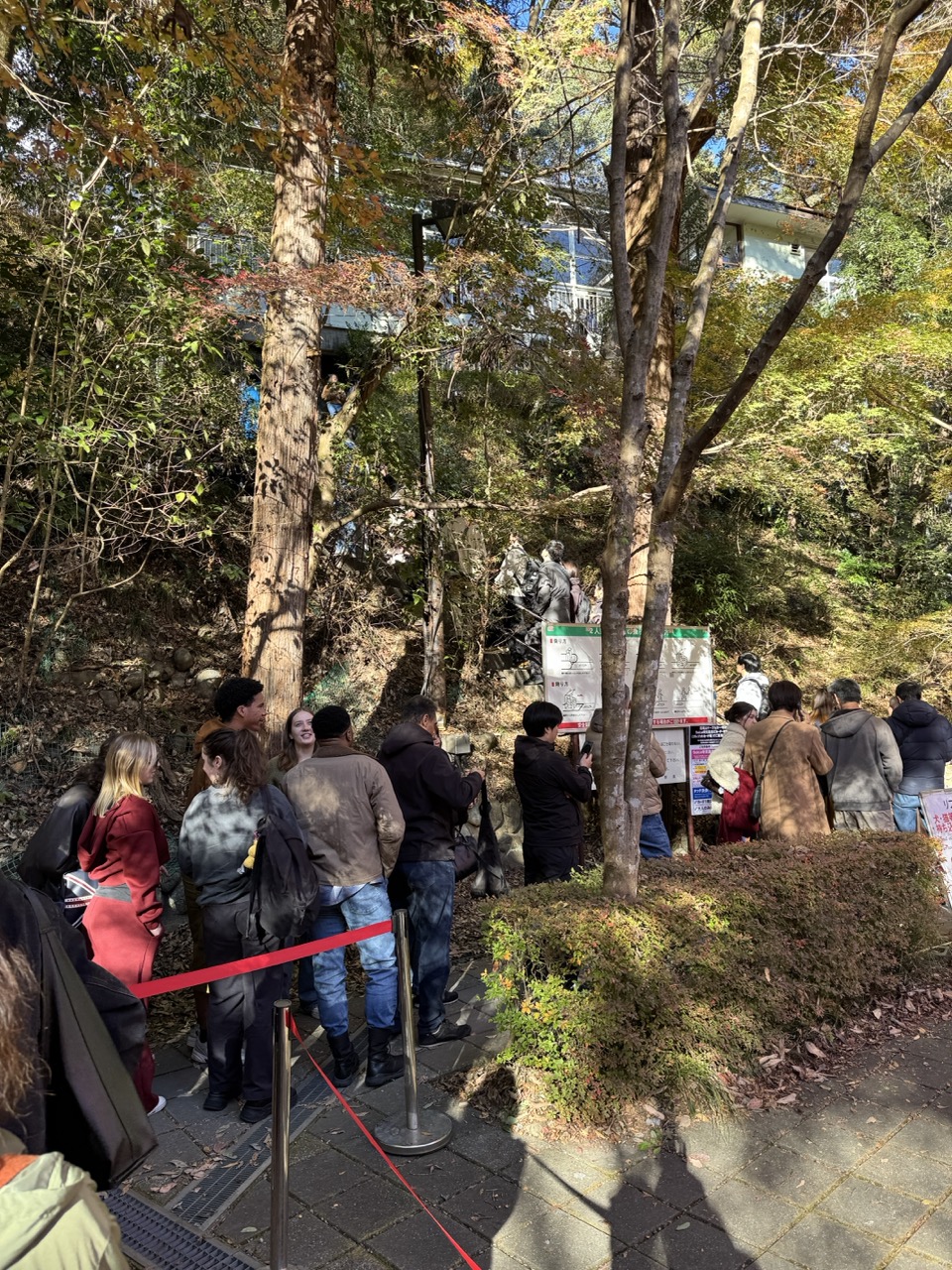
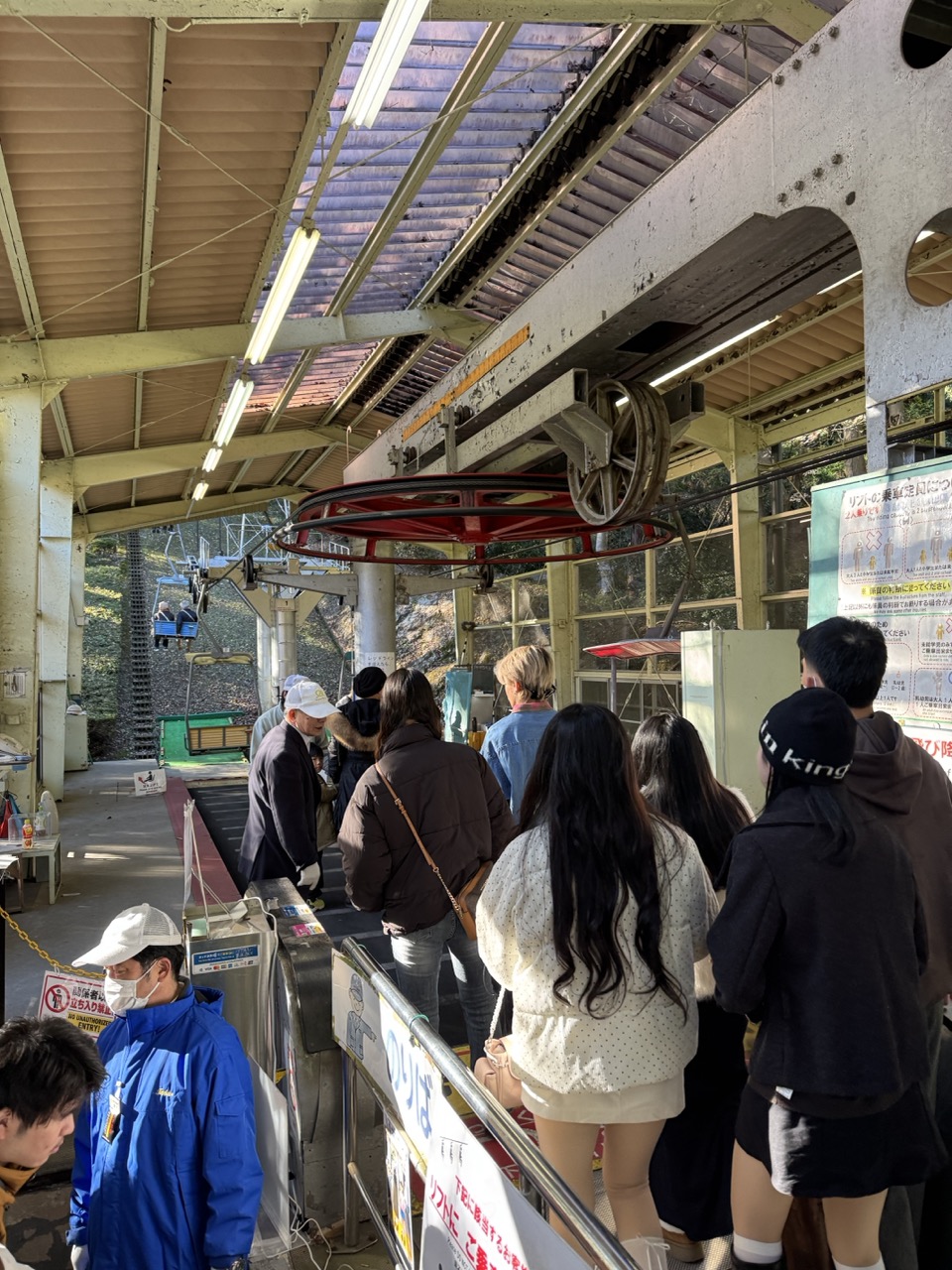
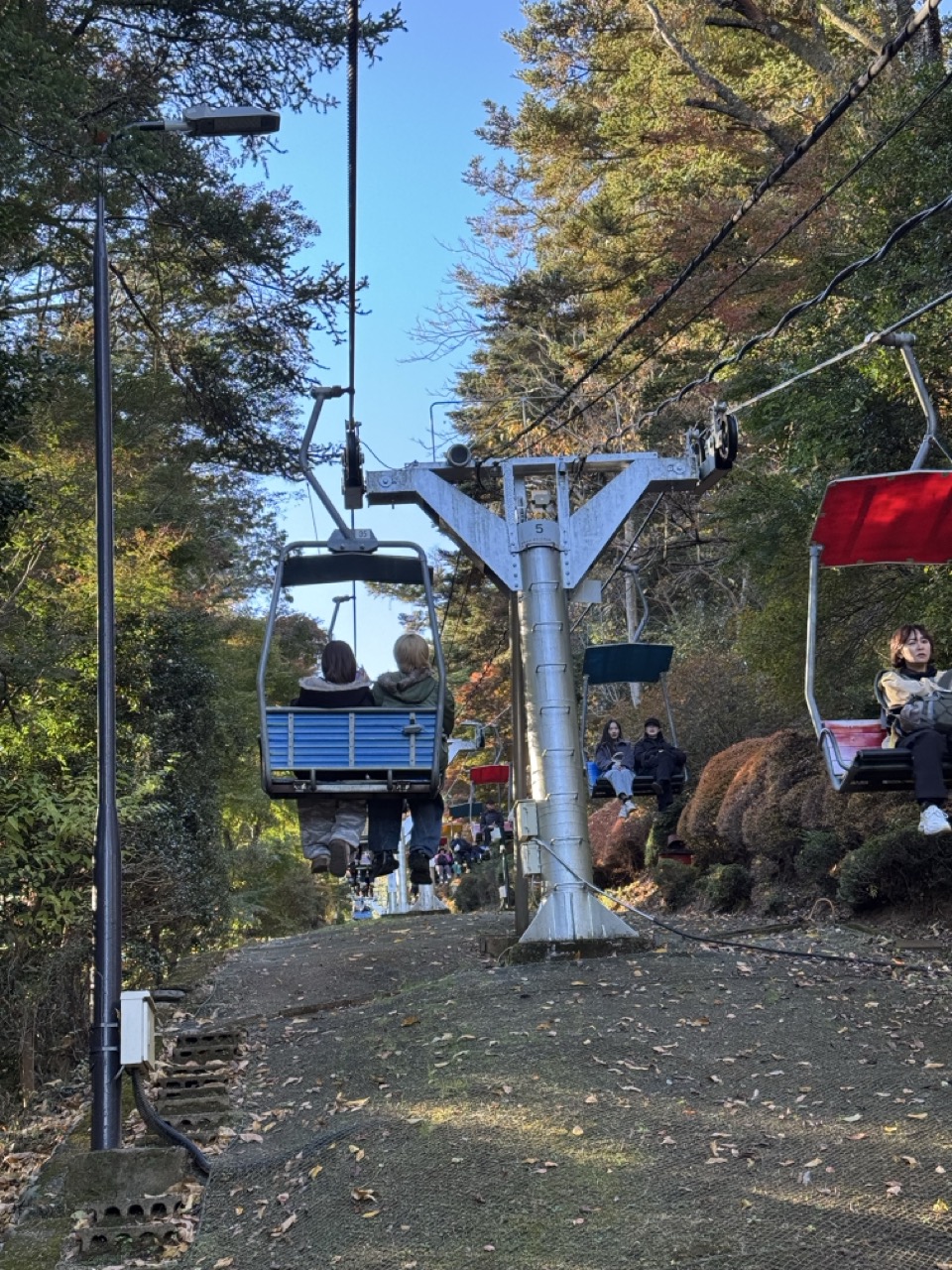
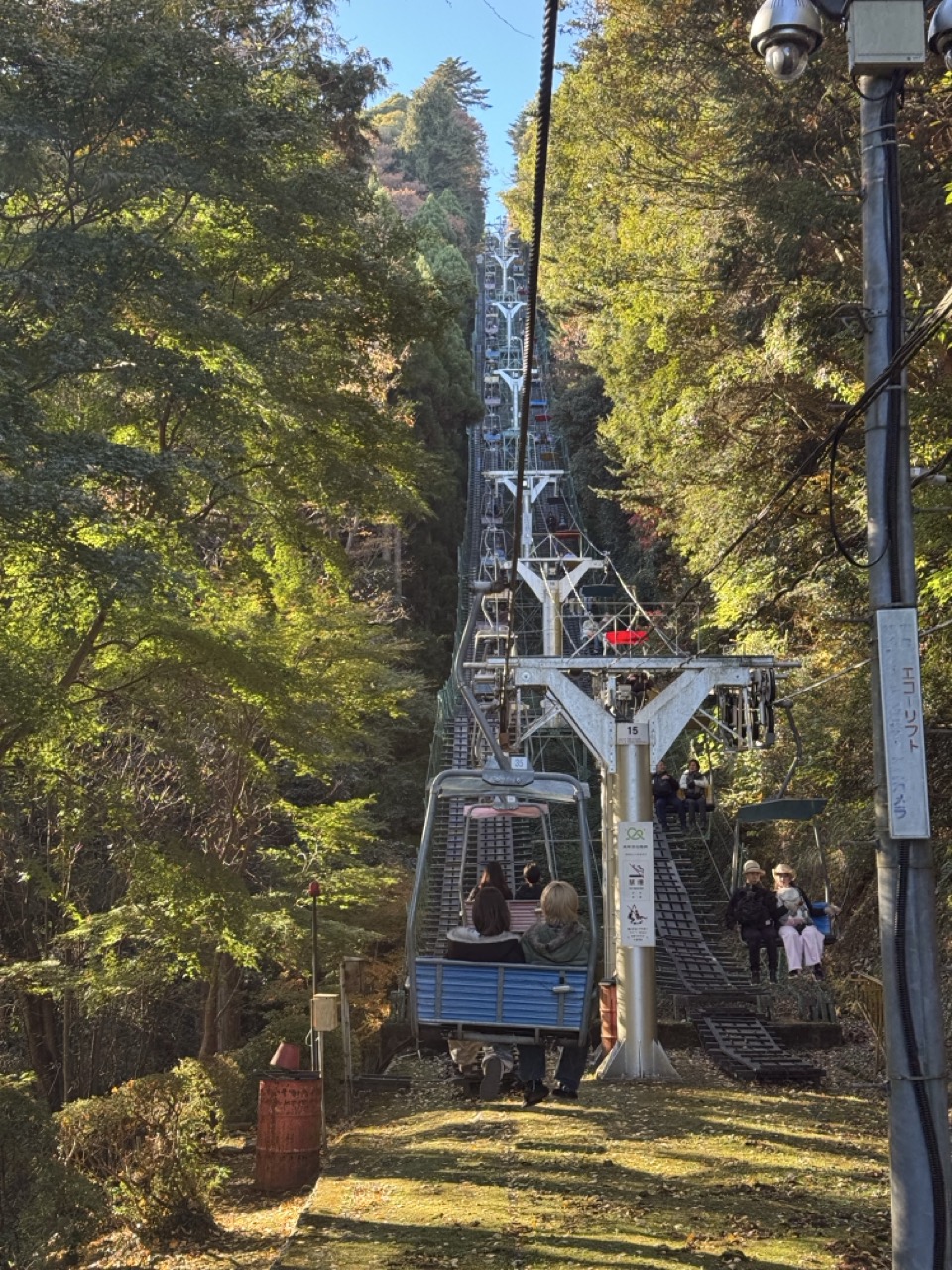
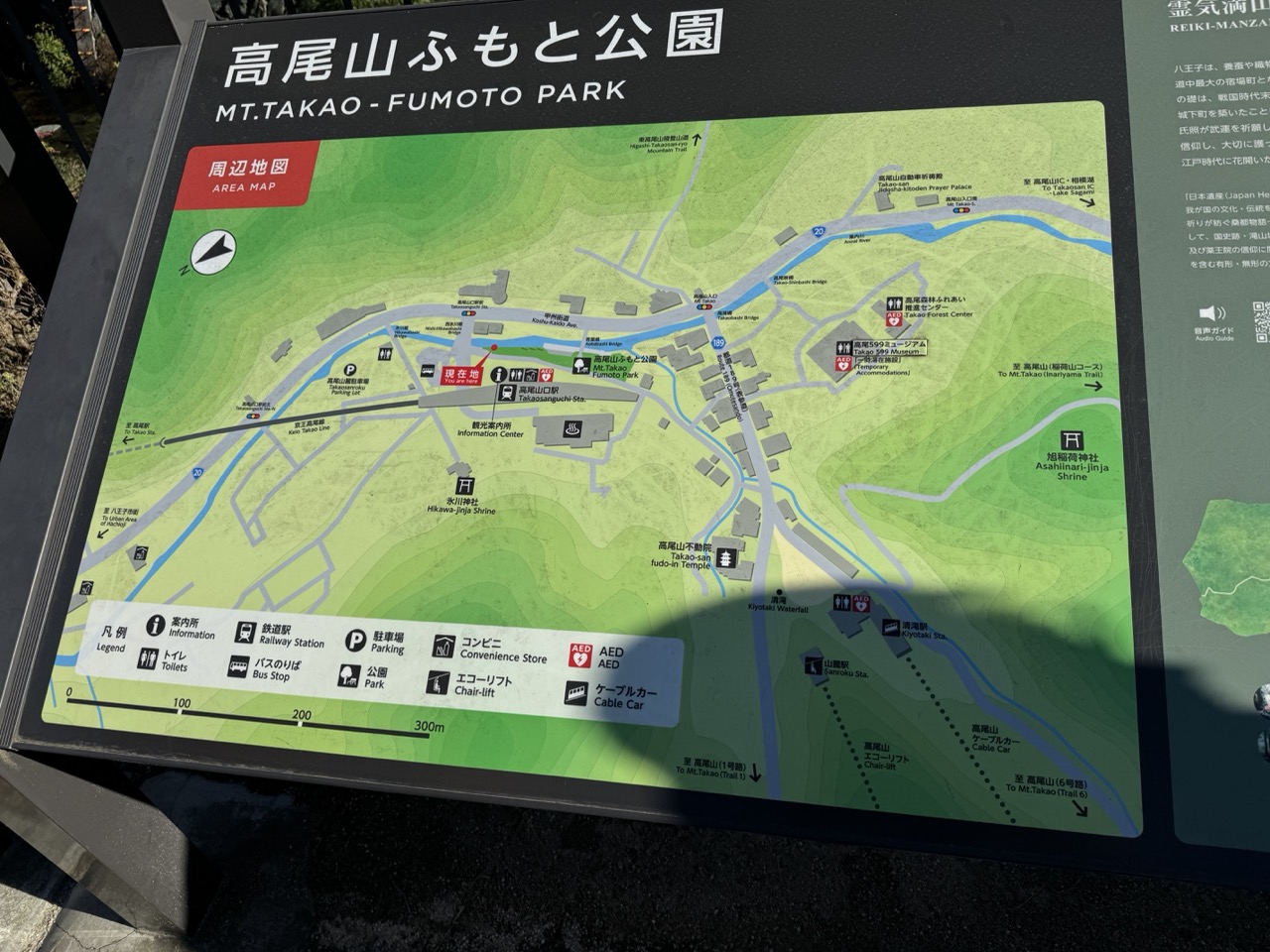
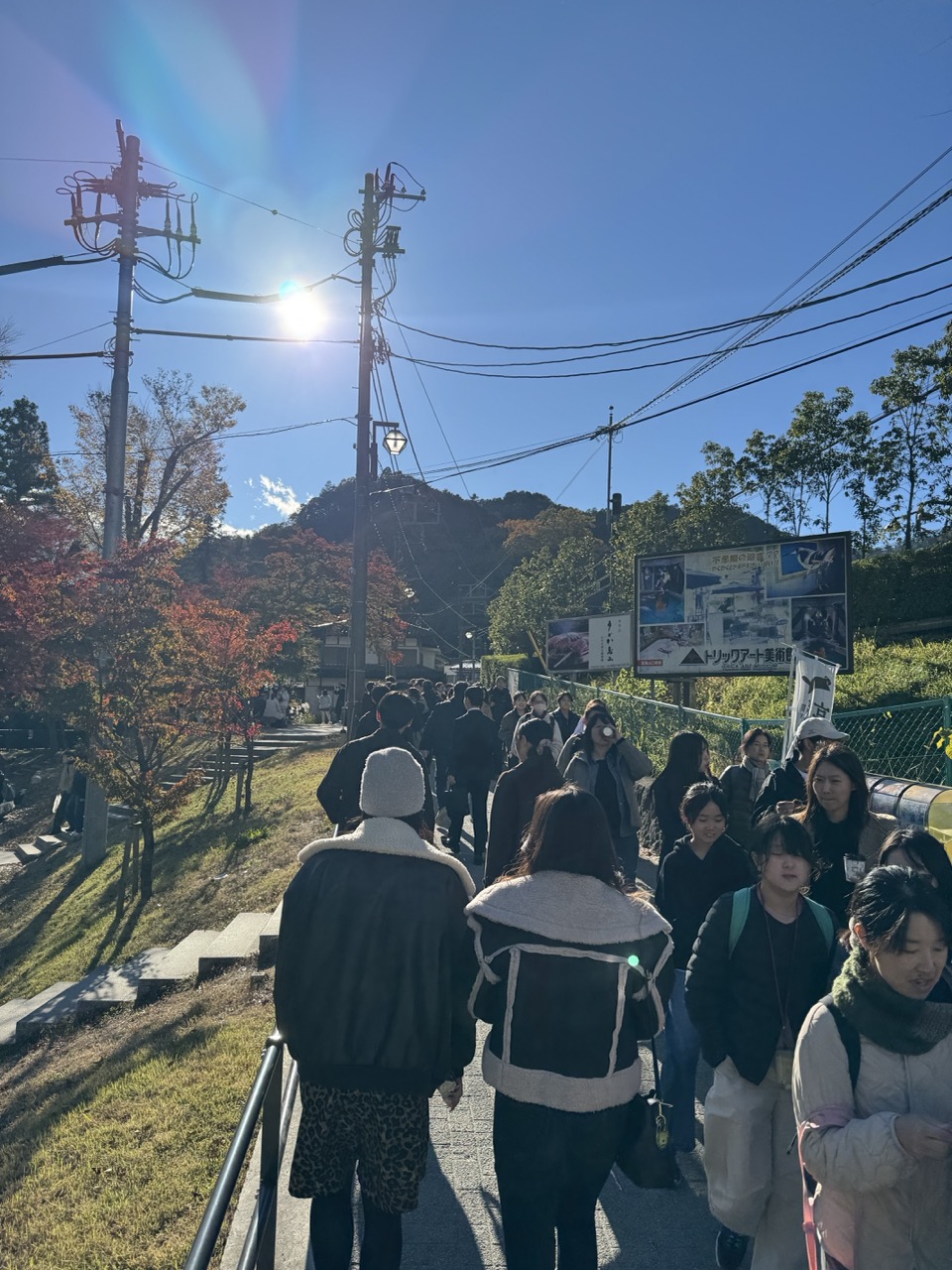
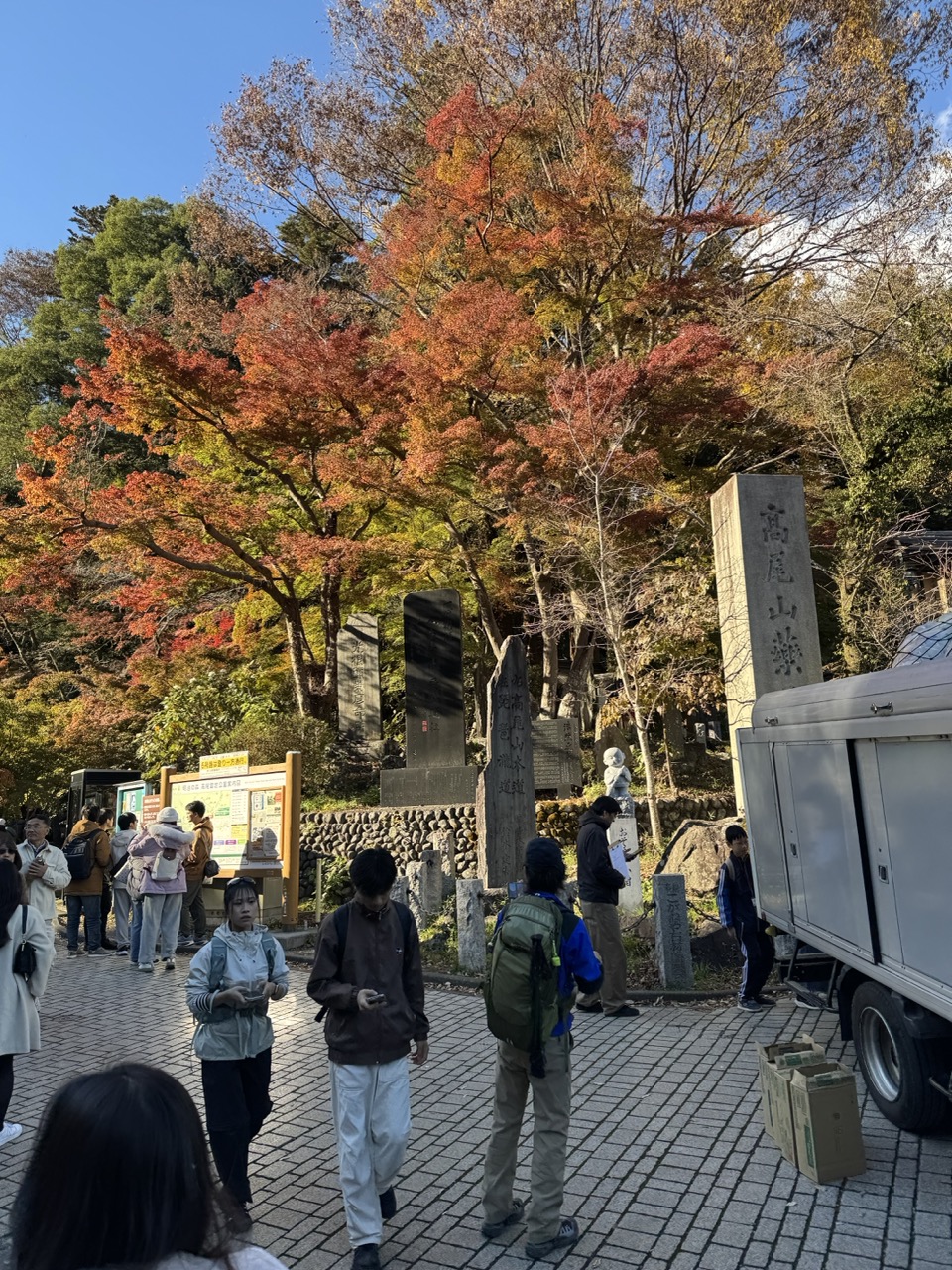
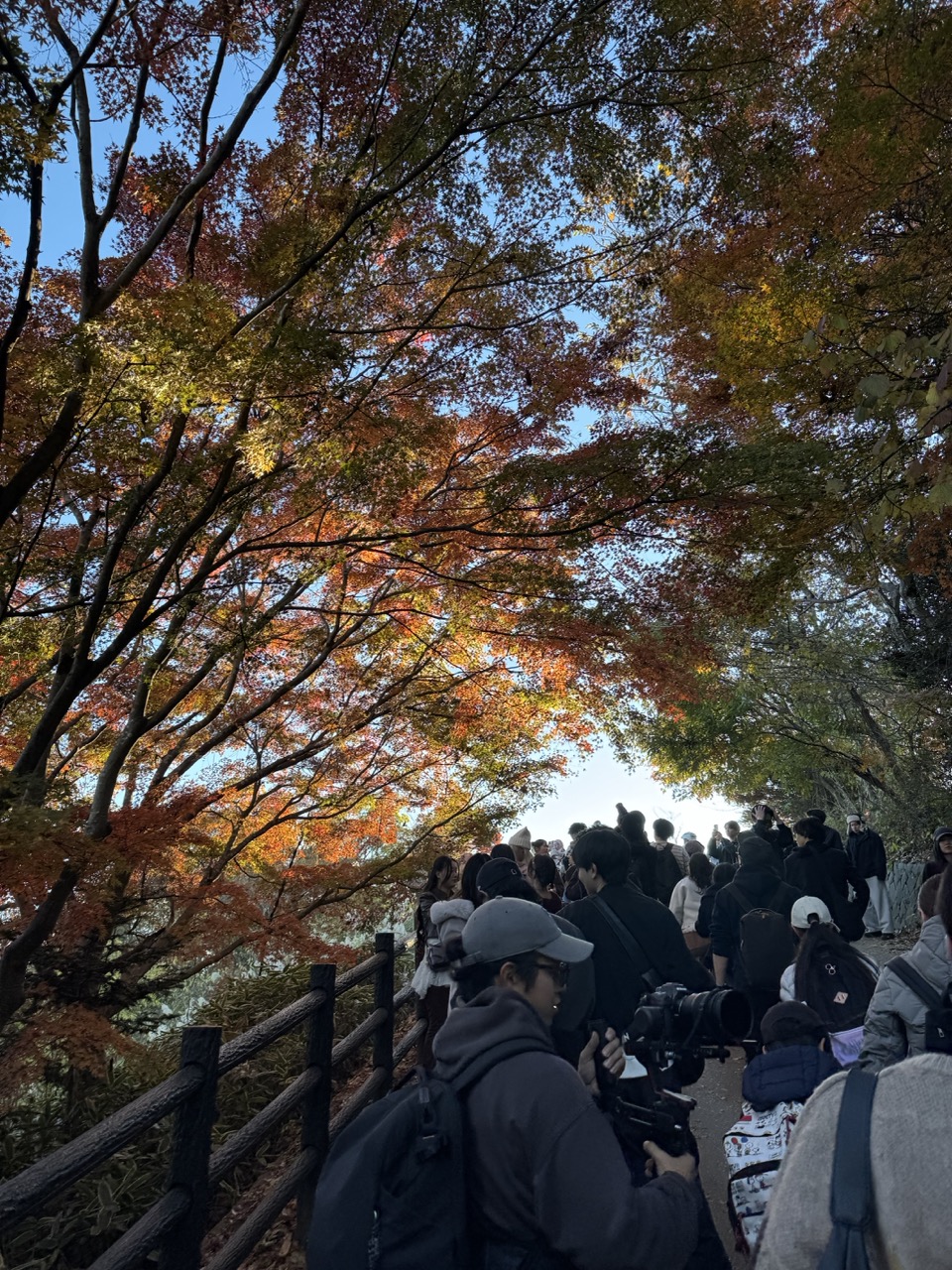
From Takaosanguchi Station it is about a five minute walk to the lifts. We took the chairlift, which is a 12 minute ride through the maples in autumn. On a clear Saturday in foliage season, expect a wait. We stood in line for roughly 30 to 40 minutes to get up, and it was worth it.
From the top station, the walk to the summit is the easiest part of the mountain. Trail 1 is the main route, and most of it is paved so sneakers are fine. My plan was about 15 minutes to Yakuoin Temple, then 20 more to the summit at 599 metres, aiming to be up by about 15:45. Around 45 minutes from the top of the lift to the summit, so allow between 35 and 50 minutes depending on how often you stop.
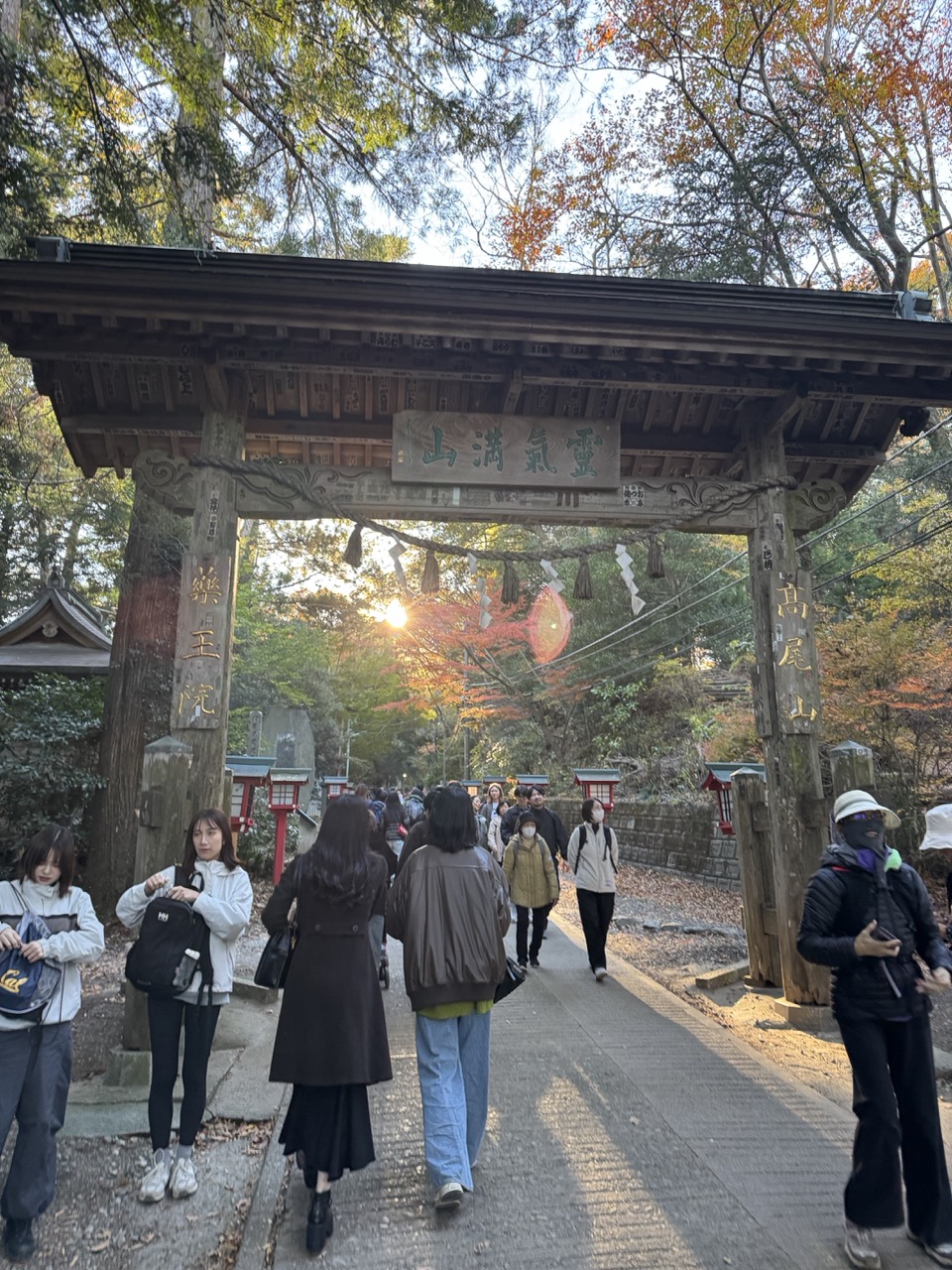
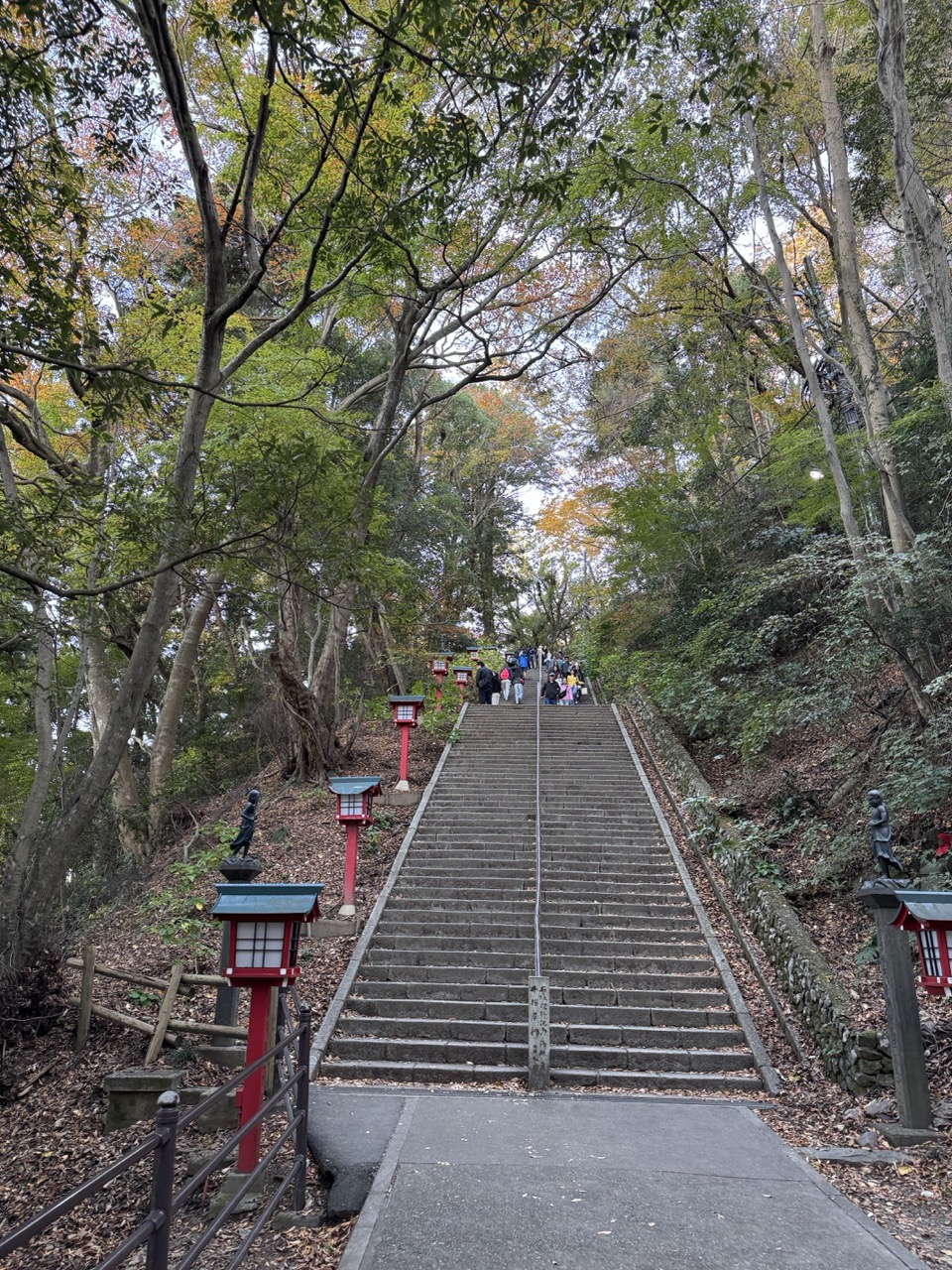
There is plenty to look at on the way. Early on you reach Joshinmon Gate, topped by a plaque reading Reiki Manzan, a phrase that expresses the mountain's spiritual energy. Further up the path splits into two routes to the temple. The left branch is Otokozaka, a staircase of 108 steps, and the right branch is the gentler Onnazaka slope. The two rejoin before the temple, so you can choose by knees and energy.
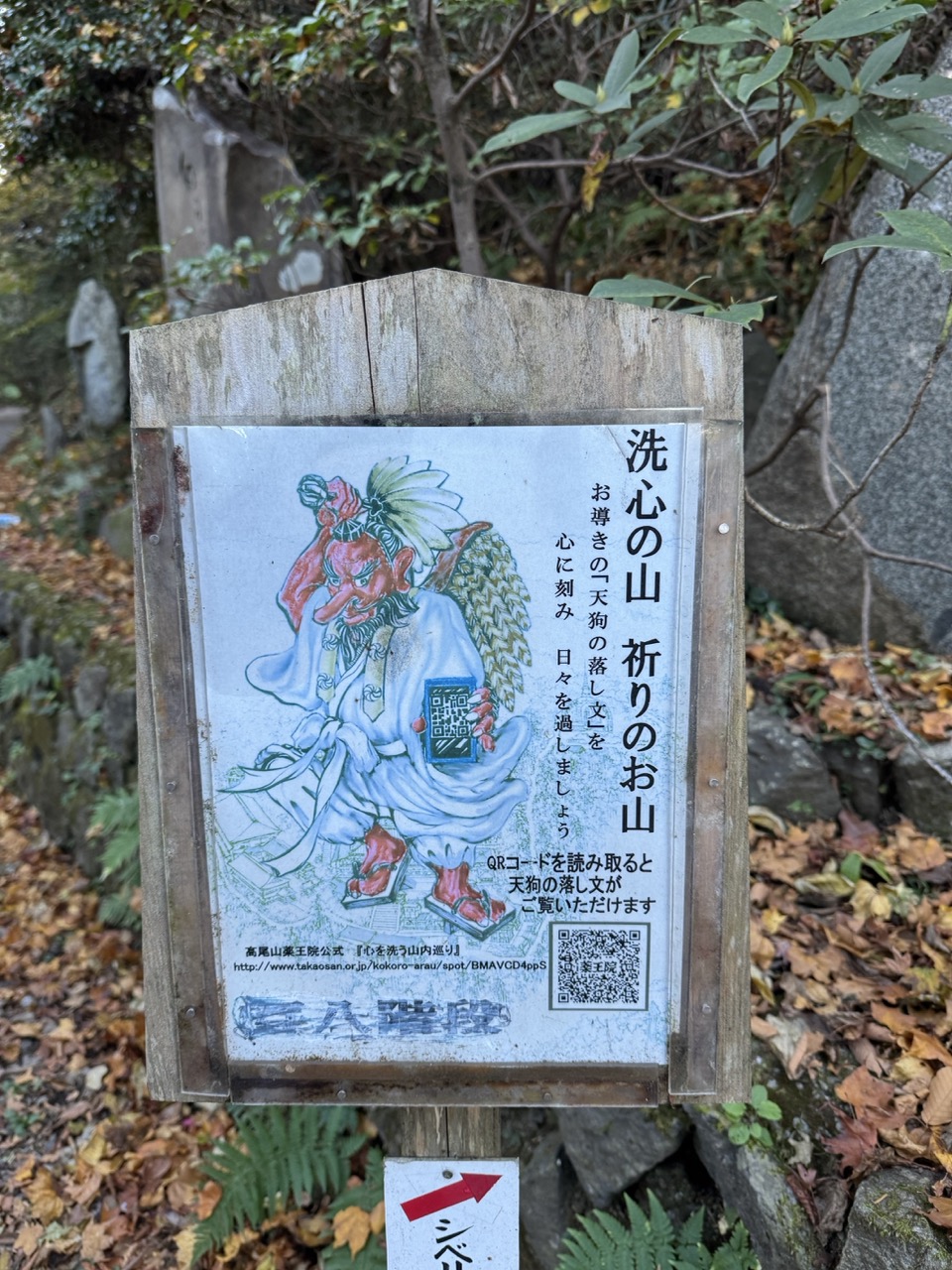
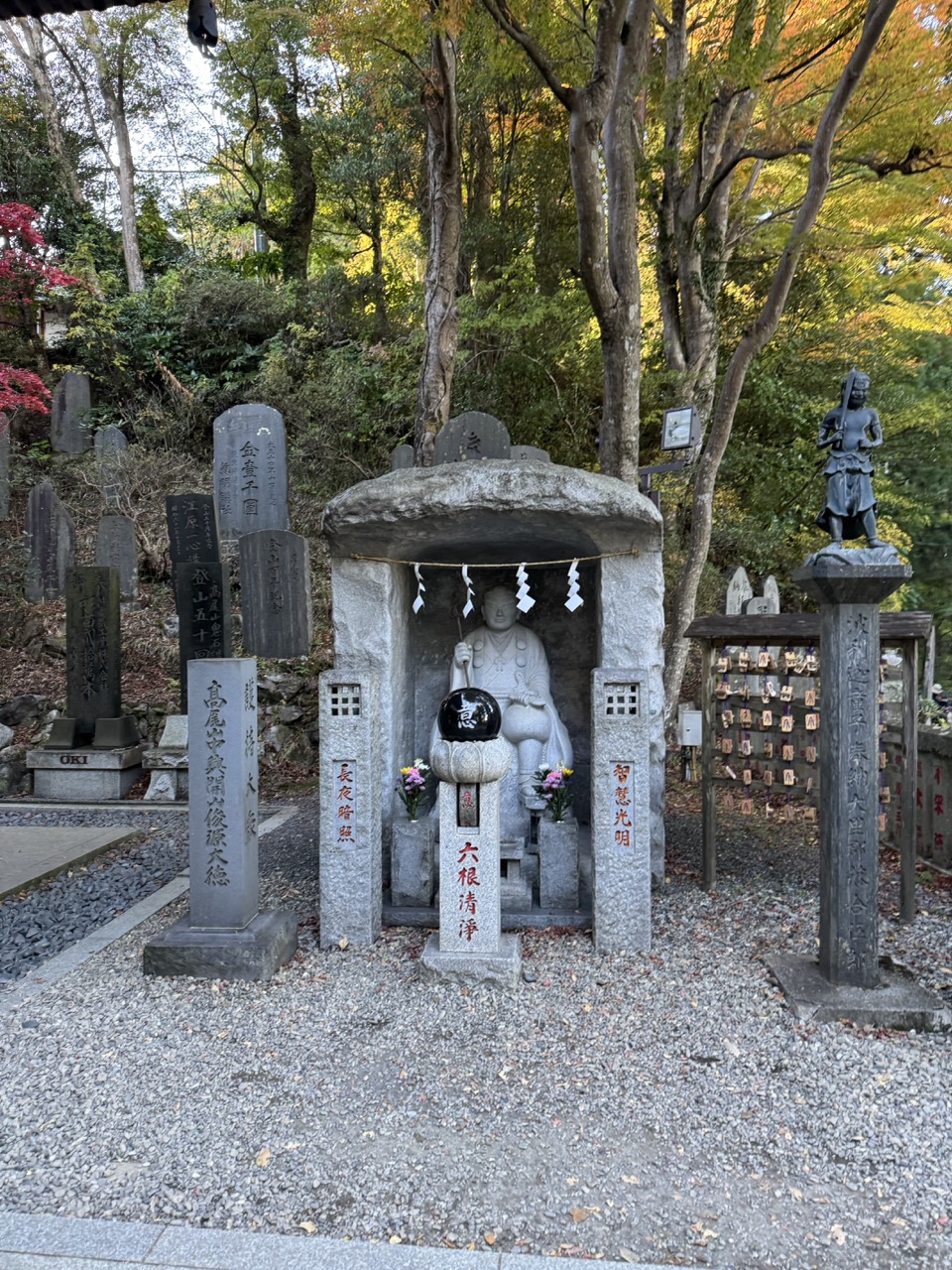
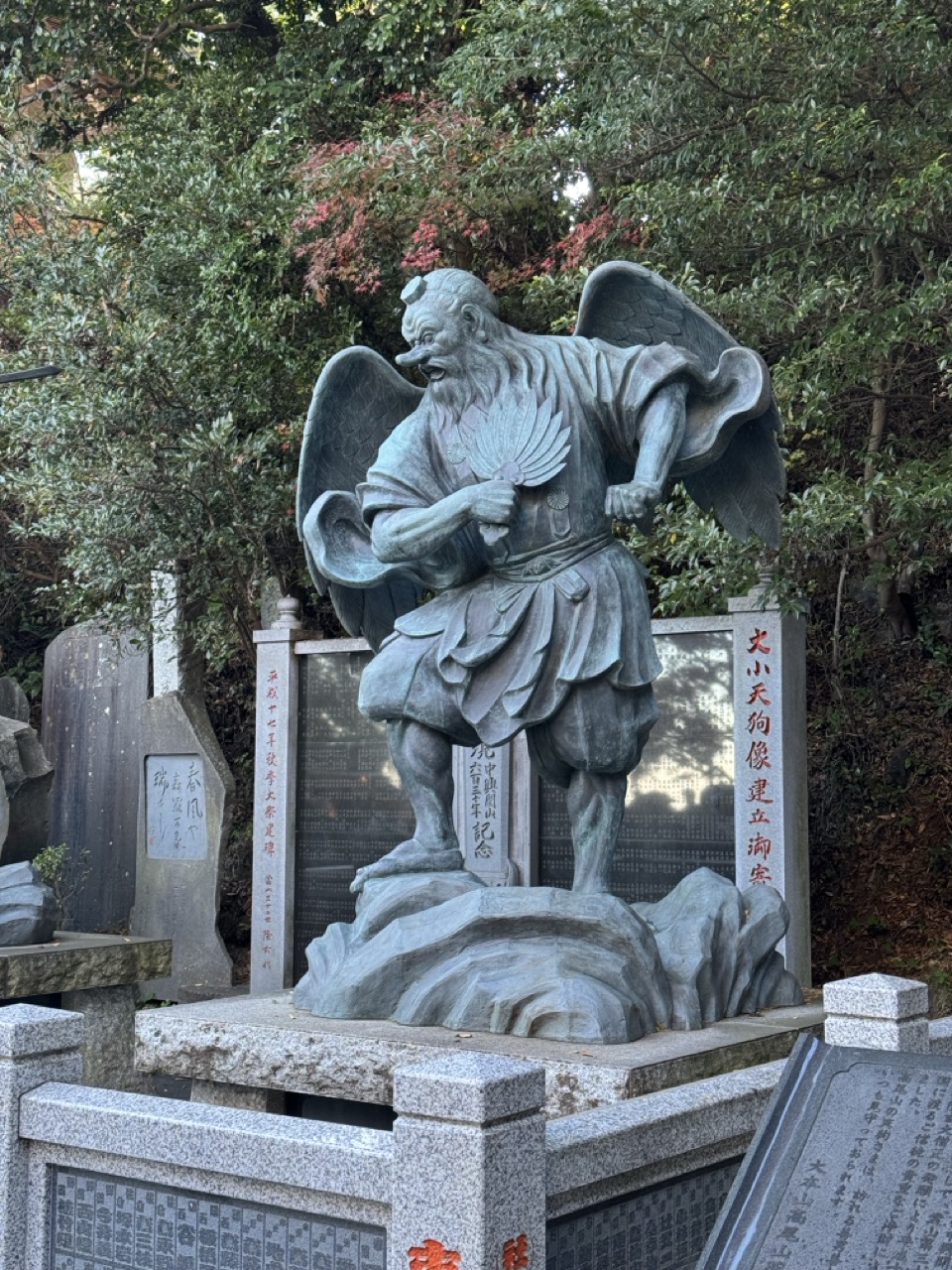
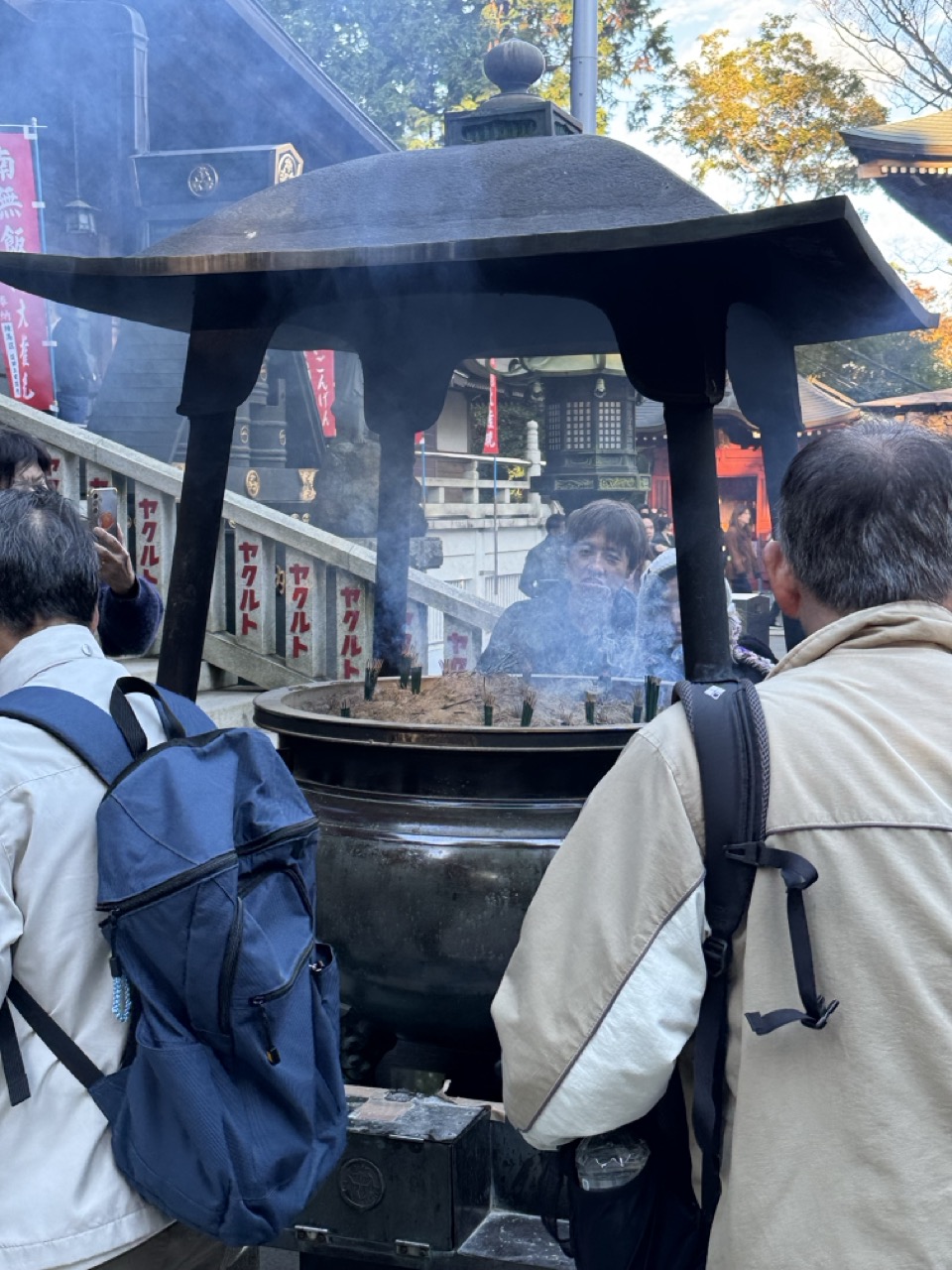
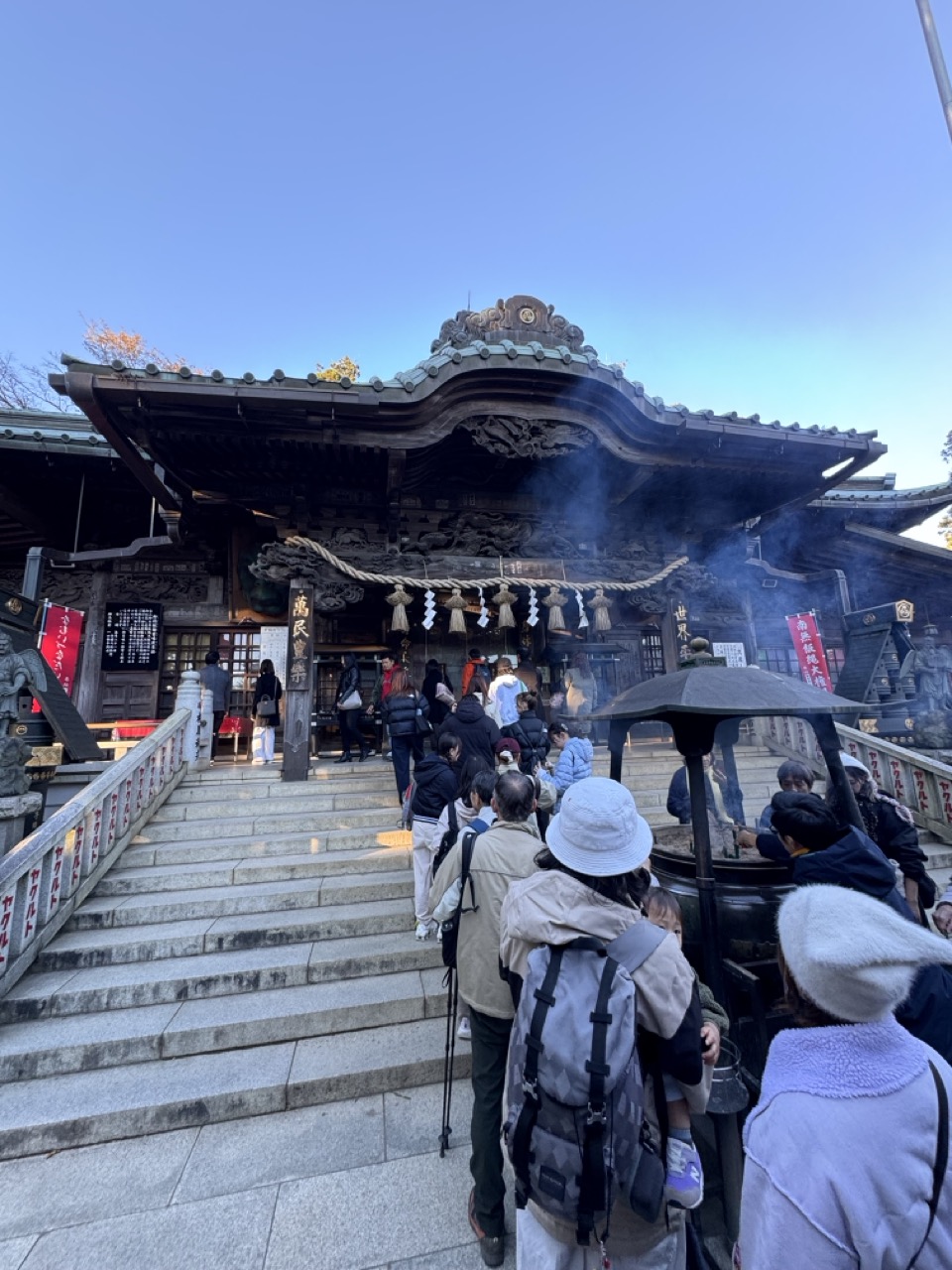
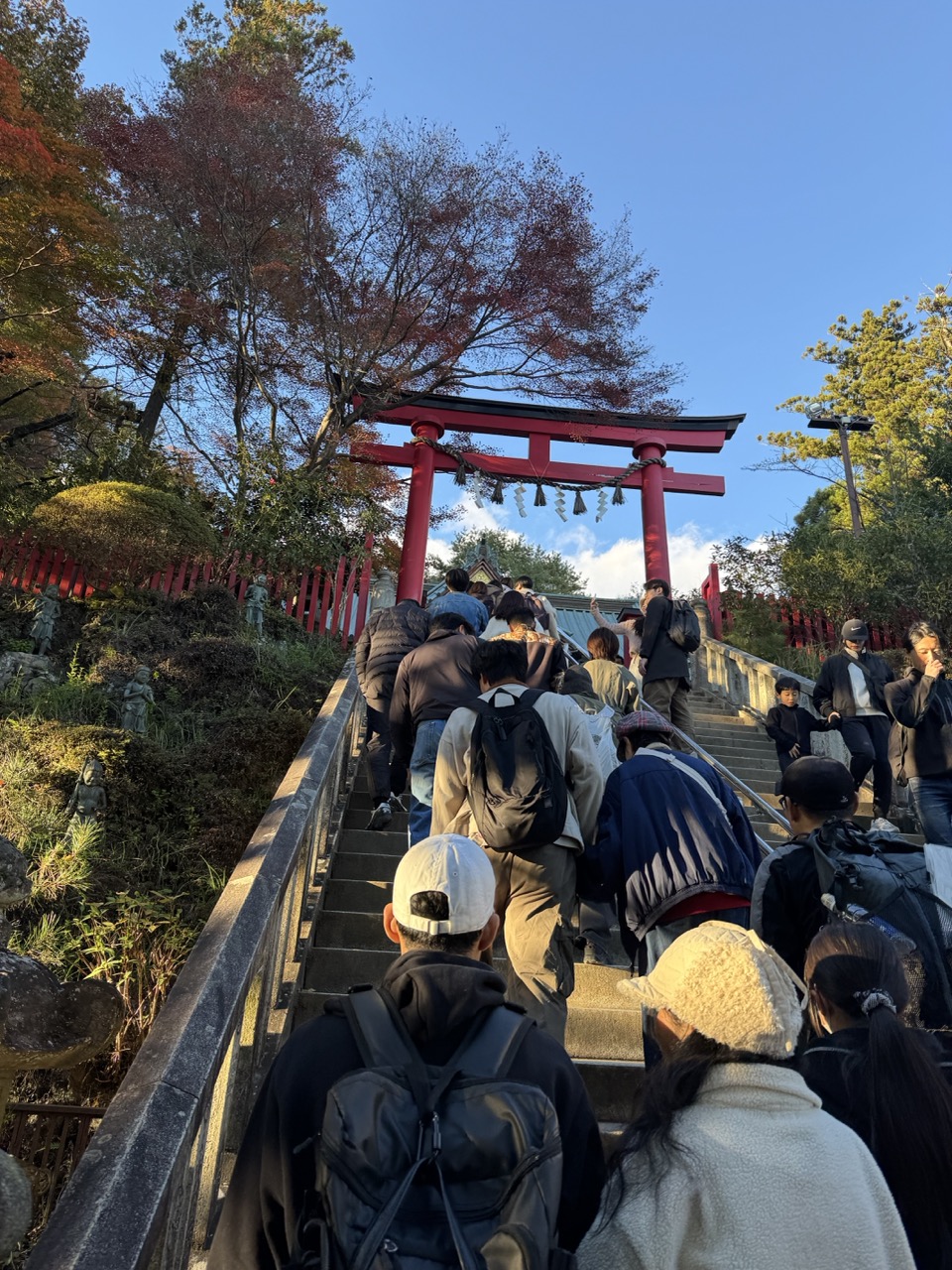
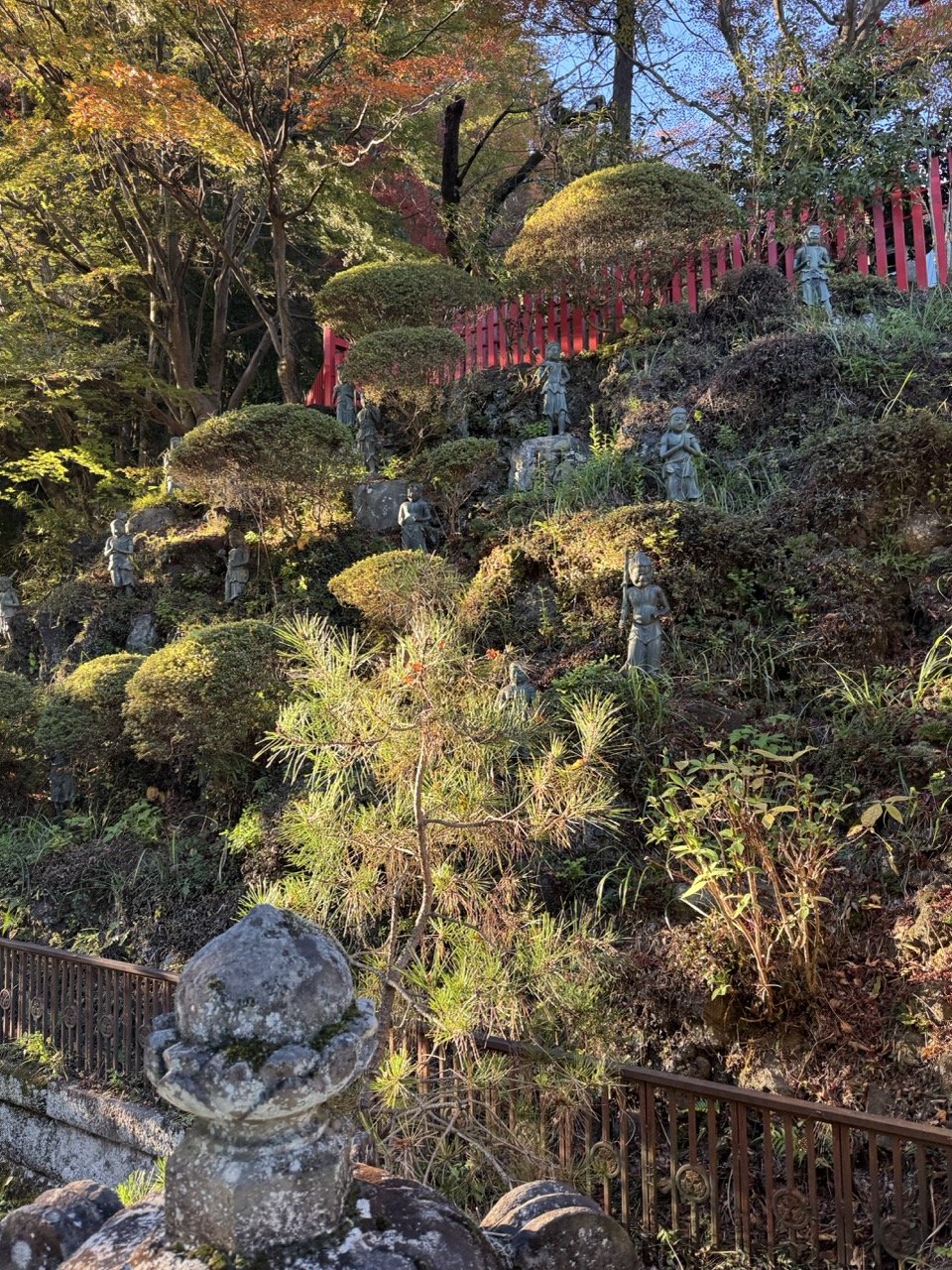
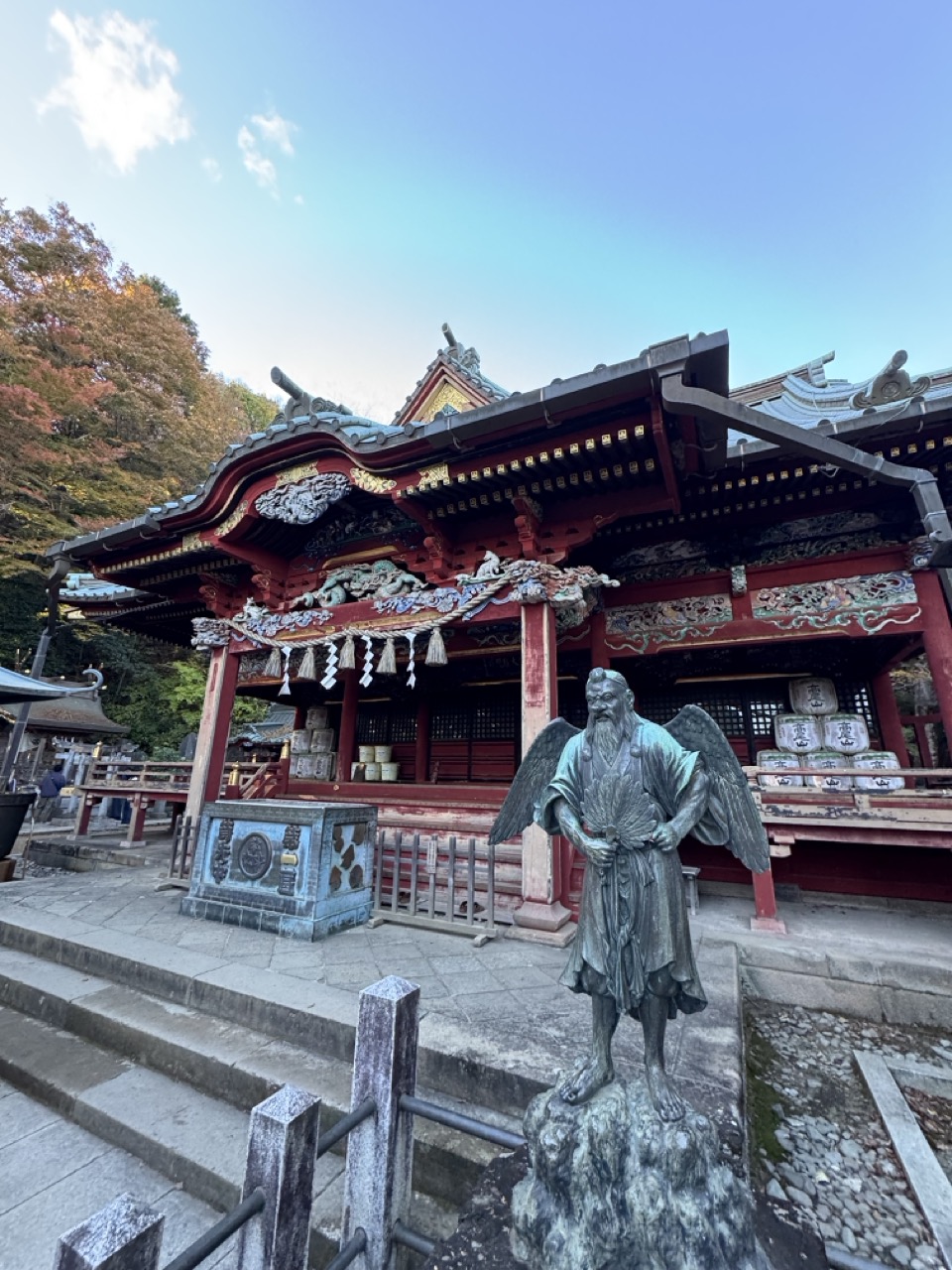
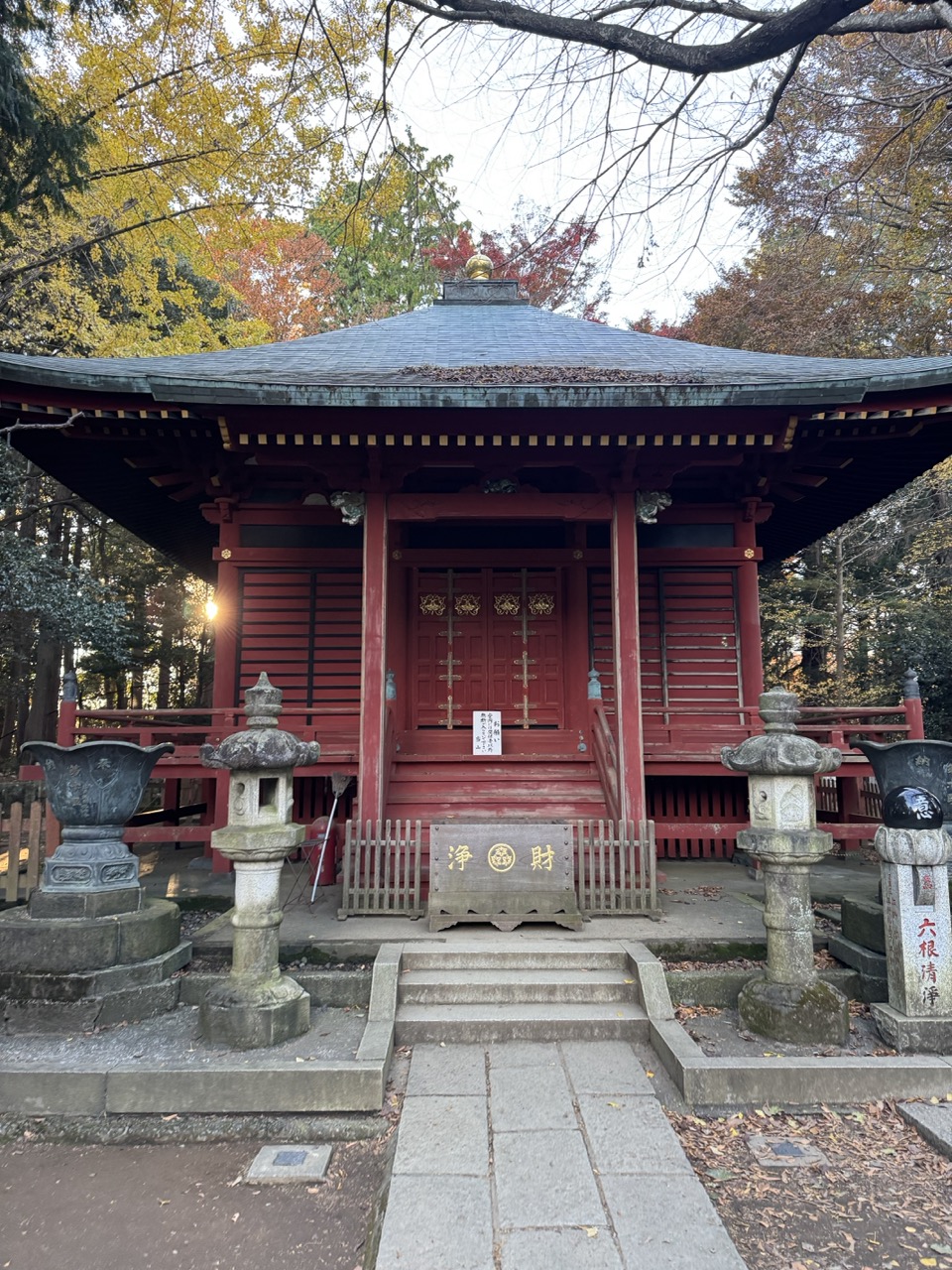
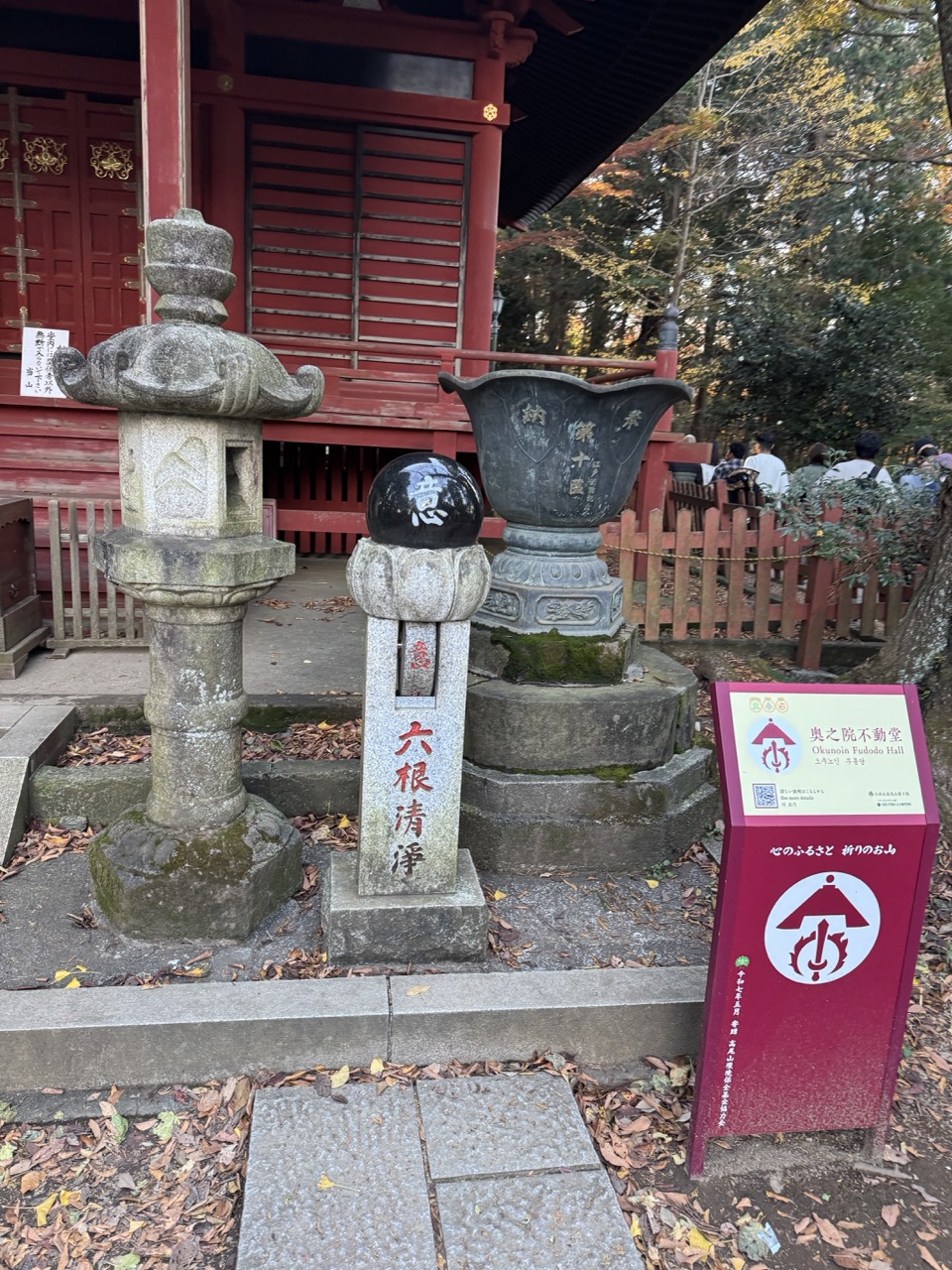
The grounds blend Buddhist and Shinto features, and a large vermilion torii gate in its upper grounds is the clearest sign of that mix. A mountain guide describes climbing the long stairs to the left of the main hall, where a torii leads to Izuna Gongen Hall, and there is a small tengu shrine nearby where clogs are offered for healthy feet. The temple itself is free to enter and sits on Trail 1, so a short stop costs nothing and fits easily into the climb.
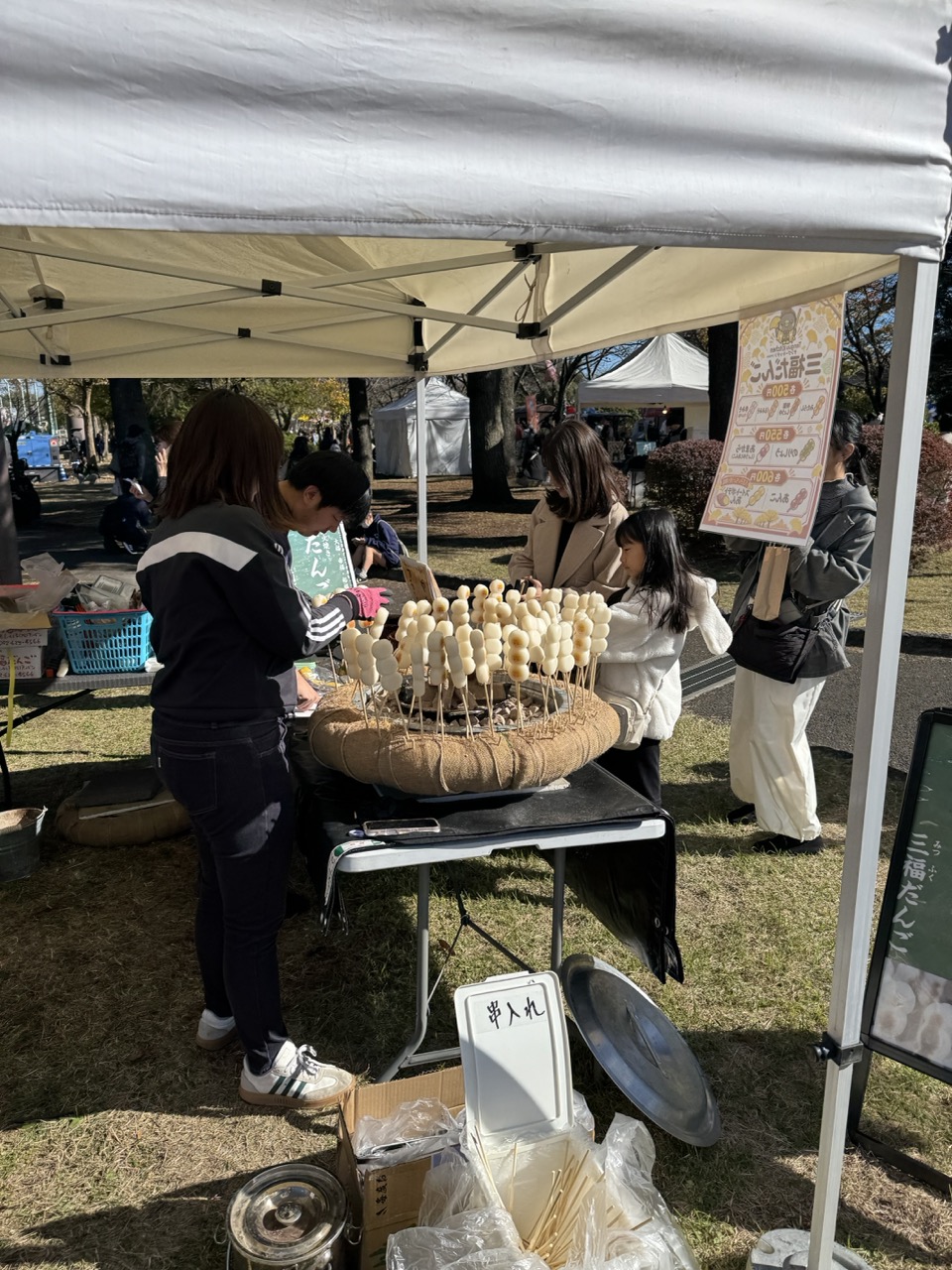
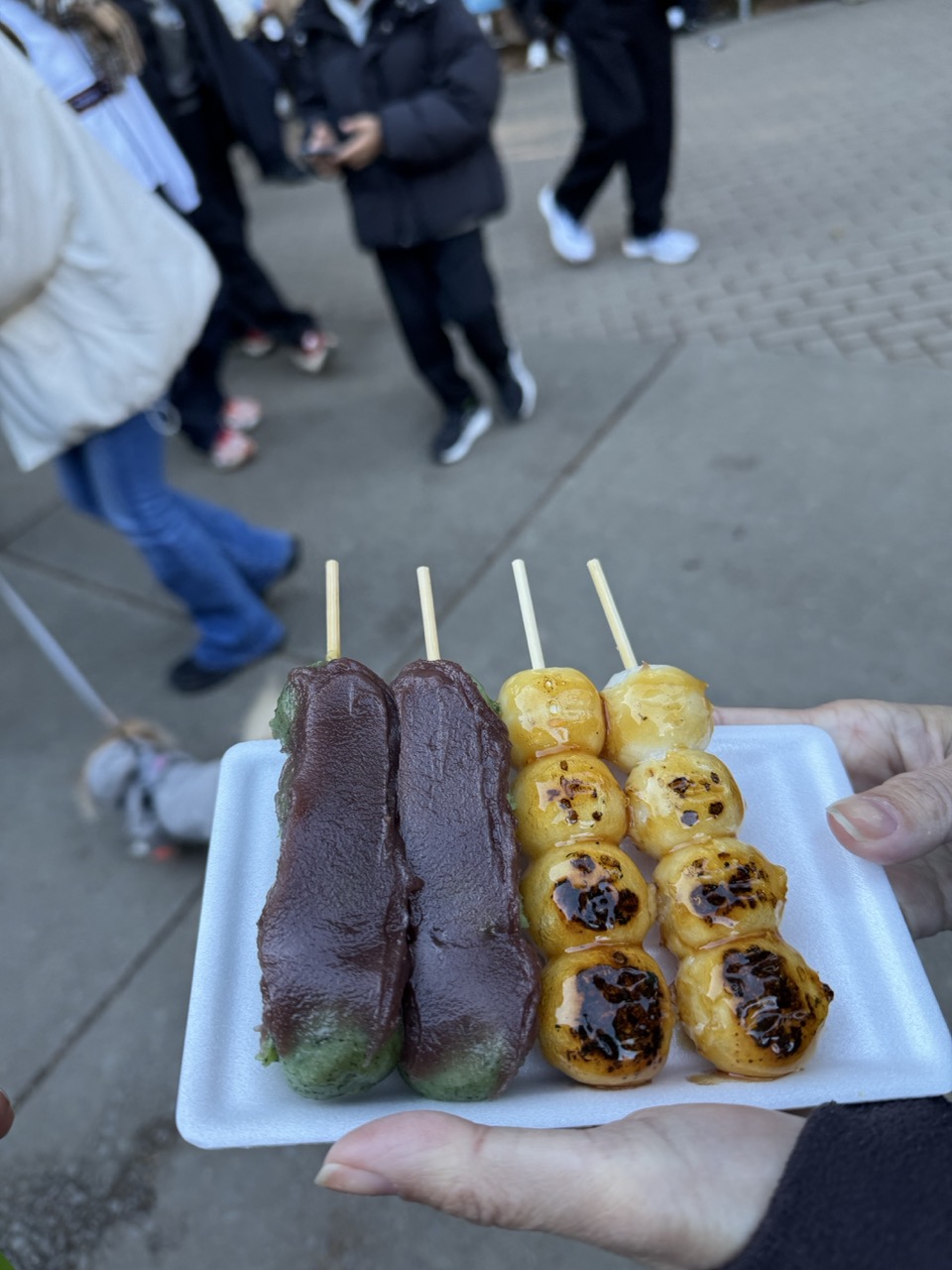
Trail 1 is also where the food is, and the stalls along the way make the walk feel shorter. The mushroom soup was particularly good on a cold day. We also had kusa dango (草団子), a chewy green rice dumpling on a stick, flavoured with yomogi, the Japanese mugwort. It was very tasty, with an earthy, slightly herbal taste and a springy bite that I found almost jelly like. Dango is the natural snack for this trail. Several shops sell their own dango along Trail 1, and dango are typically grilled and brushed with soy sauce or sweet miso glaze. Eaten hot, it is a quick, cheap way to refuel between the cable car station and the summit, and the cold weather makes the warm skewer even better.
The Summit at Sunset
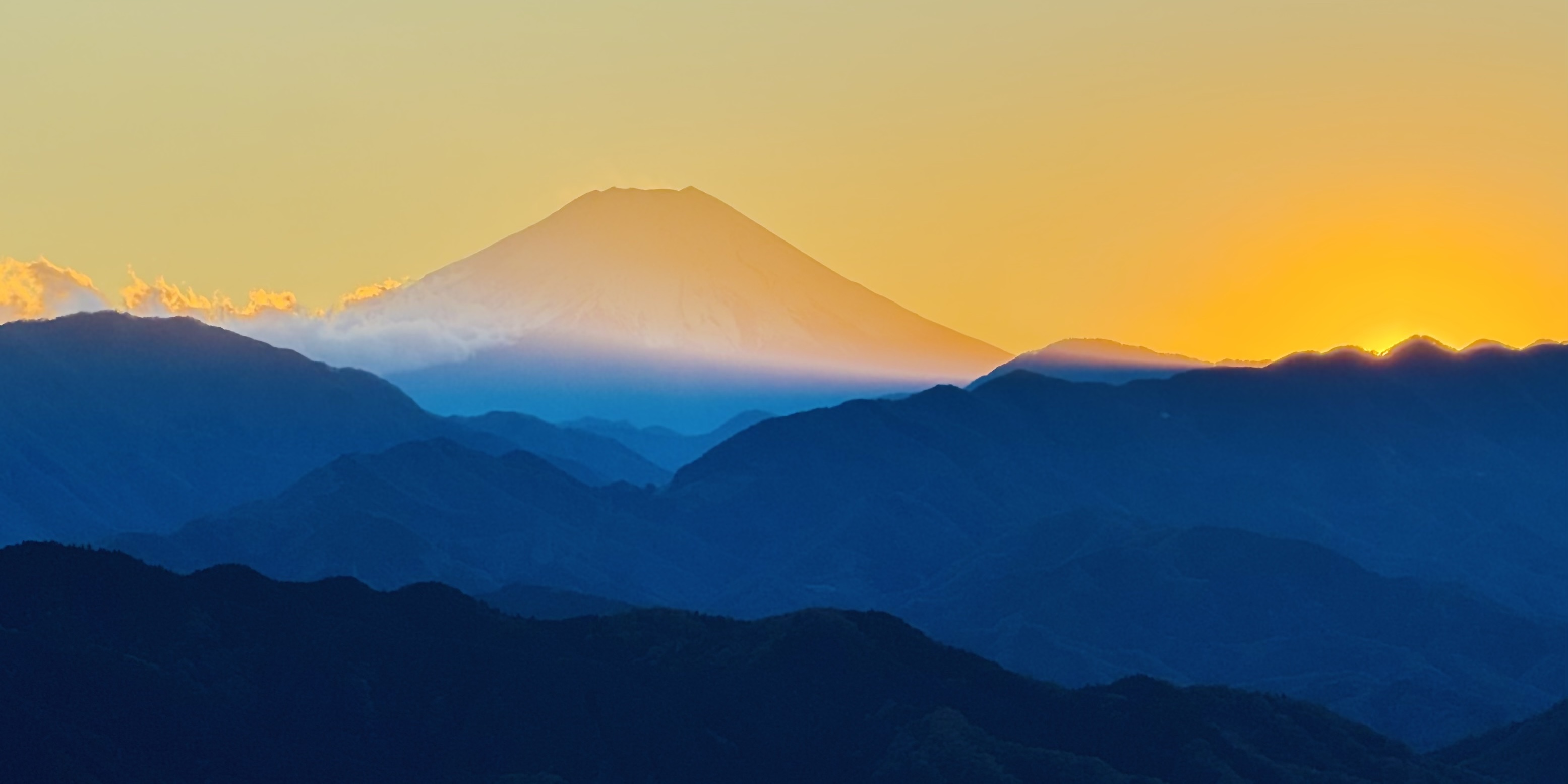
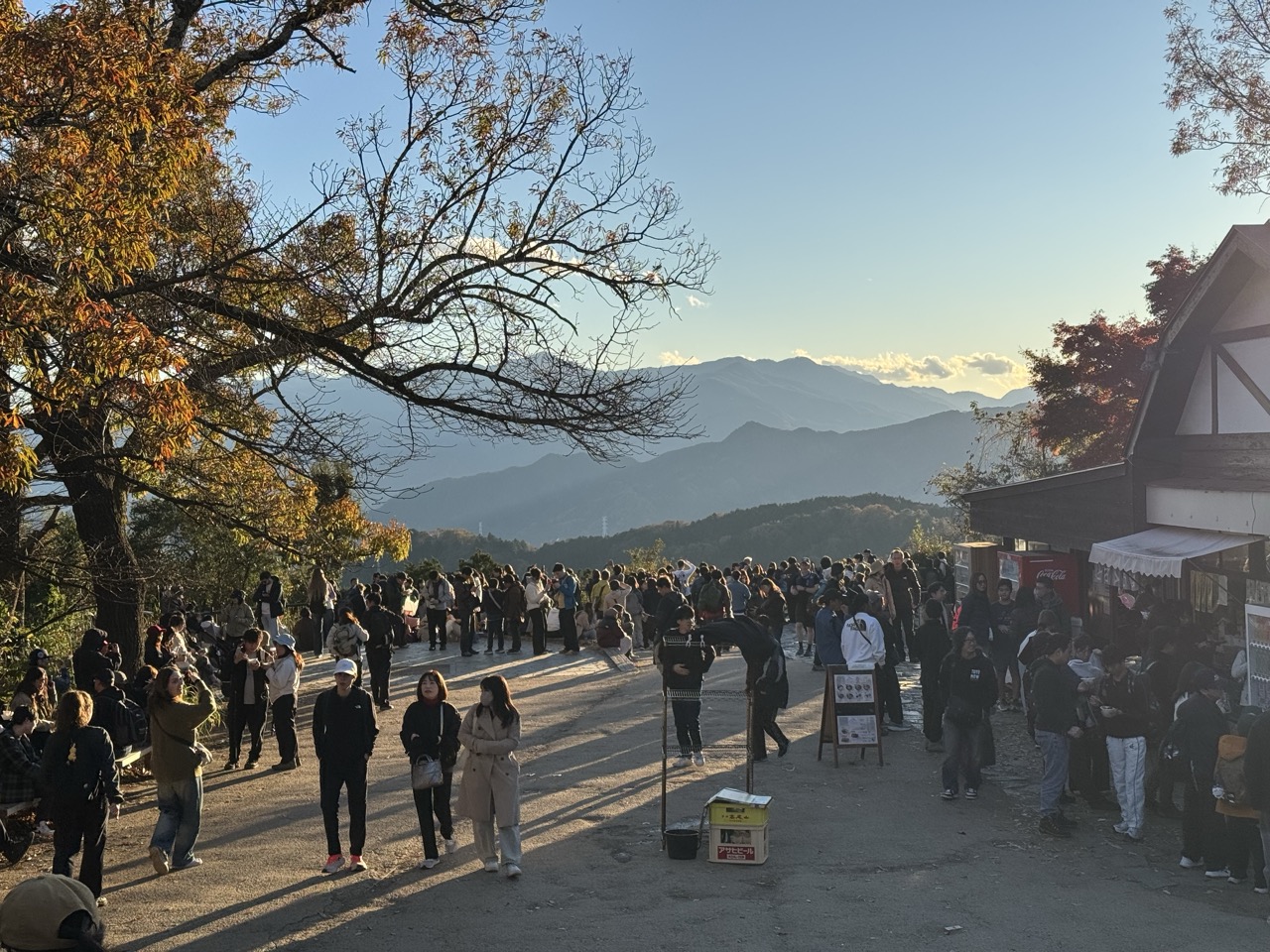
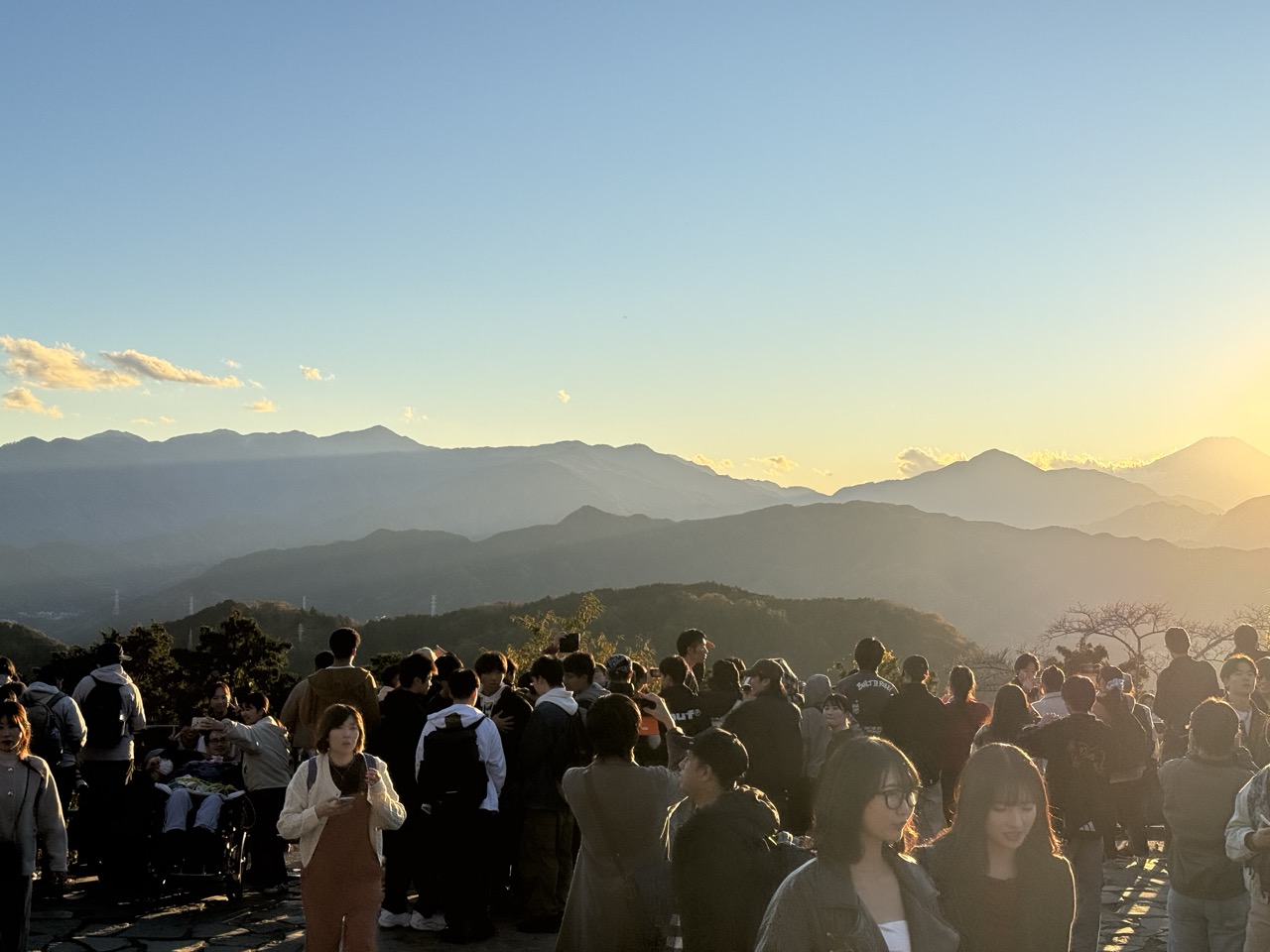
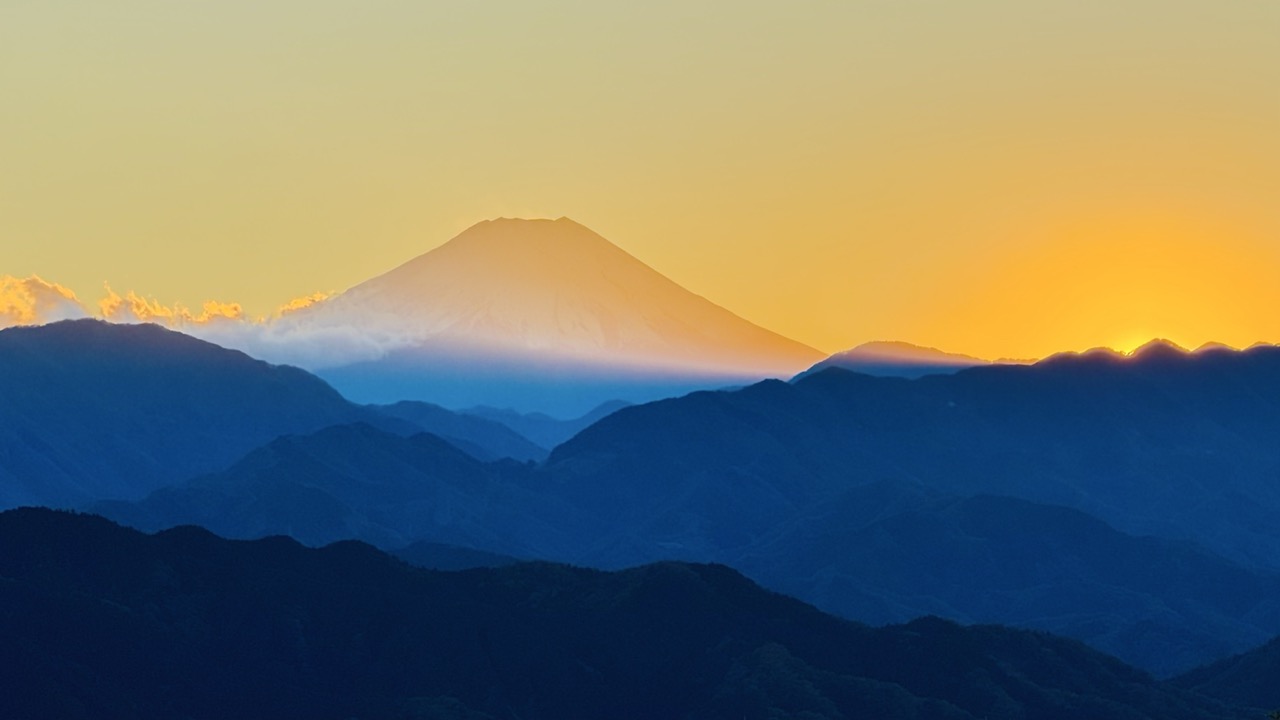
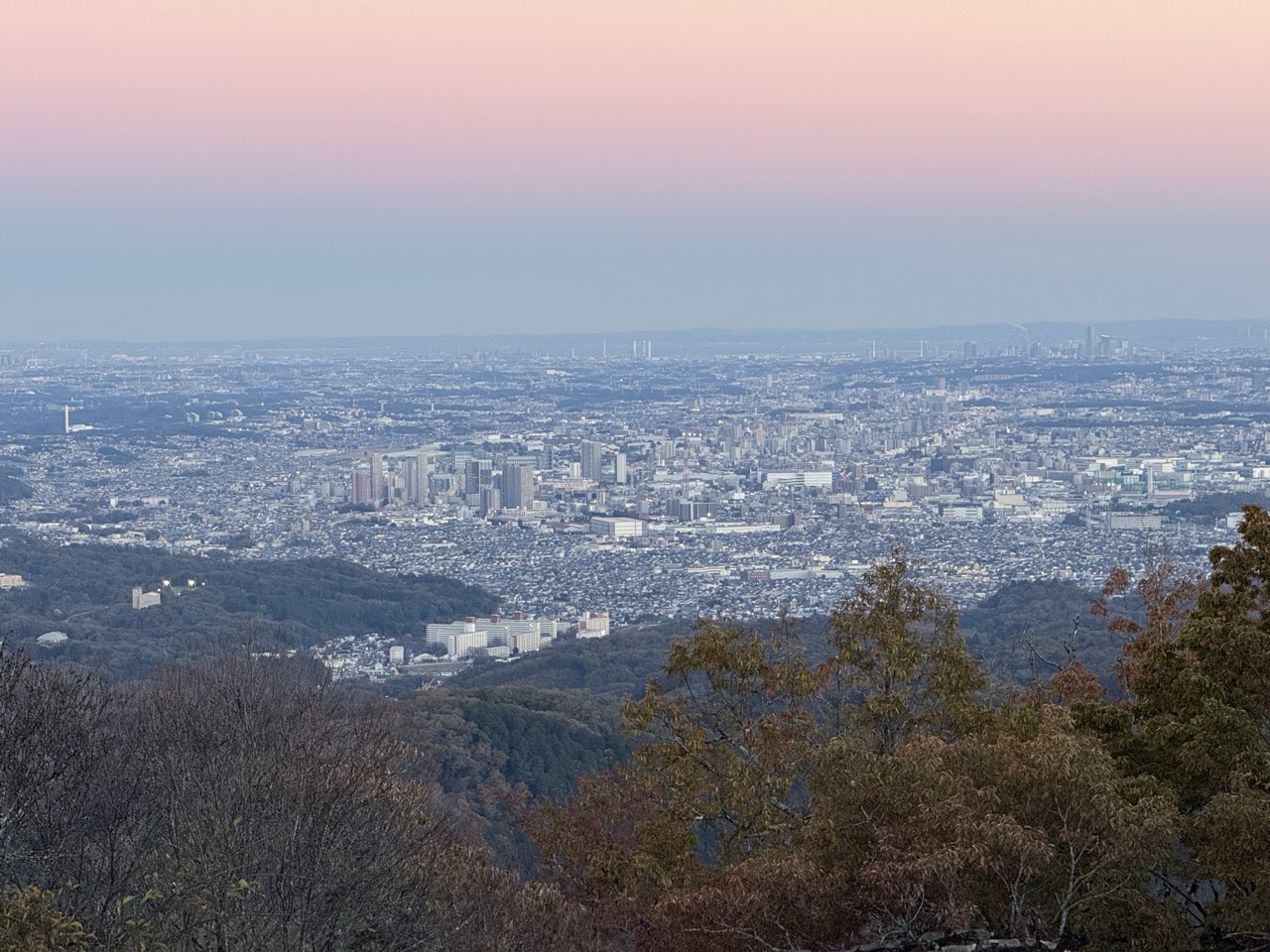
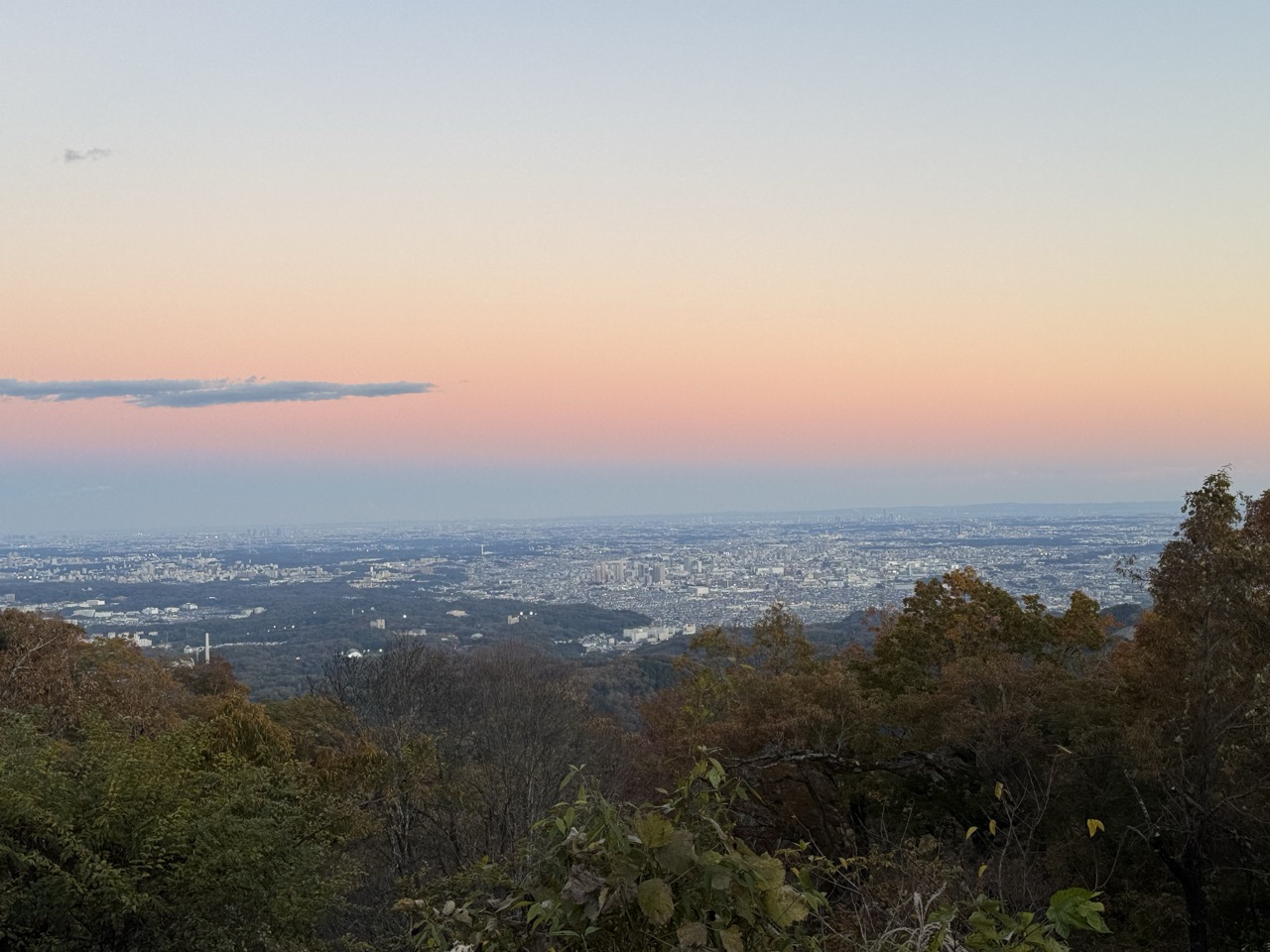
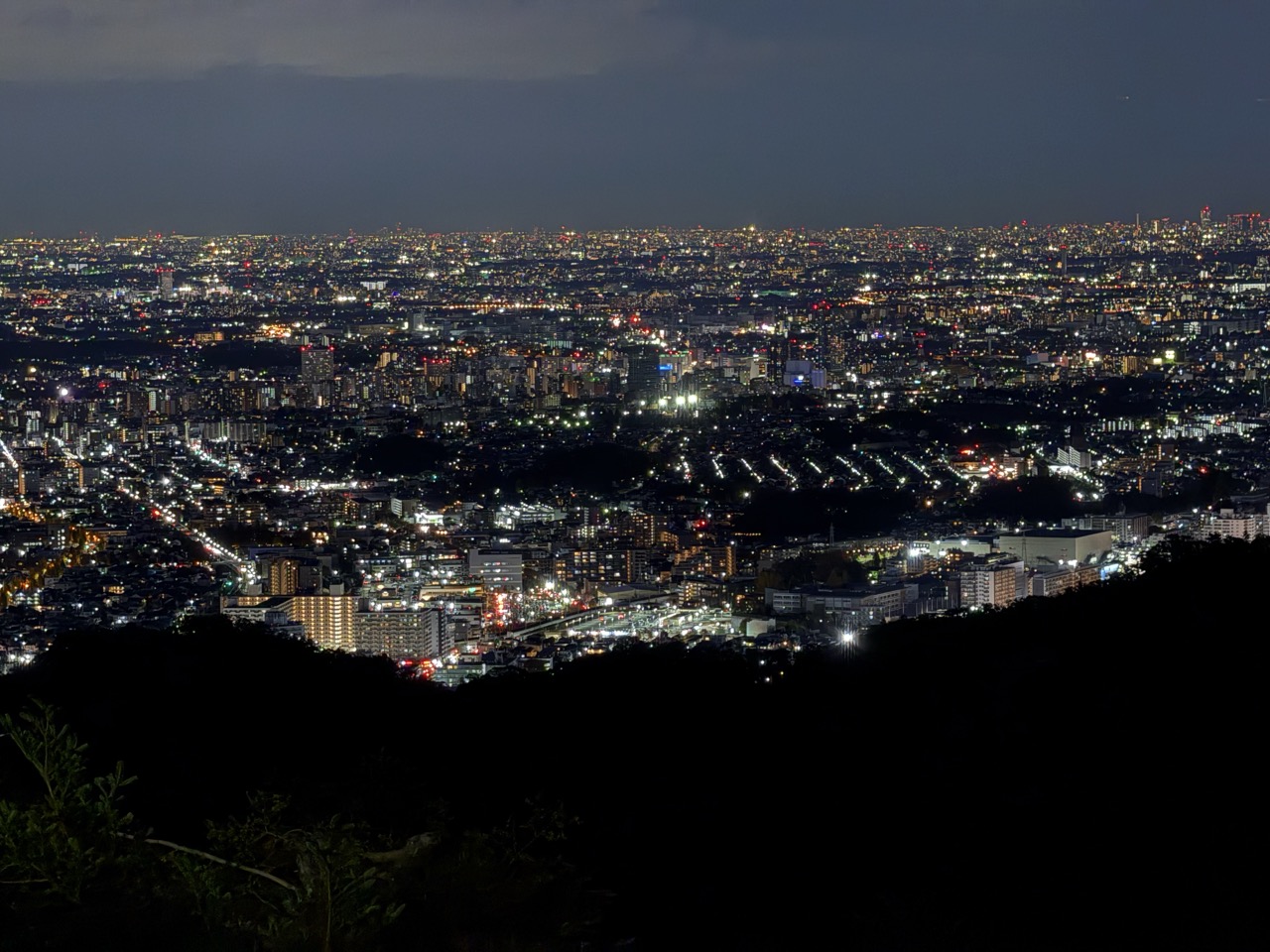
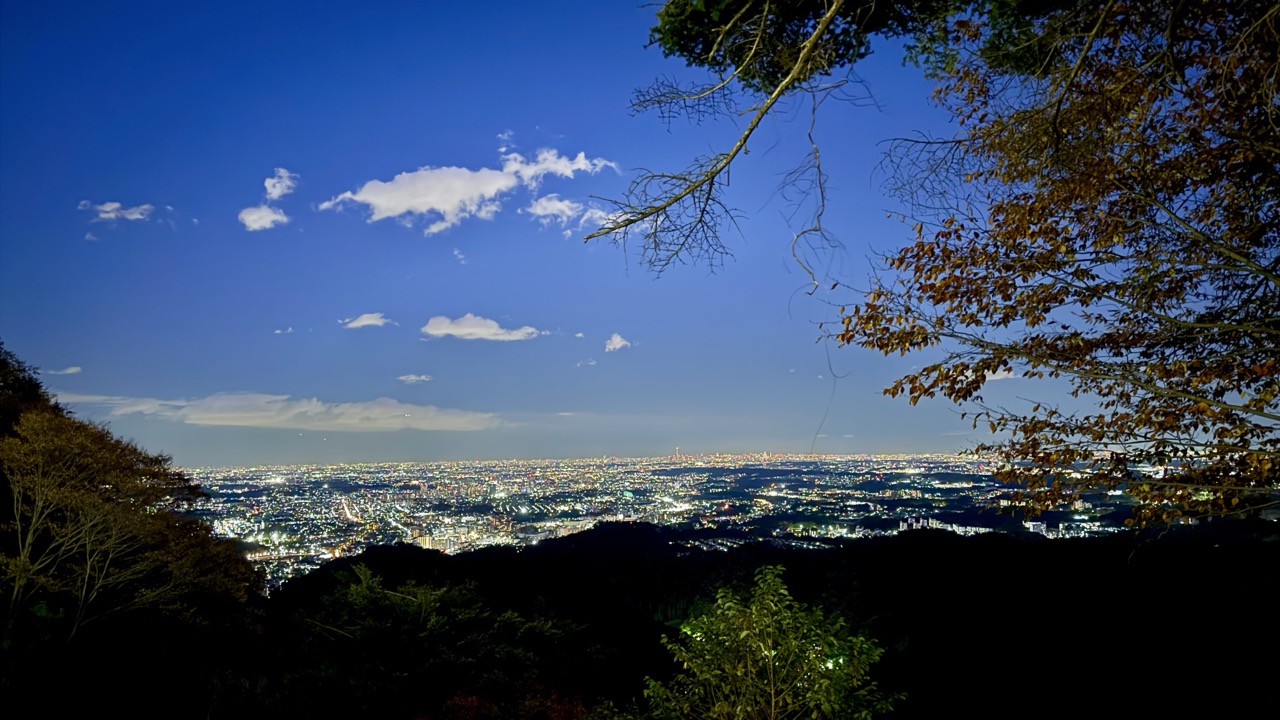
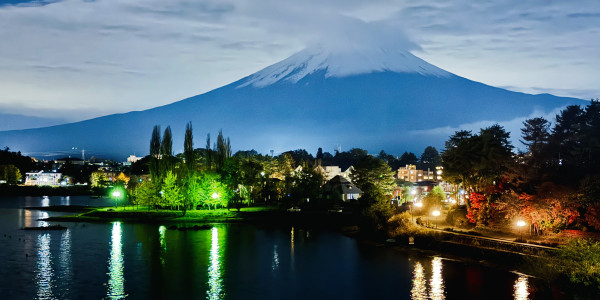
This was the highlight. The summit view at sunset was one of the best I have seen of Mt. Fuji, and later the city lights of Tokyo came out. On a clear day you can see Mt. Fuji from the summit, and the conditions were clear for us.
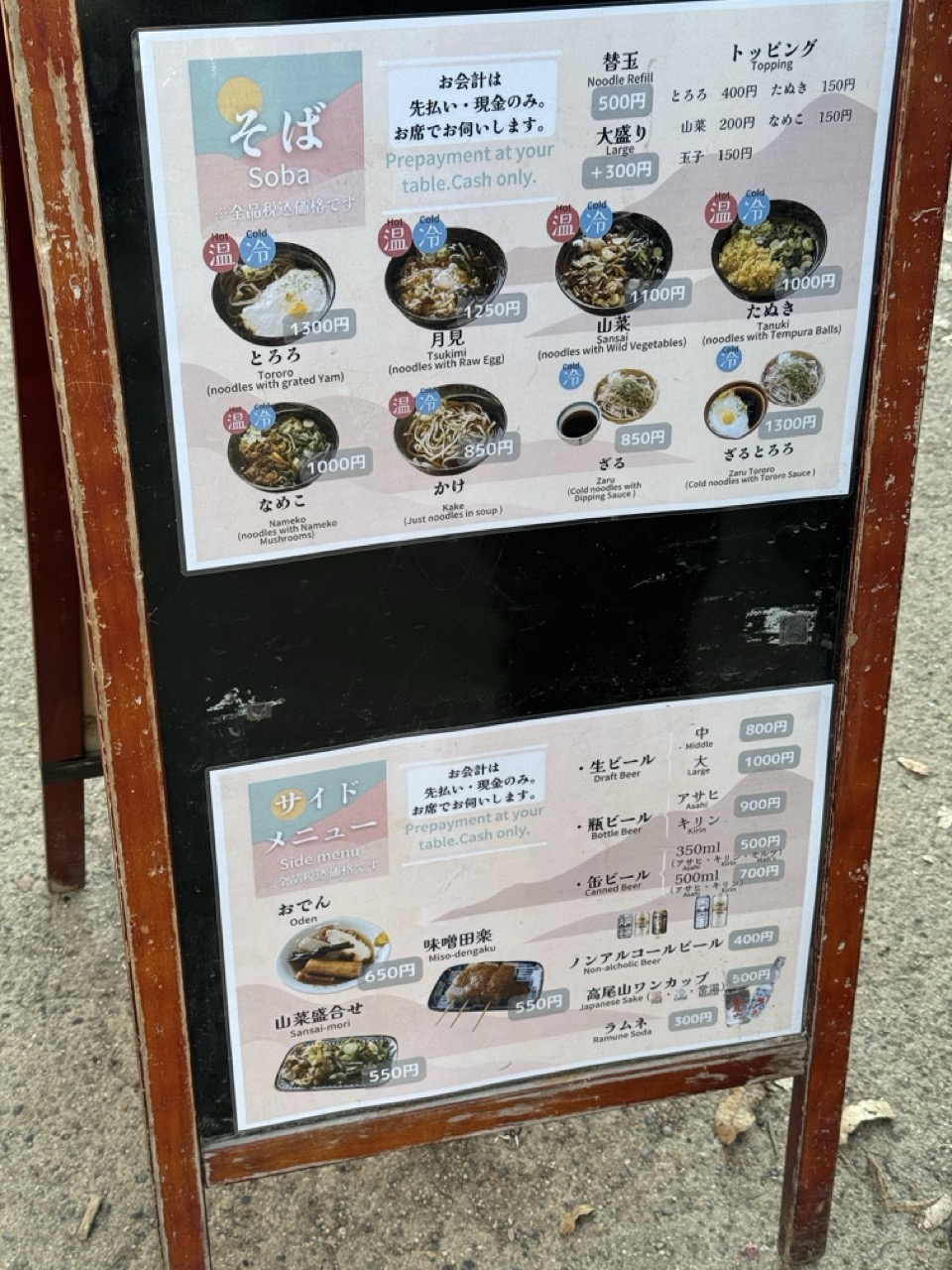
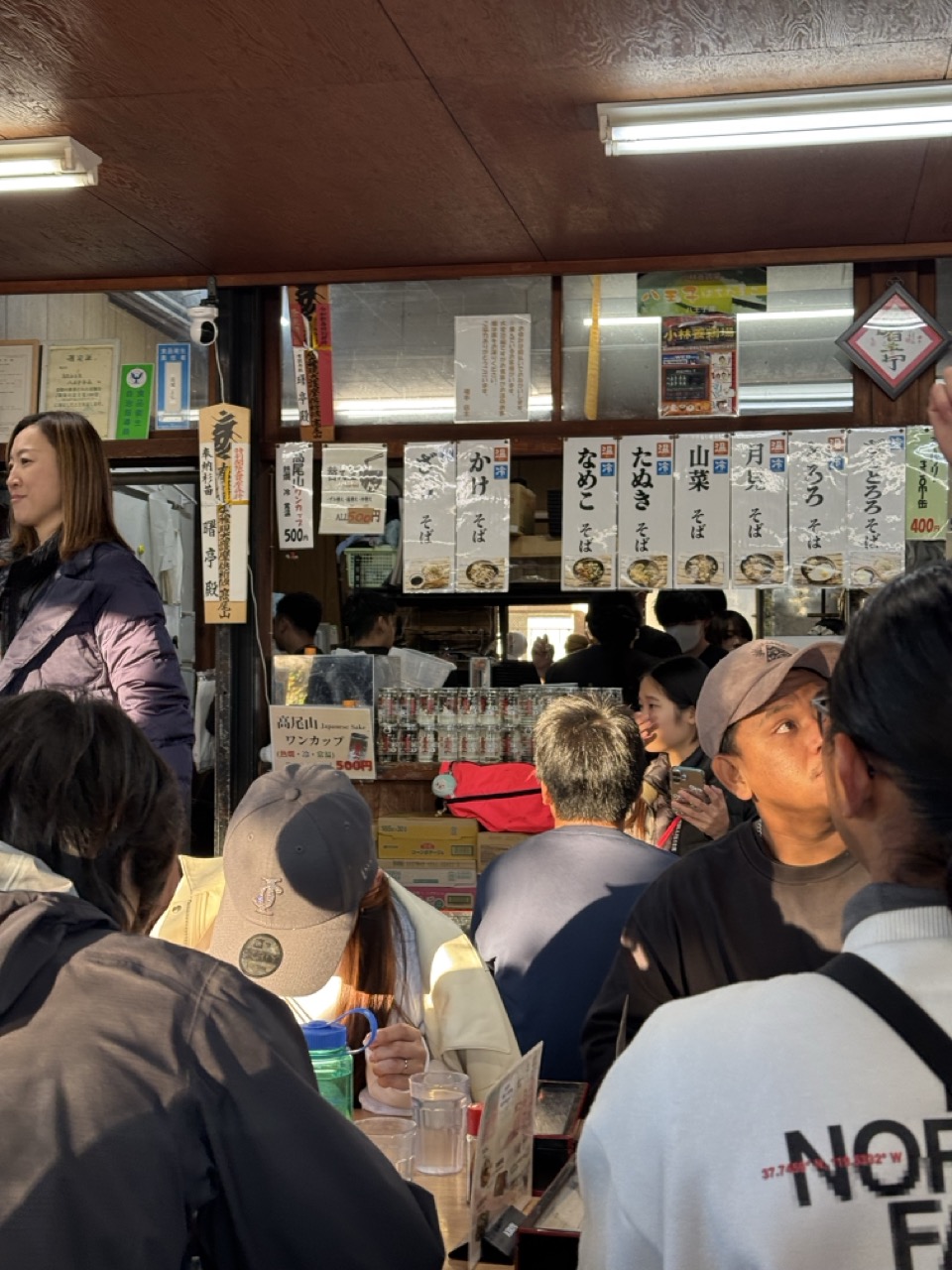
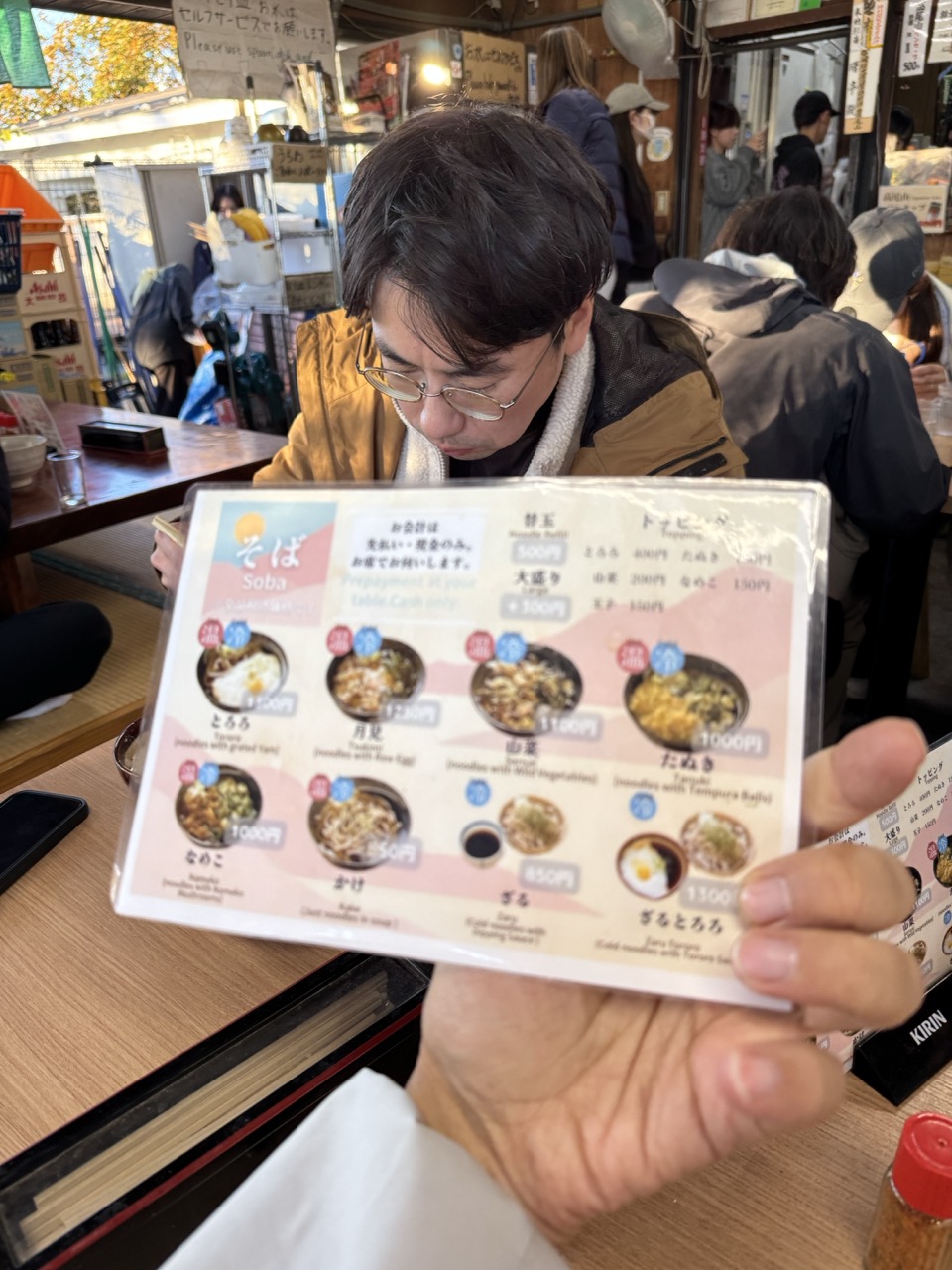
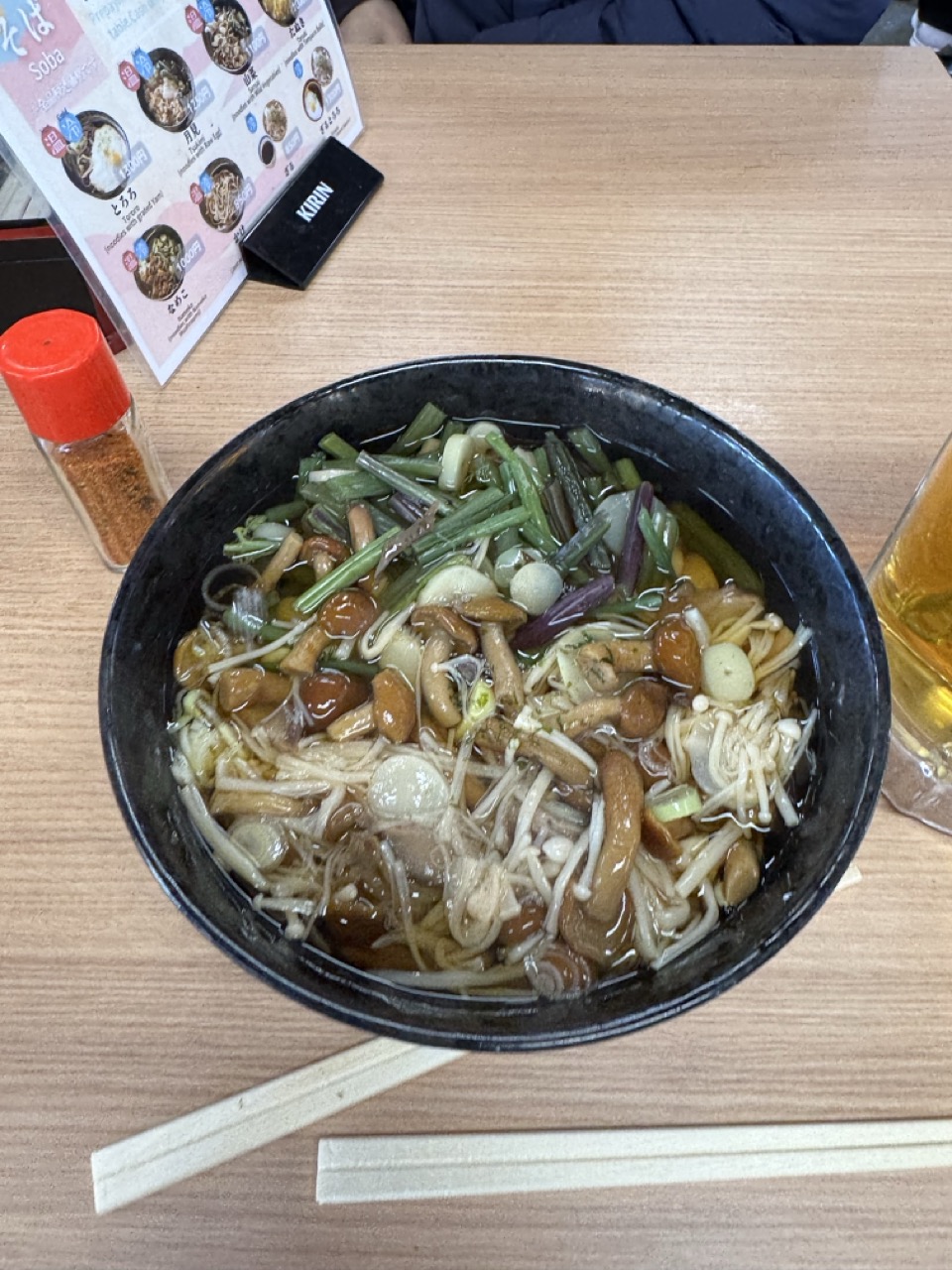
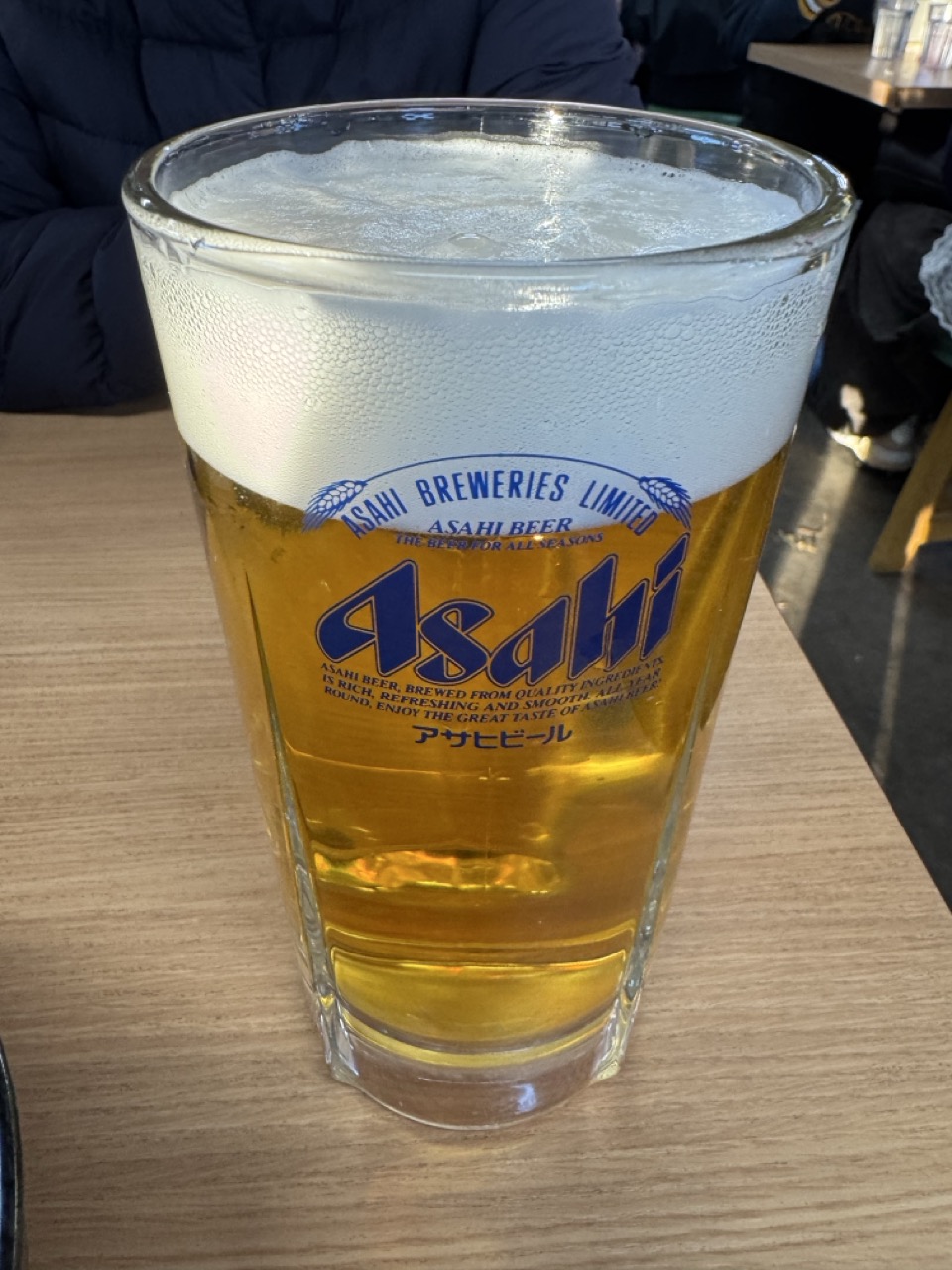
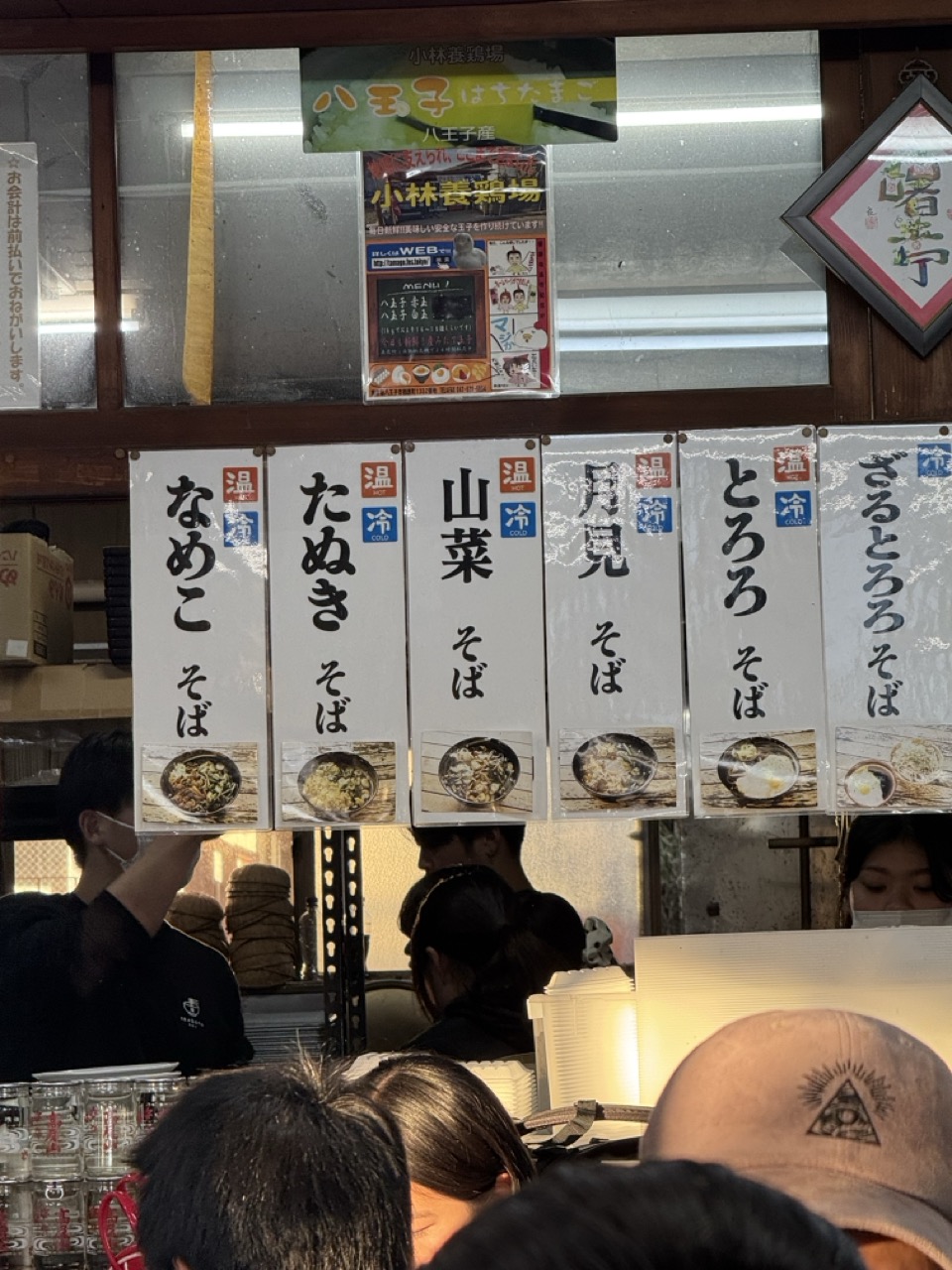
We went to Akebono Tei (曙亭), the soba shop at the summit, and had a hot bowl of soba with a beer. The soba cost around 1,000 yen. In cold air at the top of a hill after a queue, it was exactly right. If you want a seat, go in early, because other people are also trying to eat before dark. I did not note which bowl we ordered, so check the menu on the day.
The location is a big part of the appeal. The shop is the closest soba shop to the observation deck, with views from inside on clear days. It serves oden and miso oden, which pair well with beer, and that the noodles are rustic, thick and firm. It also sells snacks and drinks at the front, so you can take something out to the deck. The shop is small, though.
Walking Down in the Dark
This is the part I would plan differently. After sunset a lot of people were still waiting to get on the cable car to go back down, and the queue looked long. We decided to walk instead. It took about 30 minutes to reach the station, and honestly it was not a bad experience.
It gets dark fast. It was quite dark by around 5:30, and we used our phone flashlights to see the path. The route is easy underfoot, but one guide notes you should be off the mountain before darkness falls, and I agree. Anyone with a headlamp should bring it, and phone battery needs to be full before you start the descent.
What I Would Do Differently
I would change three things. First, leave the avenue about 30 minutes earlier, so the chairlift queue is shorter and the walk up to the summit is relaxed. Second, plan the descent before the ascent: decide whether you will take the cable car, queue for it, or walk down, and bring a light for the third option. Third, eat less at the festival, since the summit soba is worth saving room for.
Overall, if you like a long day and are ready for cold air. The ginkgo avenue is free to walk, the food at the shrine is cheap, the chairlift is a modest ¥490, and the summit at sunset is the kind of view that makes the queue forgettable. The real constraint is time, not money.